





The Balcony Watering Puzzle
Overwatering is one of the most common reasons plants fail, especially for new gardeners and those with container gardens. The signs of overwatering—like wilting and yellowing leaves—can confusingly mimic the signs of a thirsty plant, leading well-intentioned
owners to water even more. In a balcony setting, this problem is amplified. Pots and containers have a limited volume of soil and can have variable drainage. The soil at the surface might feel bone dry to the touch, especially on a sunny day, while the bottom half where the roots reside is still saturated. This oxygen-deprived, waterlogged environment is the perfect breeding ground for root rot, a condition that suffocates the roots and stops them from absorbing nutrients, ultimately killing the plant.
Your Plant's Personal Translator
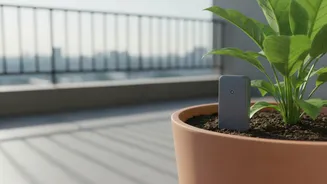
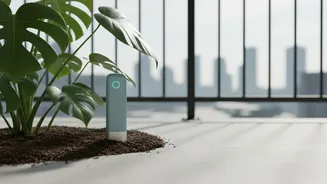
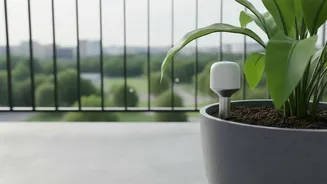
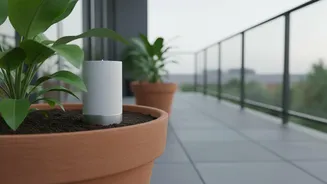
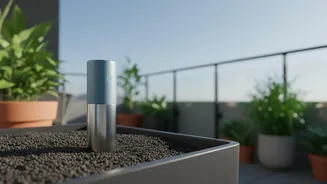
Enter the micro-engineered soil sensor. Think of it not as a complex gadget, but as a simple probe you place in the pot that acts as a personal translator for your plant. These devices are designed to measure the water content directly in the soil at the root zone, giving you an accurate picture of what your plant is actually experiencing. It takes the daily guesswork out of the equation. Instead of relying on a dry soil surface or a fixed watering schedule, you get real-time data that tells you precisely when your plant needs a drink, and just as importantly, when it doesn't.
The Science of Soil Moisture
So, how do they work? Most soil sensors for home use operate on one of two main principles: resistance or capacitance. Resistive sensors measure how easily a small electrical current passes between two probes. Dry soil has high resistance, while wet soil conducts electricity more easily, lowering the resistance. Capacitive sensors, which are often more durable, work by measuring the soil's ability to store an electrical charge. Water in the soil increases its capacitance. The sensor detects this change and translates it into a moisture level. In either case, the sensor is essentially detecting how the presence of water changes the electrical properties of the soil, providing a much more accurate reading than the classic 'finger test'.
More Than Just Thirst
Modern smart sensors often go beyond just measuring moisture. Many popular models are multi-functional tools that provide a more holistic view of your plant's environment. These 4-in-1 devices can also measure and report on light intensity, ambient temperature, and even the level of nutrients (often measured as electrical conductivity or EC) in the soil. This is incredibly useful for a balcony garden, where conditions can vary dramatically. One corner might get intense afternoon sun while another is in shade, and nutrient levels in pots can deplete quickly. Having data on all these factors helps you understand not just when to water, but also whether your plant needs to be moved to a sunnier spot or if it's time for a dose of fertiliser.
From Data to Action
The true magic of these sensors lies in how they deliver information. Most smart sensors connect wirelessly via Bluetooth or Wi-Fi to an app on your smartphone. This app doesn't just display raw numbers; it provides simple, actionable alerts. You might get a push notification that says, "Your hibiscus is thirsty," or "The soil moisture is optimal." Many apps have databases of thousands of plants, allowing you to select your specific plant for tailored advice. This data-driven approach transforms plant care from a routine of anxious guesswork into a confident, responsive process, ensuring your plants get exactly what they need, when they need it.
Finding Your Perfect Match
When choosing a sensor, consider a few key factors. First is the probe length; it needs to be long enough to reach the middle of your plant's root zone, not just the top inch. Next, think about connectivity. Bluetooth models are simple but require you to be nearby to sync data, while Wi-Fi sensors upload data to the cloud automatically, allowing you to check in on your plants from anywhere. Also, consider what you want to measure. While a simple moisture-only meter is a great start, a multi-parameter sensor offers more comprehensive insights into your plant's overall health. Finally, check the app's usability and plant database to ensure it's a tool you'll find easy and enjoyable to use.