








The Backbone: Understanding Deutsche Bahn
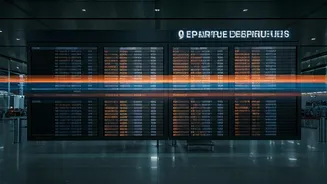
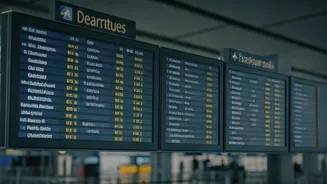
Think of Deutsche Bahn (DB) as the Amtrak of Germany, but more extensive and deeply integrated into daily life. It’s the national railway company, and its trains are the primary way to travel between cities. When you look at a station’s departure board,
you’ll see train identifiers like ICE, IC, EC, RE, and RB. Understanding these codes is the first step to navigating the country. They aren’t just random letters; they tell you the speed, comfort level, and type of journey you’re about to take. Generally, you can buy tickets on the DB Navigator app, on the DB website, or at ticket machines in any station. For longer journeys, booking in advance often saves a significant amount of money, especially on the high-speed routes.
High-Speed vs. Regional Trains
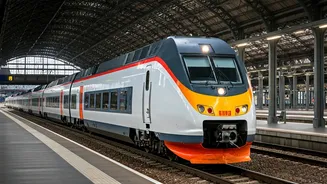
The most important distinction to make is between high-speed and regional services. The Intercity-Express (ICE) is the king of German rail. These are sleek, white, high-speed trains that connect major cities like Berlin, Munich, Hamburg, and Frankfurt at speeds up to 186 mph (300 km/h). They offer the most comfort, with amenities like Wi-Fi, dining cars, and quiet zones. Intercity (IC) and Eurocity (EC) trains are slightly slower but still connect major domestic and international destinations.
On the other end are the regional trains: the Regional-Express (RE), which makes fewer stops between towns in a specific region, and the Regionalbahn (RB), which stops at nearly every station on its route. These are your workhorses for exploring smaller towns and scenic countryside. They are slower and less luxurious but are essential for getting off the beaten path.
In the City: S-Bahn, U-Bahn & Trams
Once you arrive in a city, a different system takes over. The S-Bahn (Stadtschnellbahn) is a hybrid system, like a commuter rail that runs both above and below ground, connecting the city center with its wider suburbs. The U-Bahn (Untergrundbahn) is the classic subway or metro, running primarily underground within the city core. Most major cities have both, and they are fully integrated. Your ticket is usually valid on both systems, as well as on local trams and buses. This integrated network, known as a *Verkehrsverbund* (transport association), means you can buy one ticket and seamlessly transfer between a bus, U-Bahn, and S-Bahn to complete your journey. Just remember the cardinal rule: you must validate (stamp) your paper ticket in a machine on the platform or upon boarding the bus/tram before your first ride. Failure to do so can result in a hefty fine, even for unsuspecting tourists.
Your Golden Ticket: The Deutschland-Ticket
For many travelers, the Deutschland-Ticket (also called the D-Ticket or 49-Euro-Ticket) is a game-changer. It’s a monthly subscription pass that offers unlimited travel on all local and regional public transport across the entire country for a flat fee. This includes all S-Bahns, U-Bahns, buses, trams, and, crucially, all regional trains (RE and RB). For tourists planning to explore extensively for a week or more, it can be an incredible value.
However, there’s one major catch for planning long-distance trips: the Deutschland-Ticket is *not* valid on high-speed services like ICE, IC, or EC trains. This means you can travel from Munich to Berlin with it, but you'll have to hop between several regional trains, turning a 4.5-hour journey into an 8-hour one. You can purchase the D-Ticket through various transport apps, including the main DB Navigator app, but be mindful that it is a subscription, so you must cancel it before the cutoff date to avoid being charged for the next month.
Essential Pro-Tips for Smooth Travel
First, download the DB Navigator app. It’s your all-in-one tool for checking schedules, buying tickets, and viewing live platform information. Second, pay attention to your train car number. On long-distance trains, your seat reservation will correspond to a specific car (*Wagen*), and signs on the platform show you where each car will stop. This saves you from a last-minute sprint down the platform. Third, understand German punctuality is a stereotype, not a guarantee. While local transit is usually on time, long-distance trains can and do run late. The DB app is your best source for real-time delay information. Finally, embrace the system. It may seem daunting, but it’s designed to be logical. Don't be afraid to ask for help—most younger Germans and DB staff speak excellent English.