





The Myth of the Cloud Shield
Let's clear up the biggest misconception first: clouds are not a UV shield. While the thick, grey blanket of monsoon clouds can block a significant portion of the sun's heat and visible light, they are far less effective at filtering out harmful ultraviolet
(UV) radiation. Specifically, UVA rays, which are responsible for premature ageing, fine lines, and long-term skin damage, penetrate deep into the skin and can pass through clouds and even glass windows with ease. The Skin Cancer Foundation notes that up to 80% of the sun’s UV rays can pass through clouds. So, while you may not feel the 'burn' from UVB rays on a cloudy day, the silent, long-term damage from UVA rays is still happening. This constant, low-grade exposure is a primary contributor to photoaging and hyperpigmentation, issues that many of us are trying to prevent or correct.
Monsoon Humidity and Your Skin Barrier
The Indian monsoon brings with it a dramatic spike in humidity. This sticky, damp environment sends our skin's oil glands into overdrive, leading to excess sebum, clogged pores, and a greasy complexion. For many, this is a time of increased breakouts and acne. But the humidity also creates the perfect breeding ground for bacteria and fungi, making us more susceptible to skin infections. This is where sunscreen plays a surprising defensive role. A good sunscreen does more than just block UV rays; it acts as a protective layer for your skin barrier. When your skin barrier is compromised by excess moisture and environmental aggressors, it becomes more vulnerable to irritation and inflammation. Using a well-formulated sunscreen helps maintain that barrier, keeping your skin more resilient against the unique challenges of the season.
Choosing Your Monsoon Armour
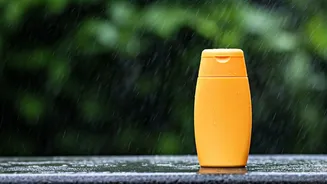
The thought of slathering on a thick, creamy sunscreen in 90% humidity is enough to make anyone skip it. This is why formula is everything. The ideal monsoon sunscreen should feel like nothing on your skin. Look for labels like 'gel-based', 'water-light', 'serum sunscreen', or 'fluid'. These formulations are designed to absorb quickly without leaving a greasy or sticky residue. A 'non-comedogenic' label is also crucial, as it means the product is formulated to not clog your pores—a must-have feature when your skin is already battling excess oil. Furthermore, consider a 'water-resistant' sunscreen. While not completely waterproof, it will hold up better against sweat and the occasional drizzle, ensuring your protection remains effective for longer. The goal is to find a product that is so comfortable, you'll forget you're even wearing it.
The Right Way to Apply
Application technique is just as important as the product you choose. To avoid that heavy, tacky feeling, follow a few simple rules. First, apply your sunscreen as the last step of your skincare routine, before any makeup. Give it at least 15-20 minutes to fully absorb and form a protective film on your skin before you step outside. This ensures it has set properly and won't just sweat off immediately. For your face and neck, a 'two-finger' length of product is the generally recommended amount to ensure adequate coverage. Don't forget often-missed spots like your ears, the back of your neck, and your feet if you're wearing open footwear. Reapplication is still key, especially if you've been sweating or have been caught in the rain. A reapplication every 2-3 hours is the gold standard for maintaining protection throughout the day.