



Tigers and Forts in Rajasthan
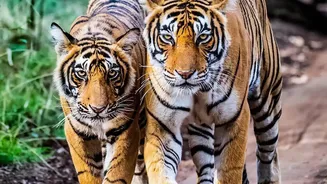
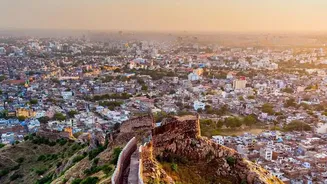
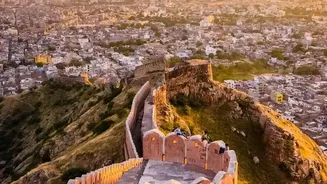
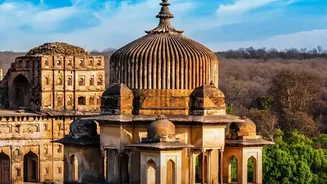
There is no better place to witness the fusion of nature and history than Ranthambore National Park in Rajasthan. Here, tigers are known to roam through the ruins of a 10th-century fort that stands within the park's boundaries. A UNESCO World Heritage
Site, the Ranthambore Fort offers panoramic views of the tiger reserve it once protected as a royal hunting ground. A morning safari searching for the majestic Bengal tiger can easily be followed by an afternoon exploring the ancient temples and palaces within the fort itself, creating a travel experience that feels like stepping through layers of time. This circuit is a perfect addition for travellers exploring the popular Golden Triangle of Delhi, Agra, and Jaipur.
Rhinos and Ruins in Assam
In the northeastern state of Assam, Kaziranga National Park tells a similar story of co-existence. A UNESCO World Heritage site, it is globally renowned for hosting two-thirds of the world's great one-horned rhinoceros population. But beyond the iconic rhinos, elephants, and tigers lies a rich cultural landscape. The park is surrounded by villages of indigenous communities like the Mishing and Bodo, offering a glimpse into local traditions. Nearby, the Deoparbat Ruins provide a window into the region's medieval history, with intricately carved stone temple remains waiting to be explored. A trip here combines world-class wildlife viewing with an immersion into the unique culture of Assam.
Lions and Nawabs in Gujarat
Gir National Park in Gujarat is the only place in the world where you can see Asiatic lions in the wild. The success of its conservation program, which began in the early 20th century under the Nawab of Junagadh, is a compelling story in itself. The former princely state of Junagadh, located just 65 km away, serves as the historical counterpart to a Gir safari. Here, you can explore the Uparkot Fort, with its ancient Buddhist caves and step-wells, and the grand mausoleums of the Nawabs who were instrumental in protecting the very lions you can see today. This journey connects the conservation legacy of a royal family with the living, breathing result in the forests of Gir.
Bears and Boulders in Karnataka
The surreal, boulder-strewn landscape of Hampi in Karnataka is a UNESCO World Heritage Site famous for the ruins of the Vijayanagara Empire. It's a vast open-air museum of temples, palaces, and royal enclosures. But just 15 km away lies a different kind of sanctuary: the Daroji Sloth Bear Sanctuary, the first of its kind in India. This unique reserve was created to protect the Indian sloth bear within a rocky, scrub-forest habitat that mirrors the Hampi terrain. Travellers can spend their days marveling at the 14th-century architecture and their evenings at observation points in the sanctuary, watching these fascinating creatures emerge. It's a seamless blend of ancient human history and dedicated wildlife preservation.
The Rise of Sustainable Experiences
Underpinning India's growing appeal is a nationwide push towards more sustainable and responsible tourism. Government initiatives like the Swadesh Darshan scheme are developing thematic tourist circuits, while a national strategy for sustainable tourism aims to reduce the environmental footprint of travel. For travellers, this translates to more meaningful experiences. You can choose to stay in eco-conscious lodges that are increasingly adopting green practices like rainwater harvesting and solar power. Or you can opt for community-based tourism initiatives, such as homestays and local craft workshops, that ensure your travel spending directly supports the communities that safeguard these precious natural and historical assets.