




The Climate Challenge: A Triple Threat to Makeup
India's hot and humid weather wages a three-pronged attack on your makeup. First, heat increases your skin's surface temperature. Second, high humidity in the air (often over 70% in coastal cities) adds external moisture. Third, your body reacts to these
conditions by producing more sweat and sebum (your skin's natural oil). This combination is disastrous for traditional makeup, which is often an emulsion of oil and water. The heat and moisture destabilise these formulas, causing foundation to separate, eyeliner to smudge, and pigments to slide right off your face. Pores also open up in high humidity, creating a surface more susceptible to trapping dirt and melting makeup.
The Science of Staying Power: What Makes Makeup 'Climate-Proof'?
The secret to makeup that survives the Indian climate lies in its formulation. Brands are now creating products with specific technologies designed for adhesion and durability. The real heroes are ingredients called 'film-formers'. These are often silicone- or acrylate-based polymers that, upon application, create a flexible, breathable film over the skin. This film essentially locks pigments in place and forms a barrier against moisture from sweat and the air. Other key ingredients include waxes like beeswax or carnauba wax, which act as water-repellents, and specific silicones like dimethicone, which create a smooth, water-resistant base without feeling heavy. Think of it as a protective shield that keeps your makeup exactly where you put it.
Decoding Labels: Your Shopping Guide
Navigating the beauty aisle can be confusing, but knowing the right terms is half the battle. 'Waterproof' formulas offer the highest level of protection, designed to resist complete submersion. 'Water-resistant' products can handle light moisture like mild sweat or drizzle but may not survive intense humidity. 'Sweat-proof' makeup is specifically formulated to hold up against perspiration. Look for products labeled 'long-wear,' 'transfer-resistant,' and 'oil-free'. Matte formulations often contain ingredients that absorb excess oil and are generally a safer bet in humidity than products described as 'dewy' or 'luminous,' which can add to the shine.
Technique Matters: How to Apply for Longevity
Even the best products can fail if applied incorrectly. The key to long-lasting makeup in humidity is a layered system. Start with minimal, lightweight skincare; gel-based moisturisers are ideal. Always use a primer, preferably a mattifying one, to create a smooth base and grip for your foundation. When applying foundation, use thin layers and press the product into the skin with a damp sponge rather than rubbing it in circles. This helps the formula fuse with your skin. Set your T-zone (forehead, nose, and chin) with a light dusting of translucent powder. Finally, lock everything in with a setting spray. This final step acts as a seal, preventing makeup from breaking down throughout the day.
Beyond Foundation: Eyes, Lips, and Cheeks
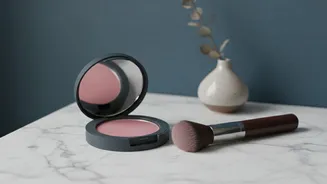
The principles of climate-proofing extend to all your products. For cheeks, cream formulas are superior to powders in humid weather. Cream blushes melt into the skin and move with it, avoiding the patchy look that powder can create on sweaty skin. For eyes, stick to waterproof mascara and eyeliner to prevent the dreaded 'panda eye'. When it comes to lips, matte liquid lipsticks have more staying power than glossy formulas, as the latter can easily feather and fade in the heat. Many modern matte formulas include nourishing oils to prevent the dry, uncomfortable feeling often associated with long-wear lip products.