





A New Cosmic Detective
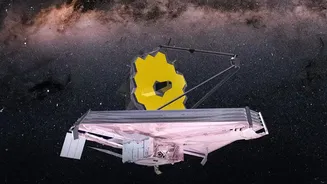
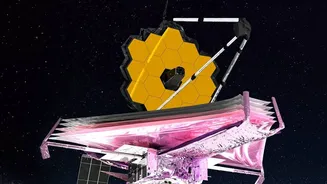
The James Webb Space Telescope is an unparalleled tool for exoplanet research, equipped with instruments that can analyse the chemical makeup of distant atmospheres. One of its primary methods is transmission spectroscopy. When a planet passes in front
of its star from our viewpoint, the starlight filters through the planet's atmosphere. By capturing this light, JWST can identify which chemical elements and molecules are present, based on the specific wavelengths of light they absorb. This technique has opened a new window into worlds light-years away, allowing scientists to hunt for the building blocks of life, with water being a top priority.
The Puzzling Case of GJ 486 b
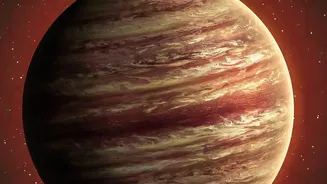
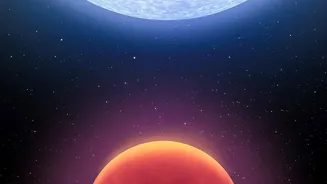
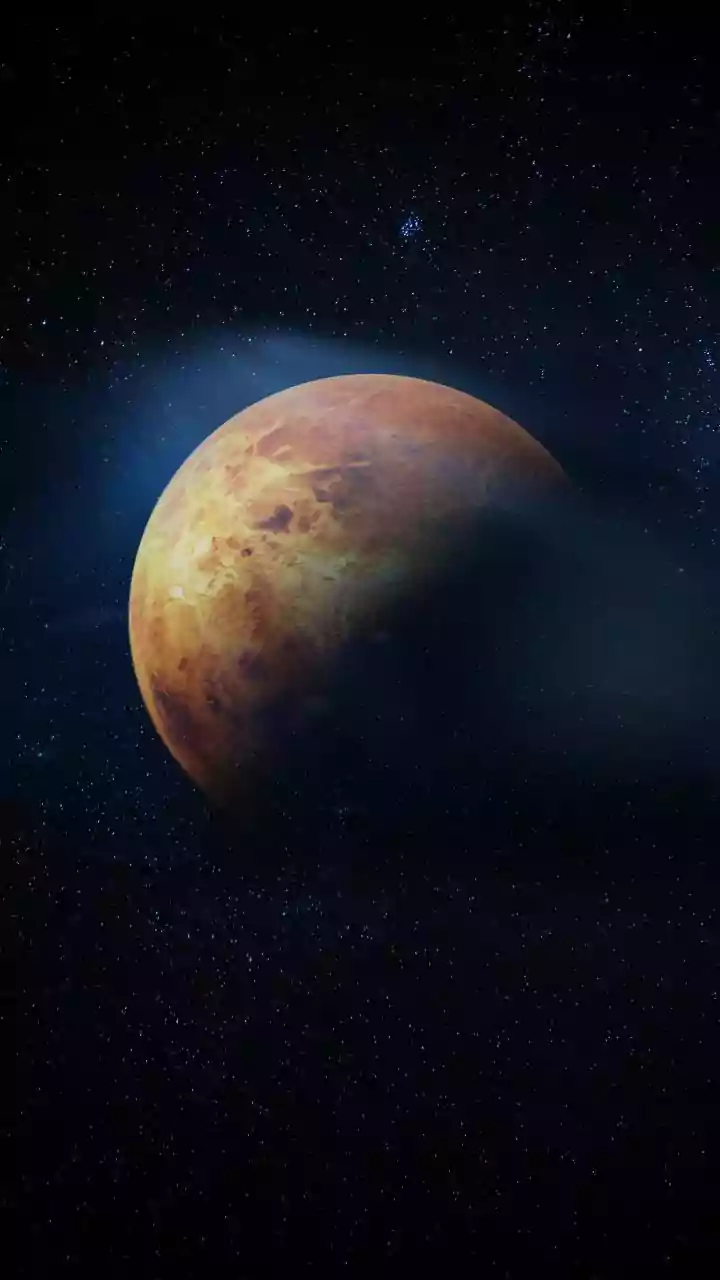
One of the most intriguing recent studies involves a rocky 'super-Earth' named GJ 486 b, located 26 light-years away. Webb's observations showed a signal that is almost certainly due to water. However, this world is scorching hot, with a surface temperature around 430 degrees Celsius, making it an unlikely place for life. The discovery sparked a major scientific debate: is the water vapour part of a planetary atmosphere, or is it coming from the star itself? Red dwarf stars like the one GJ 486 b orbits are cool enough to have water vapor concentrate in their 'starspots,' which are similar to sunspots. This could create a signal that mimics a planetary atmosphere, a cosmic mirage that complicates the search.
Atmosphere or Stellar Illusion?
The uncertainty around GJ 486 b highlights a critical challenge. Scientists are being careful not to jump to conclusions. If this hot, rocky planet does have an atmosphere, it would be a landmark discovery, suggesting that atmospheres can persist even in harsh environments close to a star. Such an atmosphere would likely need to be constantly replenished by volcanic activity, with volcanoes spewing steam from the planet's interior to counteract the star's stripping radiation. To solve the puzzle, researchers plan to use other JWST instruments to observe the planet's 'dayside' and determine where the signal is truly coming from.
Hycean Worlds and Hints of Life
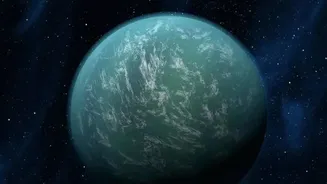
Beyond just water, Webb is investigating potentially habitable 'Hycean' worlds—planets thought to be covered by deep oceans with hydrogen-rich atmospheres. A prime example is K2-18 b, about 124 light-years away, which orbits in its star's habitable zone. Observations have confirmed methane and carbon dioxide in its atmosphere, which is consistent with a water world. More excitingly, there was a tentative detection of dimethyl sulfide (DMS), a molecule that, on Earth, is overwhelmingly produced by marine life. However, this finding is heavily debated, with some scientists arguing the data isn't strong enough to confirm the presence of DMS.
It's More Than Just Finding Water
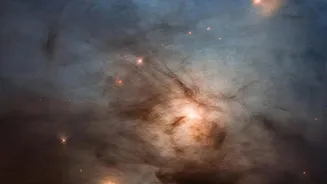
These findings reveal that Webb's mission is more nuanced than simply ticking a 'water found' box. The telescope is helping scientists understand the full context of planetary systems. It has detected water ice in the planet-forming disk of a young star, showing that the raw ingredients for water-rich worlds are common. It has also found water vapour around a dying star near the Milky Way's supermassive black hole, proving molecules can survive even in the most extreme environments. Each discovery adds another layer to our understanding of how planets form, what they are made of, and whether they possess the right ingredients not just for water, but for life itself.