


The Unmistakable Evening Star
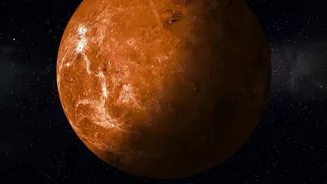
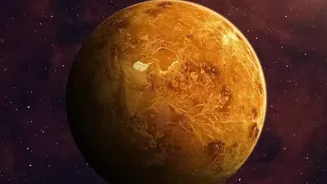
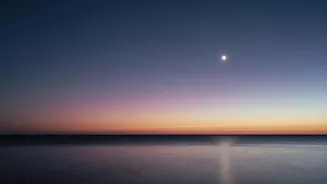
Venus is often called the 'morning star' or 'evening star' because its orbit keeps it close to the sun from our perspective. This August, it claims the title of evening star, appearing as an exceptionally bright, steady beacon of light. After the sun and
moon, Venus is the brightest natural object in the sky. Its intense glow is due to its thick, highly reflective cloud cover and its relative closeness to Earth. Unlike stars that twinkle, Venus shines with a stable, silvery light, making it easy to distinguish.
When and Where to Look
Throughout August 2026, look for Venus in the western sky shortly after sunset. You won't have to wait long; as the twilight colours fade, Venus will emerge and dominate the scene. The planet will be visible for a generous window before it follows the sun below the horizon. The middle of the month is a particularly special time. Around August 14th and 15th, Venus reaches its 'greatest elongation', meaning it will be at its farthest apparent distance from the sun. This positioning makes it appear higher in the sky and visible for longer after sunset, offering prime viewing opportunities across India.
A Special Date with the Moon
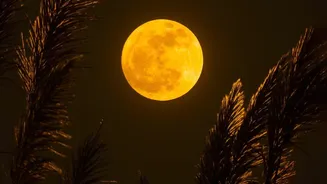
For a truly picturesque moment, mark your calendar for around August 15. On this evening, a slender crescent moon will join Venus in the western sky, creating a stunning celestial pairing. This close approach, or conjunction, is a fantastic photo opportunity and a beautiful sight even for the most casual observer. As an added bonus, you can also look for the bright star Spica, from the constellation Virgo, lingering nearby throughout the month.
No Telescope? No Problem
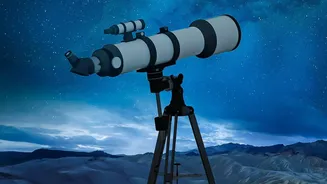
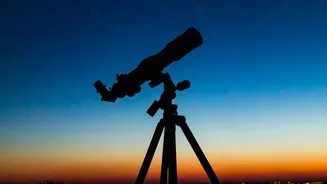
The best part about watching Venus is its accessibility. You don’t need any special equipment to enjoy the show. Its brilliance makes it easily visible to the naked eye, even from brightly lit cities. However, if you have a pair of binoculars, they can enhance the experience. Binoculars will make Venus appear as a more distinct and brighter disk rather than just a point of light. For those with a small telescope, you might even be able to discern its phase; in August 2026, it will look like a tiny, half-lit moon.
Tips for the Best View
To maximise your viewing experience, find a location with an unobstructed view of the western horizon. This could be a park, a rooftop, or a balcony facing the right direction. While Venus can cut through light pollution, getting away from the direct glare of streetlights will always improve the view. Give your eyes about 15-20 minutes to adjust to the darkness; this will help you see not just Venus in its full glory, but also other surrounding stars. Try to avoid looking at your bright phone screen, as it can ruin your night vision. If you need light, use a red light filter or a torch with a red bulb.
Use an App as Your Guide
To feel like a seasoned astronomer, consider using a stargazing app on your smartphone. Apps like SkyView, Stellarium, or Star Walk 2 can help you confirm you're looking at Venus and identify other celestial objects nearby, such as the star Spica. Many of these apps use augmented reality; you just point your phone at the sky, and the app will overlay names and information on the stars and planets you're seeing. For those interested in India-specific celestial mapping, the Bhagol app offers a unique perspective based on Indian astronomy.