


The Classic Cosmic Division
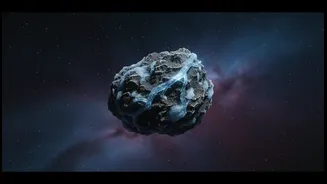
For decades, the distinction seemed simple. Asteroids are rocky, metallic bodies that mostly occupy the asteroid belt between Mars and Jupiter. They are leftovers from the formation of the inner solar system where it was too warm for ice to survive. Comets,
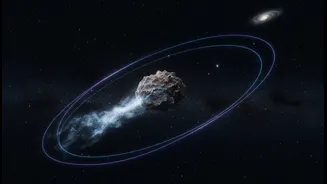
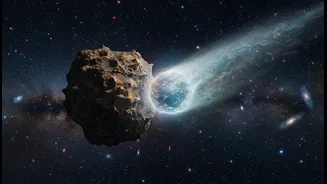
on the other hand, are the “dirty snowballs” of the cosmos, made of ice, rock, and dust. They formed in the frigid outer reaches of the solar system, beyond Neptune. When their long, elliptical orbits bring them close to the sun, the ice vaporizes, creating a glowing coma (atmosphere) and the iconic tail that can stretch for millions of kilometres. It was a neat and tidy way to catalogue our solar system's smaller residents: rocky asteroids in the warmer interior, icy comets in the cold outer regions. But the universe, as it often does, has proven to be more complex and fascinating than our simple boxes allowed.
When Rocks Sprout Tails
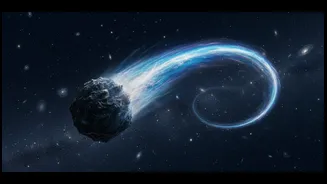
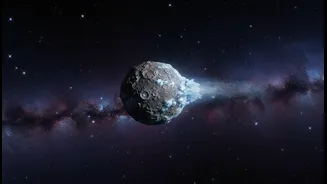
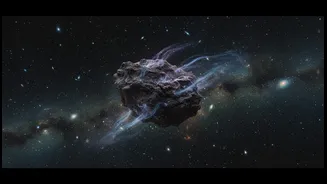
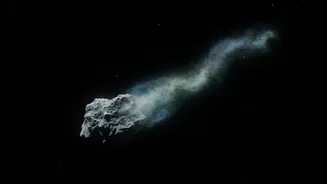
This clear-cut division has been unraveling with the discovery of a new class of objects: active asteroids. These bodies have the orbit of a typical asteroid but display comet-like activity, such as a tail or coma. One of the most famous examples is 3200 Phaethon, the source of the annual Geminid meteor shower. For years, it was a puzzle: how could a rocky asteroid produce a meteor shower, a phenomenon almost exclusively caused by cometary debris? Recent studies revealed that Phaethon isn't sprouting a tail from vaporizing ice. Instead, as it makes its scorching-hot pass near the sun, sodium trapped within its rock may fizz and vent into space, creating a tail made not of dust and ice, but of sodium gas. Other asteroids, like some in the main belt, show recurring activity that suggests subsurface ice, once thought impossible in that warmer region, is being exposed, perhaps by small impacts, and then sublimating just like a comet's.
A New Class of Objects
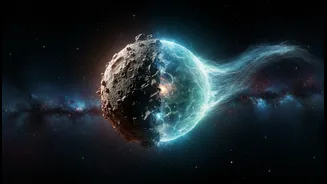
These hybrid objects are sometimes called “main-belt comets” or, more broadly, “active asteroids”. The first one, now known as 133P/Elst-Pizarro, was spotted showing a tail back in 1996, despite having an asteroid's orbit. Since then, a few dozen of these perplexing objects have been identified. They challenge our models of solar system formation. The presence of ice in the asteroid belt suggests that the dividing line between the rocky inner solar system and the icy outer solar system wasn't so sharp. These objects could be the key to understanding how water and other organic molecules, the building blocks of life, were delivered to the early Earth. Some scientists now believe the asteroid belt could be a “graveyard” of dormant comets that can be resurrected, or brought back to life, by gravitational nudges or impacts.
Why The Labels Matter
This cosmic identity crisis is more than just an academic debate. Correctly classifying these small bodies is crucial for both science and safety. From a scientific perspective, understanding their composition tells us about the primordial ingredients of our solar system. If main-belt comets delivered water to Earth, they are a vital piece of the puzzle of how life began. From a planetary defense standpoint, knowing what an object is made of helps predict its behaviour. A solid, rocky asteroid will behave very differently upon entering Earth's atmosphere than a loosely packed, icy comet that might break up more easily. Knowing an object's composition is also critical for planning any potential deflection mission. Pushing on a solid rock is a different engineering challenge than pushing on a fragile snowball that might fragment. These “rock comets” and active asteroids prove there is a continuum between the two categories, forcing us to refine our strategies for tracking and potentially mitigating any threat they might pose.