

The Soul of the Desert on City Walls
Lippan Kam, also known as mud and mirror work, is a traditional mural craft that originated in the arid landscapes of Kutch. Historically, it was practised primarily by women of pastoral communities like the Rabari, Mutwa, and Meghwal. Using a mixture
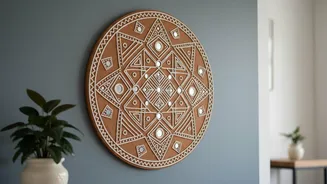
of clay and camel or cow dung, they would sculpt intricate, low-relief patterns onto the inner and outer walls of their circular mud huts, or 'bhungas'. These designs were not merely decorative. The thick mud application provided natural insulation, keeping homes cool in the blistering desert heat and warm during cold nights. Tiny, embedded mirrors, called 'aabhla', would catch and scatter the scarce sunlight, illuminating the dark interiors and, as belief holds, warding off the evil eye. It was a craft born from function, resourcefulness, and a deep-seated need for beauty in a harsh environment.
From Dung and Clay to Durable Design
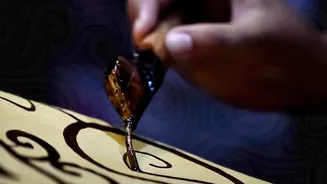
For Lippan Kam to travel from a dusty village wall to a high-rise apartment in Mumbai or Bengaluru, it had to adapt. The traditional mixture of dung and local clay, while perfect for earthen walls, is not practical for modern urban homes. Artisans and designers have innovated, preserving the spirit of the craft while updating its materials for durability and longevity. Today, the art is often created on portable MDF boards instead of being sculpted directly onto a wall. The organic dung and mud paste is frequently replaced with a more stable mixture of chalk powder, plaster of Paris, sawdust, and strong adhesives. This modern approach makes the artwork lighter, odour-free, and resistant to cracking, allowing it to be shipped and installed anywhere. While traditional work was often left in the natural white or earthen tones of the clay, contemporary pieces might incorporate vibrant acrylic paints to match modern decor palettes.
A Modern Canvas for Ancient Motifs
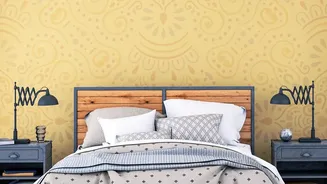
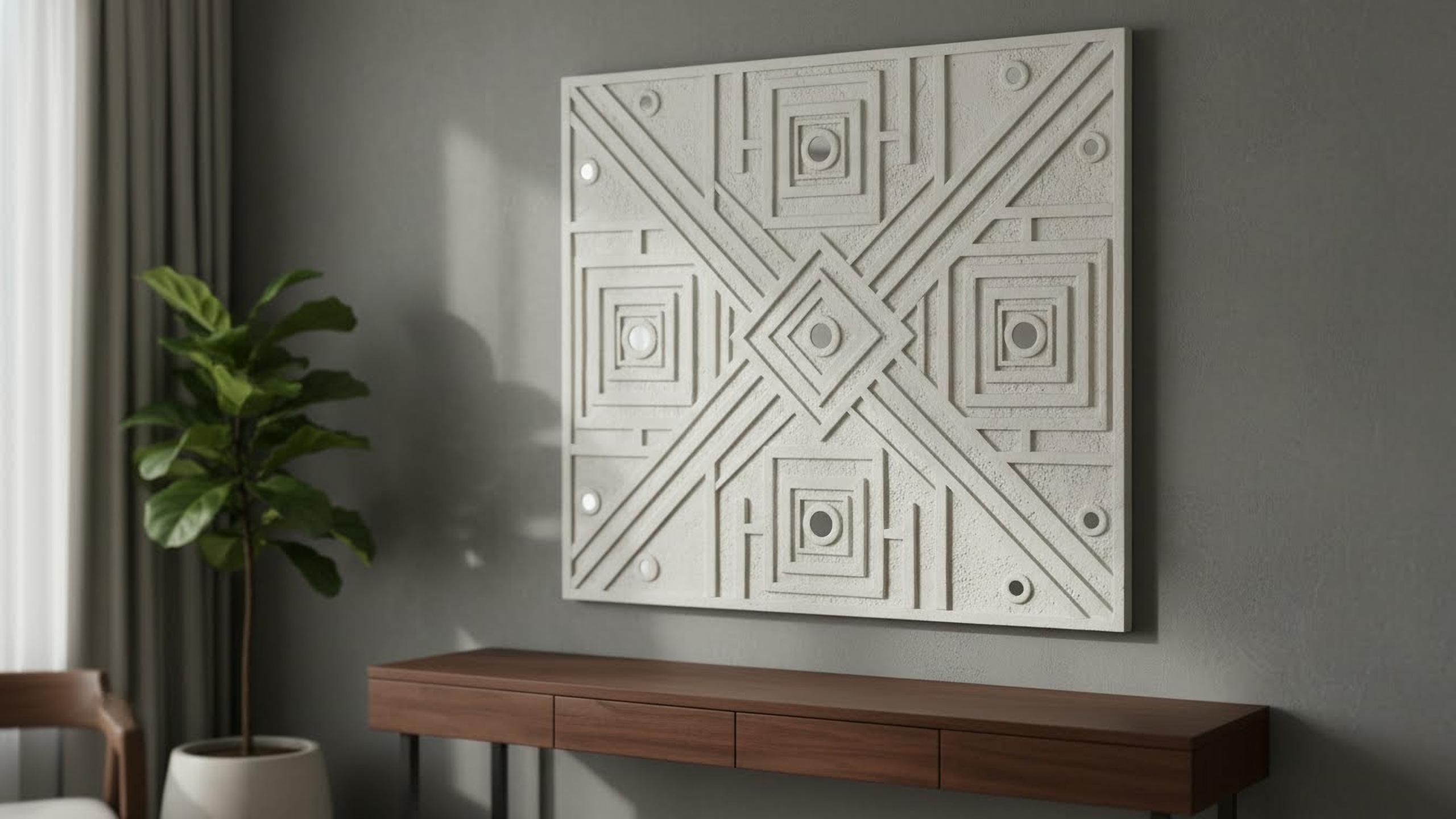
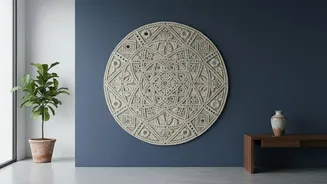
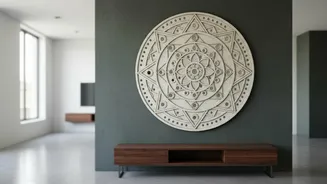
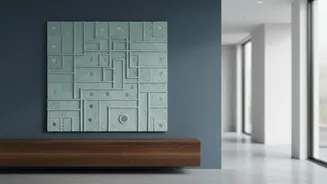
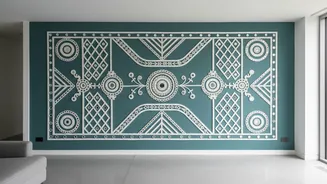
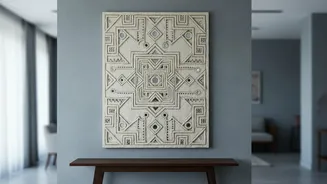
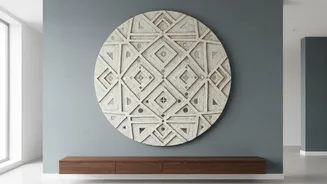
The aesthetic of Lippan Kam is also evolving. While traditional motifs of peacocks, camels, elephants, and flowers are still popular, artists are now exploring new patterns. Minimalist geometric designs, abstract forms, and modern mandalas are gaining traction, fitting seamlessly into contemporary and even Scandinavian-inspired interiors. Interior designers are commissioning large-scale Lippan panels as feature walls in living rooms, backdrops for dining areas, or as grand headboards in bedrooms. These art pieces serve as a powerful focal point, adding texture, depth, and a story that mass-produced decor simply cannot match. The interplay of the matte, earthy relief work and the shimmering mirrors creates a dynamic surface that changes with the light throughout the day, bringing a sense of life to the space.
Why Heritage Art Resonates Now
The revival of Lippan Kam is part of a larger trend towards embracing authenticity and sustainability in our living spaces. In an age of globalised, cookie-cutter design, there is a growing desire for homes that reflect personal identity and cultural roots. Choosing a handcrafted Lippan wall is a conscious decision to support local artisan communities, many of whom are preserving this generational skill through digital platforms and workshops. Events like the Rann Utsav in Gujarat have also played a significant role in bringing this art form to a wider audience, boosting its popularity and creating economic opportunities for its makers. By bringing this heritage craft into our homes, we are not just decorating a wall; we are becoming custodians of a living tradition, connecting our modern lives to a rich, artistic legacy.