

The Core Defence: A Truly Waterproof Jacket
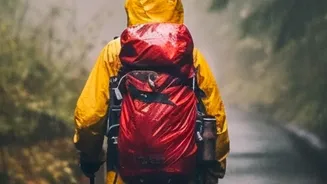
Your first and most critical investment is a high-quality rain jacket, not just a 'water-resistant' windcheater. For the sustained downpours of the Ghats, you need a jacket with a waterproof rating of at least 10,000mm. Look for 'seam-sealed' or 'fully
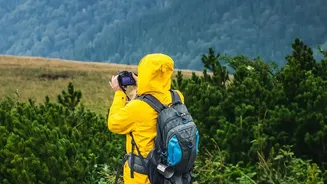
taped' seams, which prevent water from leaking through the stitching—a common failure point. While a simple poncho can offer decent coverage for you and your backpack, a dedicated jacket provides better mobility and protection against wind. Features like an adjustable hood to keep rain off your face, and 'pit zips' (zippers under the armpits) for ventilation, are invaluable. A breathable fabric is crucial; otherwise, you'll end up soaked from your own sweat. Brands like Columbia, The North Face, and Decathlon's Forclaz and Quechua lines offer reliable options for various budgets.
Two Layers of Pack Protection
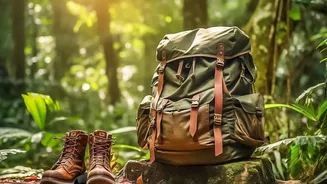
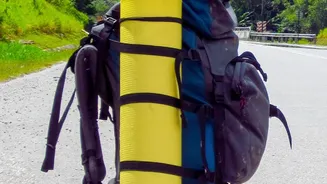
Keeping your clothes, sleeping bag, and electronics dry is non-negotiable. Relying solely on your backpack's material, even if marketed as water-resistant, is a mistake. You need a two-layer system. First, an external rain cover that fits your pack snugly is your first line of defence. However, in heavy rain and wind, water can still seep in behind the cover. The second, more crucial layer is internal: use waterproof dry bags or pack liners inside your main compartment. A large, heavy-duty bag can serve as a single liner for the entire pack, or you can use several smaller dry bags to compartmentalise and protect gear individually. This ensures that even if your backpack gets soaked, your essential items like a change of clothes and sleeping gear remain completely dry.
The Right Footwear: Grip is Everything
Monsoon trails in the Western Ghats are notoriously slippery, covered in wet rocks, slick mud, and moss. Your choice of footwear can make or break your trek. Regular running shoes or sneakers are dangerously inadequate as they lack the necessary grip. You need shoes with deep lugs on the outsole for superior traction. There are two schools of thought: waterproof shoes versus quick-drying, non-waterproof ones. Waterproof trekking shoes with a membrane are excellent for keeping your feet dry from splashes and light rain. However, once water gets in over the top (which is likely in heavy downpours or stream crossings), they can take a very long time to dry. For this reason, many experienced Ghats trekkers prefer lightweight, quick-drying shoes with excellent drainage and a strong grip. Paired with waterproof socks, this combination can offer more comfort over a multi-day trek. Whatever you choose, ensure they provide good ankle support and are broken in before your trip.
Beyond the Basics: Essential Accessories
A few smaller items can have a massive impact on your comfort and safety. Waterproof pants are often overlooked but are essential for staying warm and dry. Quick-dry synthetic pants are a better choice than heavy jeans or cotton trousers, which become cold and heavy when wet. Gaiters, which cover the gap between your pants and shoes, are great for keeping water, mud, and leeches out. Speaking of leeches, which are common in the monsoon, carrying anti-leech socks or a small pouch of salt or Dettol can be very helpful. A waterproof pouch for your phone and a power bank is a modern necessity. Finally, pack at least one quick-dry towel; it will be far more practical than a standard cotton one. Don't forget to pack extra pairs of synthetic or wool socks to change into at camp.