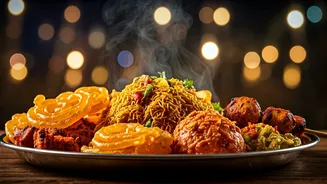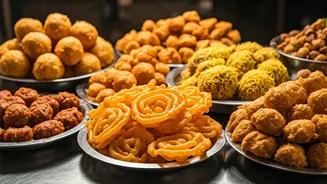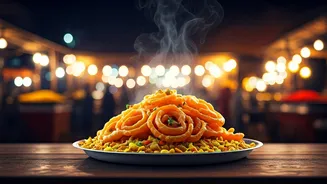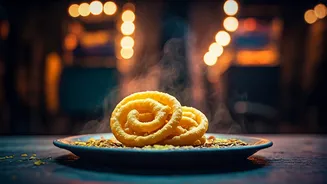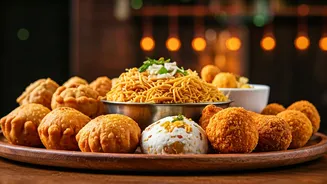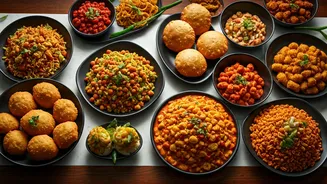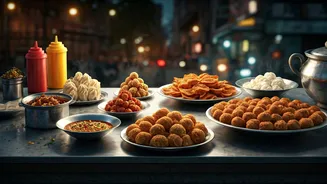



The Twin Pillars: Sarafa and Chappan Dukan
To understand Indore's culinary dominance, you must first get to know its two iconic food hubs: Sarafa Bazaar and Chappan Dukan. These are not just markets; they are the heart and soul of the city's gastronomic identity. Sarafa Bazaar is a spectacle of transformation.
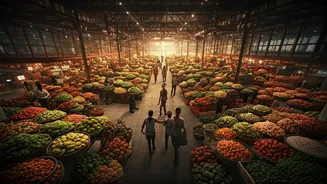
By day, it’s a bustling jewellery market. But as dusk falls and the shops shutter, the lanes come alive with over 100 food stalls, turning it into India's most famous night food market that buzzes until 2 a.m. [4, 7, 12, 14] This magical metamorphosis has been a tradition for decades, offering a culinary carnival under the stars. [5] On the other hand, Chappan Dukan, which translates to "56 Shops," is a more organized, modern street food hub. [21, 23] Established in 1974, this stretch features exactly 56 eateries serving a wide array of dishes from morning until late evening. [3, 28] It was even recognized by the FSSAI as one of India's cleanest and safest food destinations, a testament to Indore's commitment to hygiene, which complements its reputation as India's cleanest city. [3, 10]
A Symphony of Flavours: The Must-Try Dishes
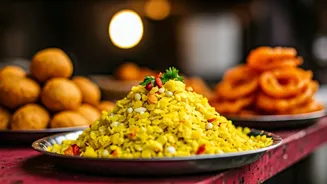
Indore's claim to the throne rests on its unique and unforgettable dishes. The day starts with the quintessential Indori breakfast: Poha-Jalebi. [8] The poha here is distinct from its Maharashtrian origins, steamed to fluffy perfection and topped with crunchy sev, fresh coriander, and a special local spice blend called *jeeravan masala*. [3] The pairing with a hot, crispy jalebi creates a delightful sweet and savoury balance that defines the city's breakfast culture. [14] As the day progresses, the snack options multiply. There's the *Bhutte ka Kees*, a creamy, spiced dish made from grated corn cooked in milk. [9, 15] Then you have *Khopra Patties*, a brilliant Indori invention of fried potato patties stuffed with a sweet, roasted coconut filling. [8, 13, 17] Another standout is the *Garadu*, a winter specialty made from deep-fried yam cubes tossed in spices and lime juice, much like Delhi's aloo chaat but with a unique twist. [13, 24] And you cannot forget the giant *Jaleba*, a jalebi so large that one piece is often enough for a family. [6]
More Than Just Food: A Culture of Innovation
What truly sets Indore apart is not just the variety, but the culture of constant culinary innovation. The city's food scene is a living tradition, a blend of Marathi, Malwi, and Marwari influences inherited from its history as the seat of the Holkar dynasty. [3, 18] But vendors don't just rest on tradition; they perfect it. Dishes that arrived from other regions, like poha, have been transformed into something uniquely Indori. [3] Even the local *shikanji* is different—not the familiar lemonade, but a thick, milky concoction enriched with dry fruits, somewhere between a lassi and a rabri. [13, 24] This spirit of creativity is everywhere, from the ten different flavours of paani for golgappas to the *egg banjo*, Indore's take on a sandwich. [28, 29] This blend of deep historical roots and a relentless drive to innovate is what makes the city's snack scene so dynamic and compelling. [18]
The Unspoken Champion
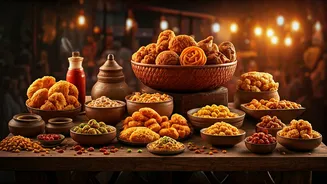
While other cities might have one or two signature dishes that define them, Indore offers an entire ecosystem of snacking. [3] It’s a city where food is a communal activity, an accessible pleasure, and a source of immense civic pride. [18] The sheer availability of food, from the 6 a.m. poha stalls to the 2 a.m. festivities at Sarafa Bazaar, is unparalleled. [23, 26] The namkeen culture is another pillar of its identity, with shops offering a staggering variety of sev and other fried snacks that are a staple in every Indori household. [6, 17, 19] It’s this combination—the unique night market, the clean and organized food streets, the incredible variety of distinct local dishes, and a culture that celebrates food at all hours—that forms the basis of Indore's quiet, confident ownership of India's snack scene. [3, 12]