






The Daily Toll of Desk Life
The modern workday, for many, is defined by hours spent in a chair. While seemingly harmless, this prolonged static posture takes a significant toll on the body. When you sit for extended periods, you're not just resting; your body is adapting in negative
ways. Muscles like your hip flexors shorten and tighten, while your glutes can weaken. Your posture often suffers as you lean toward a screen, causing your head to drift forward and your shoulders to round. This 'tech neck' places immense strain on your cervical spine and upper back muscles. Over time, this can lead to chronic lower back pain, persistent neck and shoulder stiffness, and reduced mobility. It also impacts circulation, potentially causing swelling or fatigue in your lower limbs.
Your Five-Minute Antidote: Chair Yoga
The good news is that you can actively combat these effects without ever leaving your workspace. Chair yoga is a gentle, modified form of yoga that adapts traditional poses so they can be performed while seated or using a chair for support. Its primary benefit is accessibility; it requires no special clothing, mats, or prior experience, making it a perfect wellness tool for the office. By incorporating short, targeted stretching breaks into your day, you reintroduce movement that your body craves. These brief sessions improve blood flow, decompress the spine, release muscle tension, and can even boost mental focus by giving your brain a much-needed reset.
Release Neck and Shoulder Tension
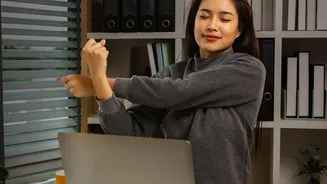
The neck and shoulders are often the first areas to protest after a long day of screen time. A simple way to provide immediate relief is with neck rolls and shoulder shrugs. Sit tall in your chair, with your feet flat on the floor. Gently drop your right ear toward your right shoulder, holding for a few deep breaths to feel a stretch along the left side of your neck. Slowly roll your chin down to your chest, then over to the left side. For your shoulders, inhale and lift them up toward your ears, then exhale and let them drop completely. Another effective stretch is Eagle Arms. Extend your arms forward, cross the right arm over the left, bend your elbows, and try to bring your palms together. Lift your elbows and feel the stretch across your upper back.
Mobilize Your Spine and Back
Sitting for hours can compress the spine and lead to stiffness. The Seated Cat-Cow is a classic yoga movement adapted for your chair that brings mobility back to the vertebrae. Place your hands on your knees and sit at the edge of your seat. On an inhale, arch your back, lift your chest, and look slightly upward (Cow Pose). On an exhale, round your spine, tuck your chin to your chest, and gently pull your navel in (Cat Pose). Repeat this fluid motion five to ten times. For a gentle twist that aids digestion and relieves spinal tension, sit tall and turn your torso to the right, using the chair's backrest for a light hold. Breathe here for a few moments before repeating on the left side.
Open Up Your Tight Hips
Your hips are another major victim of the desk job, as the hip flexor muscles remain in a shortened position for hours. The Seated Pigeon Pose is a fantastic counter-stretch. While sitting, cross your right ankle over your left knee, keeping your right foot flexed to protect the knee joint. You should feel a stretch in your right hip and glute. For a deeper sensation, you can gently hinge forward from your hips while keeping your spine long. Hold for 30 seconds, breathing into the area of tension, and then switch sides. This simple move directly counteracts the hip tightness that contributes to lower back pain.
Making It a Daily Habit
The key to reaping the benefits of chair yoga is consistency. The goal isn't a long, intense session, but rather frequent, short bursts of movement throughout the day. Try setting a timer to remind yourself to get up or stretch every 30 to 60 minutes. You could also 'habit stack' by linking a few stretches to an existing routine, such as doing a Seated Cat-Cow every time you finish a phone call or a Seated Pigeon Pose after you send an important email. Even five minutes a day can make a profound difference in how your body feels, preventing minor aches from becoming chronic issues.