
The Challenge of Faint Light
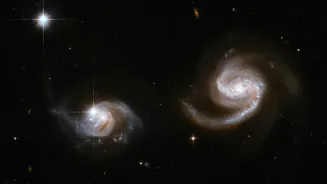
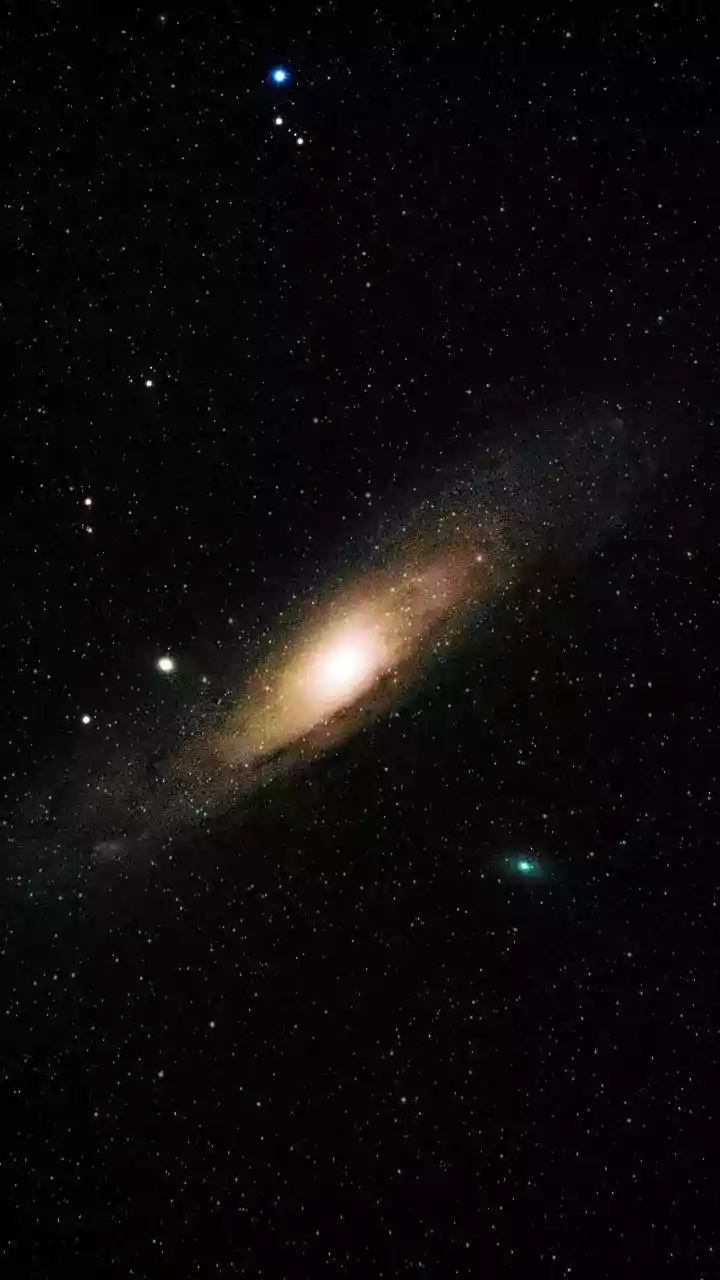
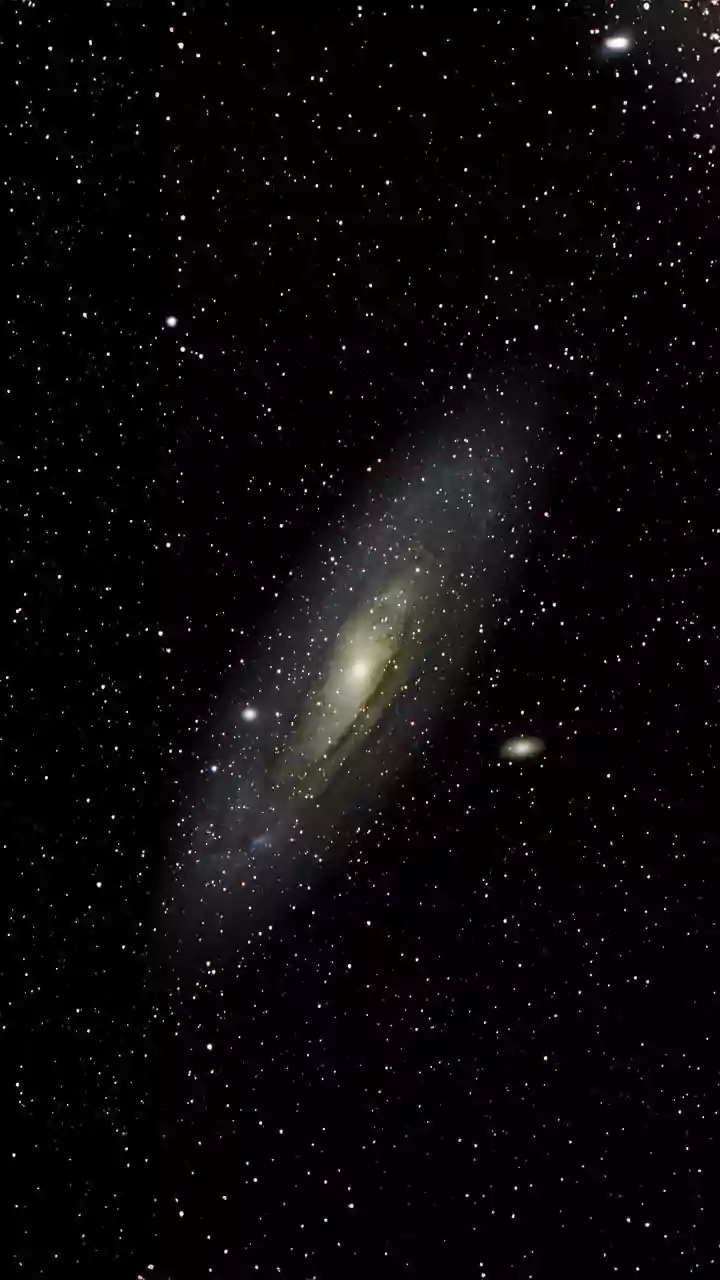
The primary obstacle in photographing distant galaxies is their incredible faintness. The light from these remote stellar cities has traveled for millions of years, spreading out and dimming along the way. Your eyes can't see them in detail because they
don't gather enough light. To make them visible, a camera needs to collect photons for an extended period, often for many minutes or even hours per shot. This is where 'advanced gear' becomes not just a luxury, but a fundamental necessity. It’s a system where every single piece works in concert to solve the problem of gathering and precisely focusing incredibly faint light over time.
The Light Bucket: Aperture and Focal Length
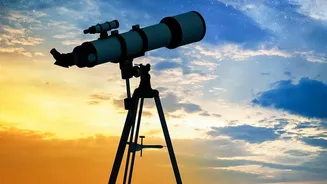
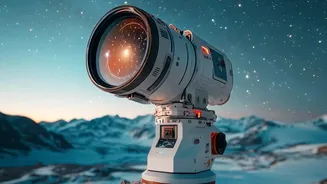
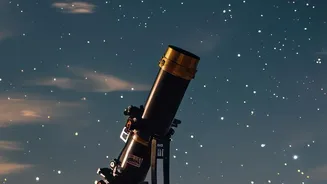
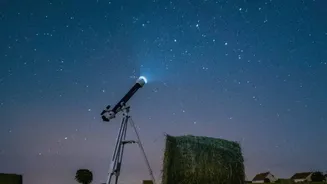
The first and most obvious piece of the puzzle is the telescope itself, which acts as a giant light-gathering bucket. The key specification here is its aperture—the diameter of its main mirror or lens. A larger aperture collects more light, making faint objects like galaxies appear brighter and revealing finer details. While a bigger aperture is generally better for faint deep-sky objects, it's a balancing act. Focal length is also crucial, as it determines the magnification and field of view. For many large spiral galaxies, a moderate focal length is ideal to frame the object nicely without magnifying it so much that its faint outer arms become impossible to detect.
The Unsung Hero: The Equatorial Mount
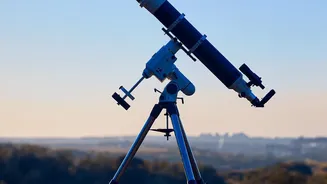
Many seasoned astrophotographers will tell you that the mount is even more important than the telescope. As Earth rotates, the stars appear to move across the sky. To take a long exposure, the telescope must track its target with perfect precision. A standard camera tripod won't work. You need a computerized equatorial mount. This type of mount is aligned with the Earth's axis of rotation, allowing it to counteract the planet's spin with a single movement. Even the best mounts have tiny mechanical imperfections that can cause tracking errors over several minutes. To fix this, photographers use an 'autoguider'—a second, smaller camera and telescope locked onto a guide star. If the guide star drifts even slightly, the autoguider sends a correction to the mount, ensuring the main telescope stays locked on its target for exposures that can last 30 minutes or more.
The Digital Eye: A Specialized Camera
While a standard DSLR camera can be a starting point, dedicated astronomy cameras offer game-changing advantages for imaging faint galaxies. The biggest difference is active cooling. During long exposures, a camera's sensor heats up, creating electronic 'noise' that looks like grain and can overwhelm the faint signal from a galaxy. Dedicated astro cameras have built-in thermoelectric coolers that can chill the sensor to well below freezing, dramatically reducing this noise. These cameras are also more sensitive to specific wavelengths of light, like the deep red of hydrogen-alpha (Hα) emitted by star-forming regions in a galaxy's arms—light that is often blocked by filters in standard cameras.
Painting with Light: Filters and Stacking
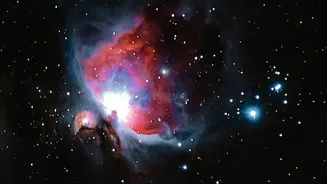
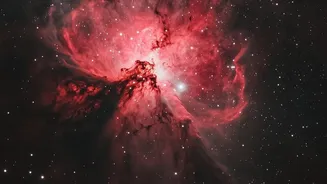
To bring out the most dramatic details, astrophotographers use specialized narrowband filters. These isolate very specific wavelengths of light emitted by elements like hydrogen, oxygen, and sulfur. By taking separate long exposures with each filter and then combining them in software, they can create a final image with stunning contrast and detail that would otherwise be invisible. Finally, no single exposure is perfect. To get a crystal-clear image, photographers take many individual shots, called 'sub-exposures', and then 'stack' them using software. This process averages out random noise, cosmic ray hits, and other imperfections, dramatically improving the signal-to-noise ratio and revealing the faint, delicate structures of the galaxy.