





The Universe Within Us
You're never truly alone. Your body is home to trillions of microorganisms, including bacteria, viruses, and fungi, that collectively form your microbiome. The vast majority live in your gut, where they play a crucial role in your overall health. This
internal ecosystem helps digest food, produces essential vitamins, regulates your immune system, and even influences your mood. On Earth, a healthy and diverse microbiome is a cornerstone of well-being. But in space, this delicate balance is thrown into chaos, and for a multi-year mission to Mars, the consequences could be severe.
Space Is Hard on the Stomach
The environment of space is uniquely hostile to the human body, and the gut is no exception. Several factors conspire to disrupt the microbiome. First is microgravity. Recent studies show that the near-weightless environment slows down the movement of food through the digestive tract. This gives gut bacteria more time to break down nutrients. When they run out of their usual carbohydrates, they switch to fermenting protein, a process that can lead to constipation and other issues. Then there is radiation. Outside of Earth's protective magnetic field, astronauts are exposed to much higher levels of cosmic radiation, which can damage cells and alter gut bacteria. Add in a confined living space, a pre-packaged diet, altered sleep cycles, and the inherent stress of the mission, and you have a recipe for significant microbial disruption.
The Martian Challenge Amplified
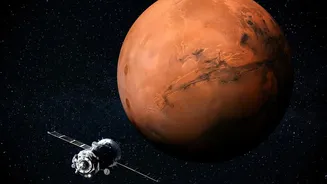
While astronauts on the International Space Station (ISS) already experience these issues, a mission to Mars raises the stakes exponentially. A trip to the Red Planet would last roughly two to three years, far longer than a typical six-month stay on the ISS. This prolonged exposure amplifies every risk. The cumulative dose of radiation increases, and the long-term effects of microgravity on digestion become more pronounced. Studies simulating long-duration confinement, like the Mars500 experiment where a crew was isolated for 520 days, found that participants developed signs of intestinal inflammation and a decrease in beneficial anti-inflammatory bacteria. This suggests that over the course of a Mars mission, an astronaut's gut could become progressively less healthy.
A Dysfunctional Gut in Deep Space
An unhealthy gut, or 'dysbiosis', isn't just about digestive discomfort. For an astronaut millions of miles from home, it could be mission-critical. A compromised microbiome can lead to a weakened immune system, making astronauts more susceptible to infections. It can also cause increased inflammation throughout the body, hinder the absorption of vital nutrients from food, and even affect cognitive performance and mood—all of which are serious problems when you need to perform complex tasks in a high-stakes environment. Some bacteria can even become more virulent or resistant to antibiotics in space, posing a significant risk in a closed environment where medical capabilities are limited.
Nourishing the Way to Mars
Recognizing this challenge, space agencies like NASA are actively researching solutions. The goal is to find ways to protect and maintain a healthy microbiome during long voyages. This research includes designing specialized diets rich in fiber and other nutrients that support beneficial gut microbes. Scientists are also exploring the use of custom probiotics and prebiotics—supplements that can either introduce good bacteria or feed the ones already there. By understanding how the gut reacts to space, researchers hope to develop personalized nutrition plans and countermeasures that will keep astronauts healthy, resilient, and ready for the challenges of exploring new worlds.