

A New King of the Moons
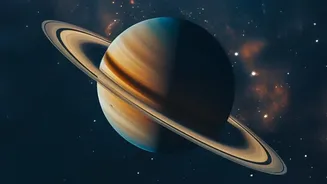
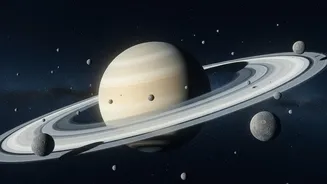
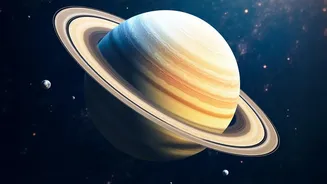
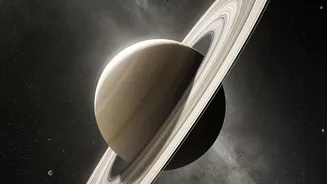
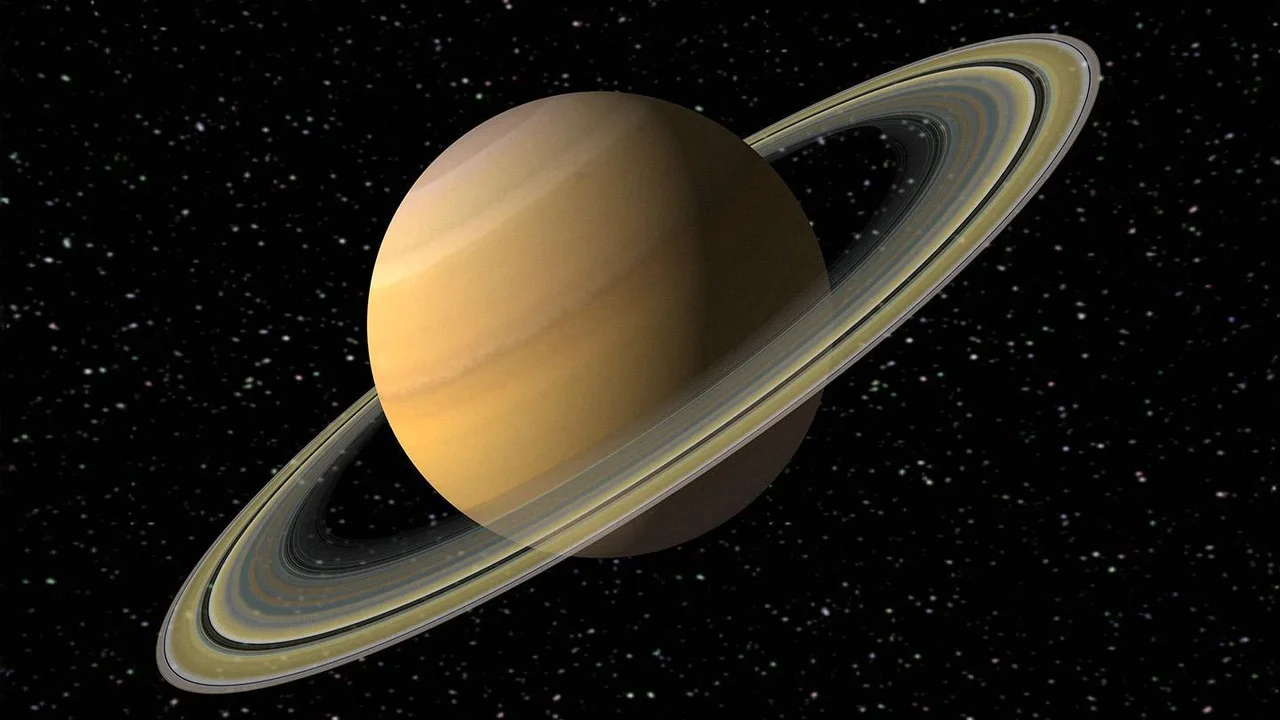
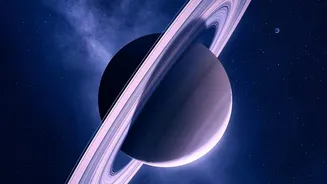
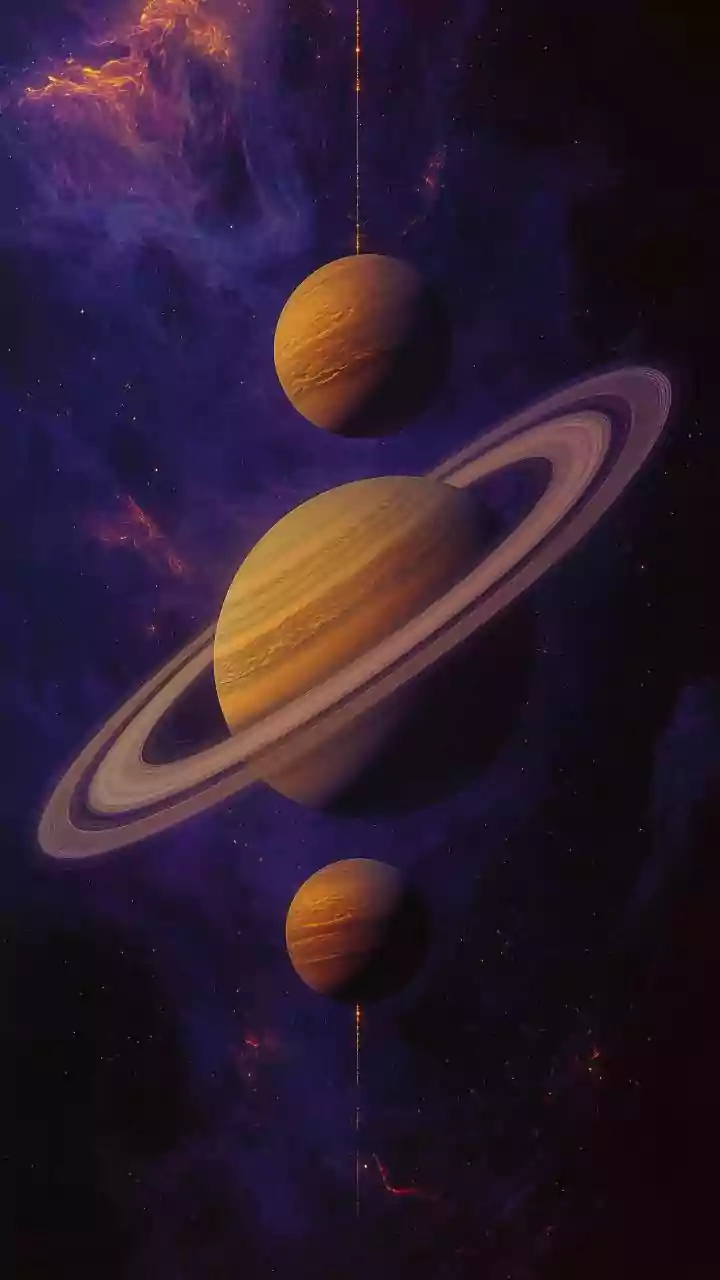
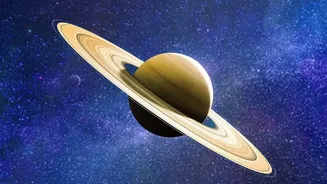
For decades, Jupiter and Saturn have been in a cosmic race for the title of the planet with the most moons. As of mid-2026, Saturn has pulled decisively ahead with a confirmed count of 293, far surpassing any other planet in our solar system. This number
isn't the result of Saturn suddenly capturing new objects; rather, it reflects incredible advances in telescope technology and dedicated observation programs that have allowed astronomers to spot and confirm dozens of tiny, faint moons that were previously invisible to us. Many of these new additions were announced in large batches, with 128 confirmed in March 2025 and more added in 2026, dramatically rewriting textbooks. The vast majority of Saturn's total orbiting mass is still contained in its largest moon, Titan, which makes up a colossal 96%. The other six large, spherical moons account for another 4%, meaning the other 286 moons—including all the recent discoveries—comprise just 0.04% of the mass.
How Do You Find a Moon?
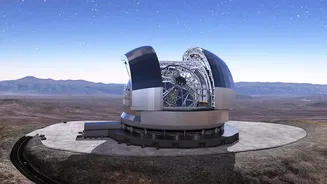
Discovering a new moon isn't as simple as pointing a telescope and seeing a new dot. Most of these recent discoveries are incredibly small and faint, some only a few kilometres in diameter. Astronomers use powerful ground-based telescopes, like the Canada-France-Hawaii Telescope and the Subaru telescope in Hawaii, to take a series of long-exposure images of the area around Saturn. They then use a technique called 'shift-and-add,' where they layer the images and shift them at the same speed a potential moon would be moving. If a faint object is consistently present and moving in a predictable path against the background stars, it becomes a candidate for a new moon. The process is painstaking, requiring sifting through vast amounts of data and sometimes re-examining archival images from missions like Cassini to find earlier traces of a newly spotted object.
From Candidate to Confirmed Moon
A sighting is just the first step. To be officially recognized, a celestial body must have its orbit fully tracked and confirmed. This is where the International Astronomical Union's (IAU) Minor Planet Center comes in. They act as the official clearinghouse for these discoveries. Once an object is identified, astronomers must observe it long enough to determine its complete orbit around the planet, proving it's gravitationally bound to Saturn and not just a passing asteroid. When first found, a moon gets a provisional name, like S/2023 S 51, which denotes its discovery year and order. Only after its orbit is confirmed does it get added to the official tally. Many of Saturn's recently confirmed moons still have these provisional designations and await permanent names, which are chosen from Gallic, Norse, and Inuit mythology.
A System of Diverse Worlds
Saturn's moons are a diverse family. They are broadly separated into two categories: regular and irregular. The 25 regular moons, which include the large, famous ones like Titan, Enceladus, and Rhea, have prograde orbits—they travel in the same direction as Saturn's rotation—and circle the planet close to its equatorial plane. These are thought to have formed from the same disk of gas and dust as Saturn itself. The other 268 moons are classified as irregular. These are much smaller, orbit much farther from the planet, and often have highly inclined, eccentric, or even retrograde orbits, meaning they circle Saturn in the opposite direction of its spin. These irregular moons are believed to be captured objects—passing asteroids or comets that were snared by Saturn's immense gravity long ago. Many of them are clustered into groups with similar orbits, suggesting they are fragments of larger moons that shattered in ancient collisions.