






Your Basic Rights Under DGCA Rules
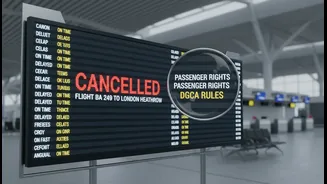
When your flight is disrupted, your primary protection comes from the Directorate General of Civil Aviation (DGCA). These rules, outlined in the Passenger Charter, are legally binding for all airlines operating in, to, and from India. They are not goodwill
gestures but obligations. For delays, while you won't get cash, airlines must provide meals and refreshments for waits over two hours. If a delay stretches to six hours or more for a domestic flight, you are entitled to choose between an alternate flight or a full refund. For overnight delays, particularly for flights scheduled between 8 p.m. and 3 a.m. that are delayed by over six hours, the airline must provide free hotel accommodation and transfers.
When Airlines Owe You Cash Compensation
In certain situations, airlines are required to provide monetary compensation. This is most common in cases of denied boarding due to overbooking and last-minute cancellations that are within the airline's control. If you are involuntarily bumped from a flight, you could be owed up to 400% of the one-way base fare, capped at ₹20,000. For flights cancelled without at least two weeks' notice, compensation ranges from ₹5,000 to ₹10,000, depending on the flight's scheduled block time. It is crucial to remember that you have the right to request this compensation as a bank transfer or cheque; you are not obligated to accept travel vouchers offered by the airline.
The Limits: Extraordinary Circumstances
Airlines are not required to pay monetary compensation when disruptions are caused by 'extraordinary circumstances' beyond their control. This is a critical loophole that often includes severe weather, air traffic control restrictions, political instability, or security risks. However, even in these force majeure events, the airline's duty of care often remains. They may still be obligated to provide refreshments, meals, and, if necessary, an alternate flight or a full refund, even if cash compensation is off the table. Airlines must be able to prove the circumstances were genuinely unforeseeable and not a result of poor planning, such as crew rostering issues.
Travel Insurance: Filling the Gaps
This is where comparing your basic rights to the benefits of travel insurance becomes essential. While DGCA rules provide a safety net, they don't cover everything. Travel insurance can cover costs that airline compensation does not, such as non-refundable hotel bookings or tour expenses you forfeit due to a delay. A good policy can offer reimbursement for additional accommodation and meals after a certain number of hours of delay, which can be more comprehensive than the airline's basic provision. Furthermore, insurance can protect your prepaid trip costs if you have to cancel your journey entirely for a covered reason, something DGCA rules do not address.
Cost vs. Benefit Analysis
The decision to buy travel insurance depends on the nature of your trip. For a low-cost, short domestic flight to visit family, relying on your basic DGCA rights might be sufficient. The potential loss is low, and the regulatory protections cover the essentials like a refund or re-booking. However, for an expensive, long-planned international holiday with multiple non-refundable bookings, the small cost of an insurance policy is a worthwhile investment. It provides a much wider safety net, covering trip interruption, lost baggage beyond the airline's limited liability, and crucial emergency medical expenses, which can be extremely high abroad.
How to Enforce Your Rights
Knowing your rights is useless if you don't know how to claim them. Always start with the airline. Approach their staff at the airport or contact their customer service immediately. If they fail to provide a satisfactory resolution, escalate the matter. The Ministry of Civil Aviation has a dedicated grievance portal called AirSewa (airsewa.gov.in) and a mobile app. You can file a detailed complaint with your PNR and supporting documents, and the airline is obligated to respond. This creates an official record and brings regulatory oversight. If you are still unsatisfied, you can approach consumer forums, which have the power to award damages beyond the DGCA's minimums.