





What Does 'Rebalancing Your Frame' Mean?
Before we get into the exercises, let's understand the problem. Our modern lives often force our bodies into asymmetrical patterns. We carry a heavy bag on the same shoulder, lean on one leg while standing, or spend hours hunched over a desk. Over time,
this causes some muscles to become overactive and tight, while their opposing muscles become weak and underused. This is a muscular imbalance. 'Rebalancing your frame' is fitness shorthand for correcting these imbalances. The goal isn't perfect symmetry, which is rare, but rather functional balance. This reduces chronic pain, lowers the risk of injury, improves posture, and helps you move with more strength and efficiency in both daily life and athletic activities.
The Unilateral Advantage
The secret to fixing these one-sided issues is to train one side at a time. This is called unilateral training. When you do a standard squat, your stronger leg can compensate for the weaker one, hiding and even worsening the imbalance. But when you do a single-leg exercise, your weaker side has nowhere to hide. It’s forced to work, catch up, and get stronger. Unilateral movements also fire up your core muscles in a unique way. Your abs and obliques have to work overtime to prevent your torso from twisting or tilting, building incredible stability from your hips to your shoulders. This core activation is crucial for maintaining a strong, balanced posture throughout the day.
Why Resistance Loop Bands Are Perfect
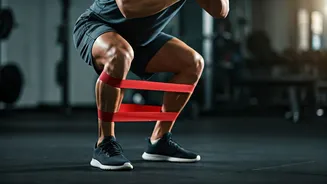
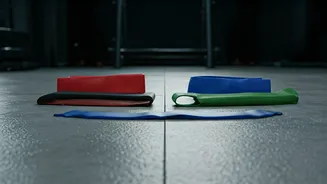
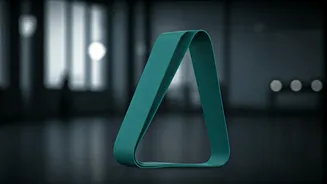
While you can do unilateral work with dumbbells or just your bodyweight, resistance loop bands are a game-changer. They are affordable, portable, and incredibly versatile. Unlike free weights, bands provide variable resistance — the more you stretch the band, the harder it gets. This constant tension is fantastic for muscle activation, particularly for the small, stabilising muscles that are often neglected. They are also gentle on the joints, making them an excellent choice for beginners, people recovering from injury, or for use as a warm-up tool before heavier lifting. The word 'effortlessly' in the headline doesn't mean you won't feel the burn; it means the tool is simple, accessible, and low-impact.
How-To: The Standing Glute Extension
This exercise targets the glutes and hamstrings, crucial for correcting the pelvic tilt caused by excessive sitting.
1. Setup: Place a loop band around both ankles. Stand tall with your feet hip-width apart, near a wall or chair for balance.
2. Engage: Shift your weight onto your left leg, keeping a slight bend in the knee. Engage your core to keep your back straight and pelvis stable.
3. Extend: Keeping your right leg straight, slowly extend it backwards, squeezing your right glute. Move only from the hip. Avoid arching your back; the movement should be controlled and not very large.
4. Hold and Return: Hold the extension for a second at the point of peak contraction, then slowly return your leg to the starting position without letting the band snap back.
5. Reps: Aim for 12-15 repetitions on one side before switching to the other. Complete 2-3 sets.
How-To: The Seated Band Abduction
This move strengthens the outer hip muscles (gluteus medius), which are vital for hip stability and preventing knee pain.
1. Setup: Sit on the edge of a sturdy chair with your feet flat on the floor. Place a loop band around both legs, positioned just above your knees.
2. Posture: Sit tall, with your back straight and core engaged.
3. Abduct: While keeping your feet planted, press your knees outwards against the resistance of the band. Focus on using your outer hip and glute muscles.
4. Hold and Return: Hold the outward press for two seconds, then slowly bring your knees back to the starting position, controlling the movement.
5. Reps: Perform 15-20 repetitions for 2-3 sets. This is a great exercise to do even during a break from work at your desk.
Making It a Consistent Habit
The key to rebalancing your body is consistency, not intensity. You don't need to spend hours in the gym. Incorporate these exercises into your routine 3-4 times a week. You can use them as part of your warm-up before a walk or a workout, or do them as a short, 10-minute 'movement snack' during your workday. Listen to your body. Start with a light-resistance band and focus on perfect form. As you get stronger, you can progress to a heavier band. The goal is to re-educate your muscles to fire correctly and work together as a cohesive unit.