








You're Only Applying It on Sunny Days
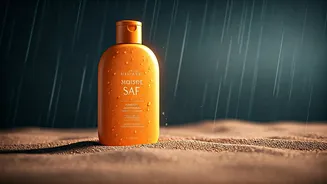
One of the most frequent mistakes is thinking that clouds offer complete protection from the sun. The reality is that up to 80% of the sun's harmful UV rays can penetrate through clouds, haze, and fog. This means your skin is still exposed to damage while
driving, sitting near a window, or just walking outside on an overcast day. In fact, some studies suggest that cloud cover can even scatter and intensify UV radiation. Making sunscreen a daily habit, just like brushing your teeth, is the most effective way to prevent cumulative sun damage, which contributes to premature ageing, dark spots, and tanning. Whether it's monsoon, winter, or a cloudy summer day, your skin needs that layer of protection.
You're Not Using Nearly Enough
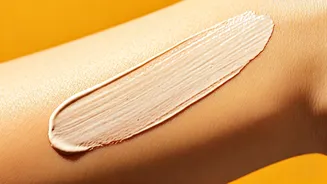
This is perhaps the biggest mistake of all. To get the level of Sun Protection Factor (SPF) advertised on the bottle, you need to apply a surprisingly generous amount. Most people only apply 25-50% of the required quantity, which dramatically reduces their protection. The official recommendation is about two milligrams of sunscreen per square centimetre of skin. In more practical terms, this translates to about a shot glass full (one ounce or 30ml) for your entire body and a nickel-sized dollop for the face alone. A simpler guide is the “two-finger rule”: squeeze two full lines of sunscreen onto your index and middle fingers to cover your face and neck.
You Apply and Immediately Go Outside
While mineral sunscreens (those with zinc oxide or titanium dioxide) offer immediate protection, most chemical sunscreens need time to be absorbed by the skin to become effective. Rushing out the door right after application means you aren't getting the full benefit of your product. To ensure you're protected from the moment you step into the sun, make it a habit to apply your sunscreen at least 15 to 20 minutes before heading outdoors. This gives the active ingredients enough time to form a protective barrier on your skin.
You're Forgetting to Reapply
Sunscreen is not a one-and-done application. Its effectiveness decreases over time as it's broken down by sunlight, and it also wears off through sweat and friction from clothing. The golden rule is to reapply your sunscreen every two hours when you are outdoors. This isn't just for beach days; it applies to any situation with prolonged sun exposure. If you're swimming or sweating heavily, you need to reapply even more frequently—ideally every 80 minutes or immediately after you towel off. Even if you're indoors but sitting near a window, a reapplication every four to six hours is recommended as UVA rays can penetrate glass.
You're Missing Crucial Spots
It's easy to cover the main areas like your cheeks, nose, and forehead, but many high-risk spots are often missed. Dermatologists frequently find sun damage on the ears, back of the neck, scalp (especially along your hair parting), eyelids, and the tops of your feet. These areas receive a lot of sun exposure but are consistently overlooked during application. Other forgotten zones include your hands (especially while driving), lips, and the back of your knees. Be meticulous with your application, ensuring you cover every bit of exposed skin. Using a lip balm with at least SPF 30 is also crucial for protecting the delicate skin on your lips.
You're Relying on Makeup with SPF
While foundation or powder with an SPF rating is a great bonus, it should not be your primary source of sun protection. The main issue is the amount of product used. To achieve the SPF number on the label, you would need to apply a very thick layer of makeup—far more than anyone typically would. Applying a thin layer provides significantly less protection than stated. The best and most reliable approach is to apply a dedicated, broad-spectrum sunscreen with an SPF of 30 or higher as the final step of your skincare routine, wait for it to absorb, and then apply your makeup on top.