



An Architecture That Breathes
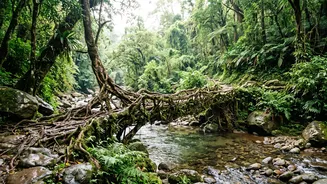
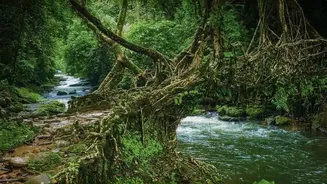
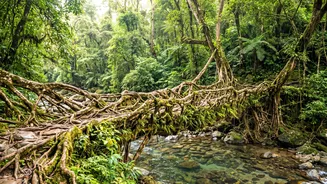
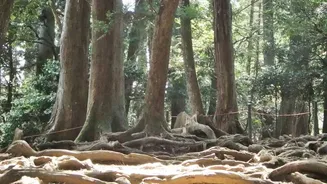
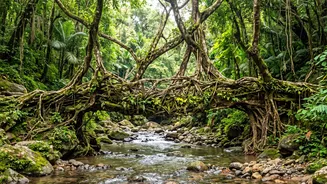
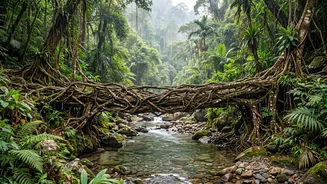
Forget concrete and steel; these bridges are alive. For centuries, the Khasi and Jaintia tribes have guided the aerial roots of rubber fig trees (Ficus elastica) across rivers, patiently weaving them into sturdy, functional crossings that grow stronger
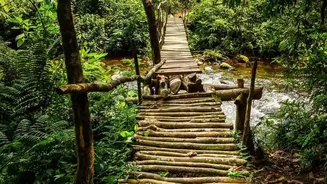
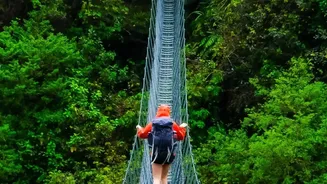
with time. Some of these bio-engineered marvels are hundreds of years old, capable of supporting dozens of people at once. This is more than just a photo opportunity; it’s a living testament to sustainable harmony between humans and nature. The journey to see them involves descending into lush valleys, crossing swaying suspension bridges, and hearing the constant buzz of the forest, making the entire experience an adventure in itself.
The Legendary Nongriat Trek
The most famous of these hikes leads to Nongriat village, home to the iconic Umshiang Double-Decker Root Bridge. The trek begins from Tyrna village and is not for the faint of heart, involving a descent of over 3,500 stone steps. It's a physically demanding journey that tests your endurance, especially on the steep climb back up. But the reward is immense. Along the way, you pass smaller villages, another single root bridge, and natural pools with crystal-clear water. Reaching the magnificent two-tiered bridge and taking a dip in the cool water below is a moment of pure magic that makes every step worthwhile.
The Backpacker's Value Proposition
This is where the "unmatched value" comes in. While the experience feels priceless, the actual cost is remarkably low. The main entry fee to the Nongriat bridge area is nominal, often around ₹20-₹50 per person. The real savings come from the accommodation. Villages like Nongriat offer basic but clean homestays, with dormitory beds sometimes costing as little as ₹300 per night. Simple, home-cooked Khasi meals are also incredibly affordable, often priced around ₹50-₹150. When you compare this to commercialized tourist destinations, the value is clear: you get a world-class trekking experience, cultural immersion, and stunning natural beauty for a fraction of the cost.
Staying in a Khasi Homestay
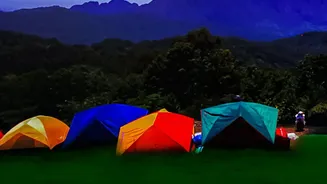
Opting to stay overnight in Nongriat transforms the trip from a challenging day hike into a deeply immersive cultural experience. It allows you to explore at a slower pace, perhaps trekking further to the stunning Rainbow Falls. More importantly, it provides a window into the local way of life. Sharing meals with a Khasi family, listening to their stories, and experiencing the quiet rhythm of village life is an invaluable part of the journey. These homestays are simple, often with shared bathrooms and basic amenities, but they offer a genuine connection that no luxury hotel can replicate.
How to Plan Your Budget Trek
The best time to visit is from October to April, when the weather is drier and the paths are less slippery. Pack light but smart: you'll need sturdy shoes with good grip, a raincoat for sudden showers, a power bank, a water bottle, and enough cash for your stay, as there are no ATMs in the villages. While the trail to Nongriat is well-marked, hiring a local guide is inexpensive and recommended, especially if you plan to explore less-trodden paths. For those seeking less crowded alternatives, other root bridges exist near villages like Riwai, Rangthylliang, and Pynursla, each offering a unique adventure.