






What Exactly Are Micro-Movements?
Micro-movements are small, gentle, and intentional physical actions you can do right at your desk without breaking a sweat. Unlike a formal exercise break, these movements take only 15 to 60 seconds and are designed to be integrated seamlessly into your workflow.
The human body isn't designed for static positions; prolonged sitting can slow circulation, tighten muscles, and stiffen joints. By frequently shifting your posture, stretching, or activating muscles, you counteract the negative effects of a sedentary work style, preventing the slow creep of stiffness and pain.
Release Your Neck and Shoulders
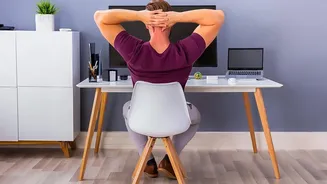
Neck and shoulder tension is a hallmark of desk work, often caused by hunching or craning towards a screen. Simple movements can provide immediate relief. Try chin tucks: sit tall and gently pull your chin straight back as if creating a double chin, holding for a few seconds. This helps align your ears over your shoulders. Follow this with shoulder rolls, lifting your shoulders toward your ears, then rolling them back and down in a circular motion. Finally, perform a gentle neck stretch by slowly tilting your right ear toward your right shoulder, holding for 20-30 seconds before switching to the left side.
Activate Your Spine and Hips
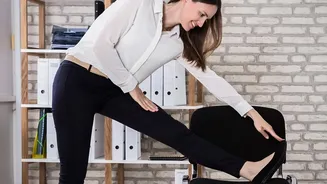
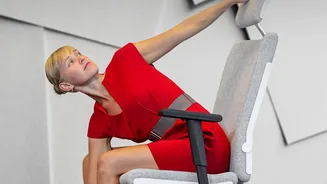
Sitting for hours puts constant pressure on the spine and causes hip flexor muscles to shorten and tighten. To combat this, perform seated spinal twists. Sit tall at the edge of your chair, place your right hand on your left knee, and gently twist your torso to the left, holding the stretch. This mobilises the lower back. Another excellent exercise is the glute bridge, which can be done during a standing break, or a simple glute squeeze while seated to 'wake up' the muscles that support your spine. Pelvic tilts—gently rocking your hips forward and back while seated—also help to lubricate the joints in your lower back.
Combat Digital Eye Strain with a Simple Rule
Staring at a screen for hours can lead to digital eye strain, also known as Computer Vision Syndrome, with symptoms like blurred vision, headaches, and dry eyes. The most recommended strategy to combat this is the 20-20-20 rule. The concept is straightforward: every 20 minutes, take a 20-second break to look at something at least 20 feet away. This simple action allows the focusing muscles in your eyes to relax, reducing fatigue. It's also important to remember to blink often, as we tend to blink less when focused on a screen, which leads to dryness and irritation.
Putting It All Into Practice
The key to success with micro-movements is consistency. It's about making movement a regular part of your workday, not just something you do when you already feel stiff. Set a timer or use an app to remind yourself to take a short break every 30 to 60 minutes. Link movements to existing habits; for example, do a set of shoulder rolls after every phone call or stand up for a spinal stretch every time you send a long email. Even standing up for just two minutes every hour can improve blood flow and cognitive function. The goal is to break up long periods of stillness frequently.