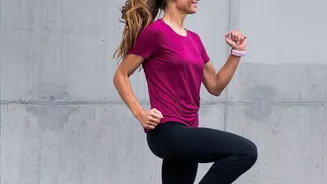









The Golden Rule: Always Test for Movement
The single most important step when buying new apparel is to move around in it. Before you head to the checkout counter, perform a few simple actions. Can you sit down without the waistband digging in or buttons pulling?. Raise your arms—does the shirt
ride up excessively? Bend your knees as if you’re picking something up; do your trousers feel restrictive?. For any garment, you should be able to pinch about an inch of fabric on each side for a comfortable yet tailored fit. This isn't about finding baggy clothes, but rather ensuring the cut allows for a natural range of motion without constant adjusting. A garment that fights your movement is a garment you’ll grow to dislike.
Fabric Is Your Foundation for Comfort
The material of your clothing is just as critical as its size, especially in India’s varied climate. For daily wear in hot and humid conditions, natural fibres are your best friends. Cotton, linen, and lightweight mulmul are prized for their breathability, allowing air to circulate and heat to escape. They absorb moisture, keeping you feeling drier and more comfortable. For activewear or during monsoons, look for fabrics with moisture-wicking properties, like polyester or nylon blends. These materials pull sweat away from your skin to the fabric's outer layer, where it can evaporate quickly. Many modern garments also incorporate a small amount of stretch with fibres like spandex or elastane, which provides flexibility for a full range of motion whether you’re in a yoga class or reaching for a file at the office.
Decoding Fit for Everyday Wear
For the clothes you wear most often, like office shirts, kurtas, and trousers, specific fit points are key. For tops and kurtas, check the shoulder seams; they should sit squarely on the edge of your shoulders, not droop down your arm or pull towards your neck. There should be no gaping or pulling across the chest buttons. For trousers and jeans, the rise is crucial. Whether high, mid, or low-rise, the waistband should sit comfortably without creating a gap at the back when you sit down. For traditional Indian wear, the same principles apply. A well-fitting kurta won't be restrictive across the back and shoulders, and a saree blouse should allow you to lift your arms without discomfort.
The Sole Story: Acing Your Shoe Fit
Poorly fitting shoes can ruin your day faster than almost anything else. When testing shoes, look beyond the size. A good walking shoe should only bend at the ball of the foot, where your foot naturally flexes. If it can be bent in half easily, it lacks proper support. Similarly, a shoe that twists easily from side to side is too flimsy and won't provide stability. Look for a firm heel counter—the part that cups your heel—to prevent your foot from moving excessively. Always shop for shoes in the afternoon, when your feet are naturally slightly larger. Ensure there's a thumb's width of space between your longest toe and the end of the shoe. Most importantly, walk around on a hard surface, not just a carpeted area, to get a true feel for the cushioning and support.