




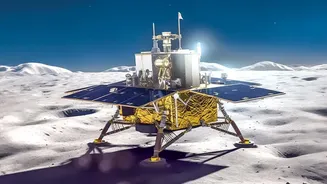
The Next Frontier: A Sample Return
Chandrayaan-4 represents a monumental leap in complexity and ambition for India's space program. While Chandrayaan-3 proved India could successfully land a craft on the challenging south pole of the Moon, its successor is designed to perform a round trip.
The primary objective is to land, collect several kilograms of lunar soil and rock—specifically from regions believed to hold water ice—and return them to Earth for study. If successful, India would join an exclusive club of nations—the United States, the former Soviet Union, and China—that have accomplished this feat. More significantly, it would be the first mission to specifically target and return samples from the resource-rich south polar region.
Why Lunar Ice is the Ultimate Prize
The focus on lunar ice is strategic. Water is one of the most critical resources for future space exploration. It can be purified for astronauts to drink, its oxygen can be used for breathable air, and it can be split into hydrogen and oxygen—the primary components of rocket fuel. Bringing back pristine samples of this ice will allow scientists on Earth to use advanced laboratory equipment to study its composition, quantity, and accessibility in ways a rover never could. These samples, still holding clues from the early solar system, could unlock secrets about the Moon's history and provide a definitive roadmap for establishing a sustainable human presence beyond Earth. The mission is a foundational step towards India's long-term goal of landing an astronaut on the Moon by 2040.
An Ambitious Two-Launch Plan
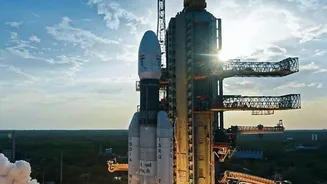
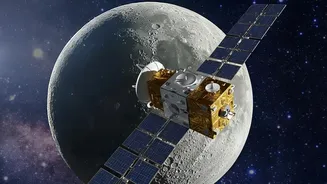
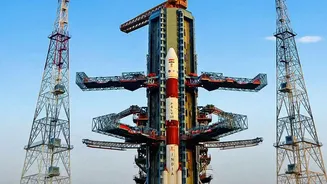
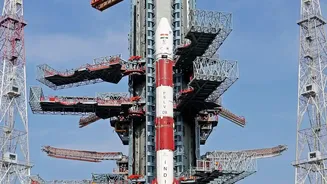
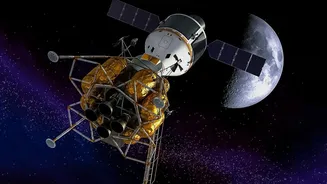
Chandrayaan-4 is so complex it cannot be launched by a single rocket. ISRO has devised a novel mission architecture that requires two separate launches using its heaviest rocket, the LVM-3. The mission is comprised of five distinct modules: a propulsion module, a descender (lander), an ascender, a transfer module, and a re-entry module. The first rocket will launch some of the modules, while the second will carry the rest. These components will then need to perform a series of autonomous docking manoeuvres in space—a critical capability ISRO has been testing with its SPADEX (Space Docking Experiment) mission. This multi-launch, in-orbit assembly approach is a first for ISRO and showcases a significant jump in technical capability.
The Intricate Dance in Lunar Orbit
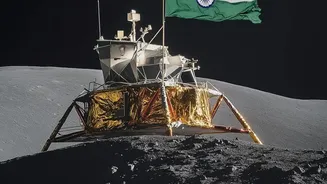
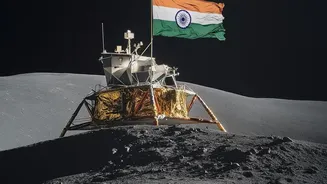
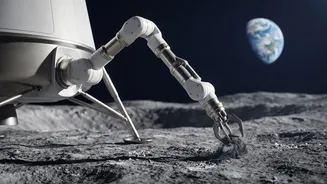
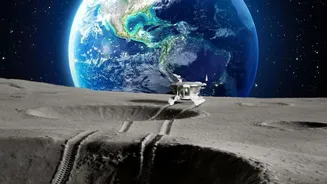
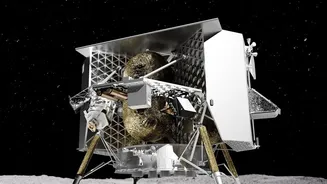
Once the components reach the Moon, the mission becomes an intricate ballet of robotics and rocketry. The lander will touch down on a pre-selected site near the south pole, an area known as Mons Mouton. A robotic arm will then collect the samples and transfer them to the ascender module. This ascender will then perform another first for India: launching from the lunar surface back into orbit. In orbit, it must autonomously rendezvous and dock with the waiting transfer module. The samples will be transferred once more, this time into the re-entry module for the final journey back to Earth. Each step—from the landing to the lunar launch and orbital docking—is a high-stakes manoeuvre that must be executed flawlessly.
The Road to 2028
While the designs have been finalized and the mission has received government approval, bringing a piece of the Moon to Earth takes time. ISRO Chairman S. Somanath and other officials have indicated a target launch date around 2028. This timeline allows for the rigorous development and testing of the new technologies required, particularly for the automated docking and lunar ascent phases. The mission is not just a scientific endeavour; it is a crucial technology demonstrator for India's future ambitions, including the planned Bharatiya Antariksha Station (Indian Space Station) by 2035 and crewed missions to the Moon. As development continues, Chandrayaan-4 stands as a testament to India's commitment to pushing the boundaries of space exploration.