




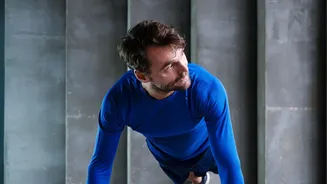
The Zero-Gear Philosophy
The idea that you need a gym membership or expensive machinery to get in shape is one of modern fitness's biggest myths. Calisthenics, or bodyweight training, is a highly effective method for building functional strength, improving muscle tone, and boosting
your metabolism. The benefits go beyond just convenience; because these exercises often involve compound movements, they engage multiple muscle groups at once. This means you're not just strengthening your chest and arms with a push-up, but also engaging your core for stability, leading to a more holistic and efficient workout. This approach is perfect for small spaces because your workout area only needs to be as big as you are.
Your Foundational Full-Body Moves
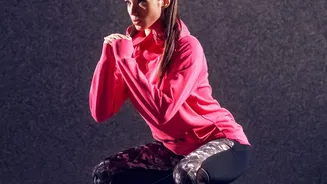
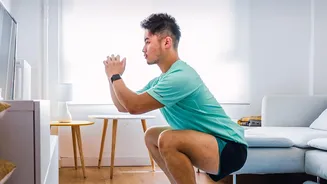
A powerful routine is built on a few core movements that target the entire body. Mastering these is your first step. Start with Bodyweight Squats, standing with feet shoulder-width apart and lowering your hips as if sitting in a chair. Add Push-Ups for upper body strength; if a standard push-up is too hard, start with your knees on the floor or by placing your hands on an elevated surface. Lunges are excellent for targeting each leg individually, improving balance and hitting your glutes and hamstrings. Finally, the Plank is a champion for core stability; hold a straight line from your head to your heels, engaging your abs to prevent your hips from sagging.
Cardio Without the Machine
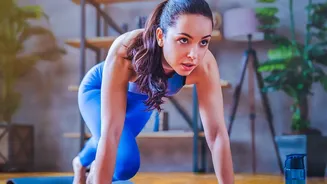
You don't need a treadmill to get your heart rate up. High-Intensity Interval Training (HIIT) is a method that involves short bursts of intense exercise followed by brief rest periods, and it's perfectly suited for bodyweight workouts. Exercises like High Knees, Jumping Jacks, Burpees, and Mountain Climbers can be done in place and will elevate your heart rate effectively. Even a 'quiet' burpee, where you step back instead of jumping, can provide a great cardiovascular challenge without disturbing your neighbours. A simple HIIT circuit could involve 40 seconds of an exercise followed by 20 seconds of rest, repeated with different moves.
Putting It All Together: A Sample Circuit
Creating your workout is simple. Combine exercises from each category into a circuit. This ensures you're getting a full-body workout. For example, you could perform one set of each of the following exercises back-to-back with minimal rest: - 10-15 Bodyweight Squats - 10 Push-Ups (at your level) - 20 Alternating Lunges (10 per leg) - 30-second Plank - 30 seconds of High Knees After completing all five exercises, rest for 60-90 seconds. That’s one round. Aim to complete 3 to 4 rounds for a complete and challenging workout that can be done in under 30 minutes.
The Key to Maximum Results: Progressive Overload
To keep seeing results and avoid hitting a plateau, you must continually challenge your body. This principle is called progressive overload. In a gym, this usually means adding more weight. At home, you can achieve it in several ways. You can increase the number of repetitions or sets you perform. You can decrease your rest time between sets to increase the intensity. Another effective method is to slow down the tempo of an exercise, which increases the time your muscles are under tension. Finally, you can progress to more difficult variations of an exercise, such as moving from a standard squat to a single-leg squat or from a regular push-up to a decline push-up.