




A Paradox of Ice and Drought
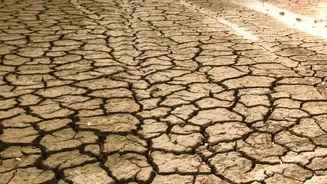
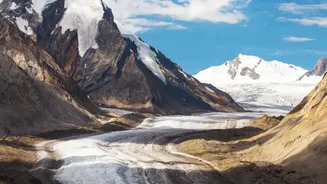
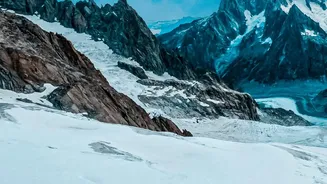
Ladakh is a land of extremes. With annual rainfall often less than 50 millimetres, its communities have for centuries depended on a single, vital source of water: the seasonal melting of Himalayan glaciers. This meltwater feeds the streams that irrigate
barley and vegetable fields, the backbone of the local agricultural economy. However, climate change is disrupting this ancient rhythm. Glaciers are receding at an alarming rate, and winter snowfall has become unpredictable. The result is a cruel timing mismatch: much of the winter snow and ice melts too early, in February and March, and the water rushes away before the crucial sowing season begins in April and May. By the time farmers need water most, the streams run dry, creating a seasonal drought in a land surrounded by frozen reserves.
An Engineer's Simple, Brilliant Idea
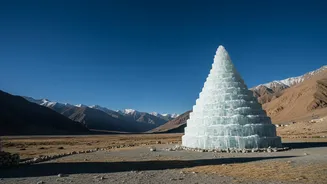
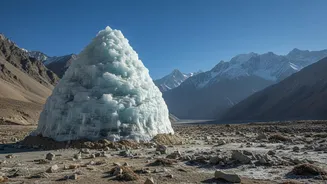
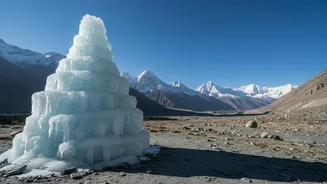
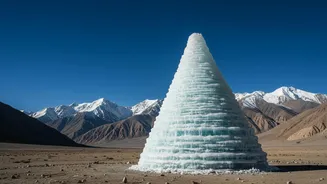
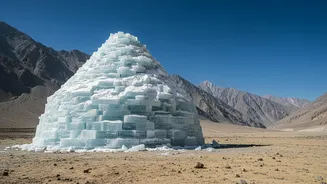
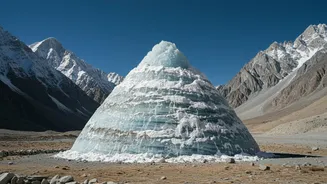
The solution came from local engineer and innovator Sonam Wangchuk. The inspiration was born from a simple observation in late spring: a patch of ice that had survived under a bridge, shielded from the direct sun, long after other ice had melted. Wangchuk realised that the key to preserving frozen water into the spring was not just shade, but shape. He reasoned that while providing shade for a massive, horizontal ice field was impractical, a vertical, conical shape would naturally minimise the surface area exposed to the sun for a given volume of water. He named these artificial glaciers "ice stupas" for their resemblance to the traditional Buddhist monuments that are sacred in Ladakh.
How to Build an Artificial Glacier
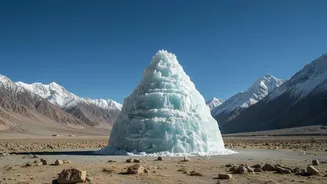
The engineering behind an ice stupa is remarkably simple and requires no electricity or pumps. In the autumn, a network of underground pipes is laid, connecting a water source at a higher altitude to a village downstream. During the harsh winter, when temperatures plummet far below freezing, a valve is opened. Gravity pushes the water through the pipe and out of a vertical sprinkler in the designated location. As the water is sprayed into the frigid air, it freezes instantly, falling and accumulating around a basic frame. Layer by layer, a massive cone of ice builds up over the winter months, capable of storing millions of litres of water that would have otherwise flowed away unused.
Releasing Water When It's Needed Most
The genius of the conical shape is fully revealed when spring arrives. Because its vertical structure exposes minimal surface area to the high-altitude sun, the ice stupa melts very slowly. Unlike natural glacial melt that arrives too late, the ice stupa begins to release its stored water in April and May, precisely when farmers need it to sow their crops. The first prototype, built in 2014, stored 150,000 litres of water and lasted until well into the summer, proving the concept's viability. During one inauguration project, meltwater from a stupa was used to plant over 5,000 saplings, turning a barren patch of desert green and demonstrating the immediate impact on the local ecology.
A Grassroots Solution with Global Potential
Since the first successful prototypes, the ice stupa project has expanded across Ladakh, with dozens of villages building their own artificial glaciers. The initiative is a powerful example of a community-led, nature-based solution. It's low-cost, relies on gravity, and engages villagers directly in solving their own water problems. The success in Ladakh has gained international attention, with similar projects being tested in other mountainous regions facing glacial retreat, including Switzerland and Chile. The ice stupas are more than just a clever water storage system; they have become symbols of climate adaptation and a testament to how local ingenuity can provide powerful answers to some of the world's most pressing environmental challenges.