




With light pollution obscuring the cosmos for most city dwellers, the desire to witness a truly star-filled sky has never been greater. India, with its diverse and remote landscapes, offers some of the most spectacular celestial views on the planet.
Decoding the Moonlight
A
common mistake for budding stargazers is planning a trip during a full moon. While beautiful, bright moonlight washes out the fainter stars and the Milky Way, much like city lights. The key is to plan your trip around the moonlight, specifically during the new moon phase. This is when the moon is not visible in the sky, leaving it at its darkest and allowing millions of stars to shine through. A week-long window around the new moon provides the best viewing opportunities. Check a lunar calendar when setting your dates.
Hanle, Ladakh: India's Premier Dark Sky Reserve
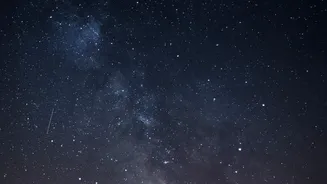
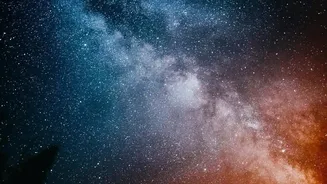
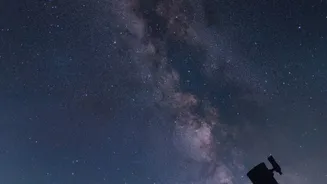
For the ultimate stargazing experience, look no further than Hanle in Ladakh. In 2022, it was officially designated as India's first Dark Sky Reserve, a protected area where light pollution is actively controlled to preserve the pristine night sky. Situated at an altitude of over 4,500 metres, the thin, dry air offers exceptionally clear views. Hanle is also home to the Indian Astronomical Observatory, one of the highest in the world. On a moonless night here, the Milky Way is so bright it can be seen with the naked eye, along with countless constellations and even the Andromeda Galaxy.
Spiti Valley, Himachal Pradesh: A High-Altitude Desert
Spiti Valley is another high-altitude cold desert that boasts some of the darkest skies in the country. Its remote location, minimal rainfall, and high elevation create perfect conditions for stargazing. Villages like Kaza, Kibber, and Langza serve as excellent bases for night-sky viewing. The iconic Buddha statue at Langza, silhouetted against the galactic core, is a bucket-list shot for astrophotographers. The best time to visit for clear skies is between May and October, aligning with the new moon for the darkest nights.
Rann of Kutch, Gujarat: Stars Over a Salt Desert
Imagine a vast, flat, white salt desert stretching to the horizon under a blanket of stars. This surreal experience awaits at the Rann of Kutch. Far from major cities, its skies are incredibly dark, providing an unobstructed 180ndegree view of the cosmos. The best time to visit is during the winter months, from November to February, which coincides with the Rann Utsav festival. The dry winter air enhances clarity, making it possible to see the Milky Way arching across the sky. You can choose between a moonless night for the stars or a full_moon night to see the salt flats glow.
Coorg, Karnataka: Celestial Views from the South
For those in South India, Coorg in Karnataka offers a surprisingly dark retreat. While not as dark as the Himalayan destinations, the southern valleys near the Brahmagiri foothills are remote enough to offer stunning views. Areas around Srimangala and Theralu are rated Bortle 2, meaning the Milky Way's dust lanes are visible to the naked eye. The clear_sky season runs from November to May. For your best chance to see the Milky Way's core, plan your trip between February and May, when it is visible in the southern Indian sky.
Your Stargazing Trip Essentials
To make the most of your celestial adventure, packing the right gear is crucial. Start with any basics : warm clothing in layers , as even summer nights get cold at high altitudes . A red light torch is a must have ; it illuminates your surroundings without ruining your night vision , which takes about 20 - 30 minutes to fully adjust to the dark . Binoculars are a fantastic tool for beginners , often better than a telescope for scanning wide star fields . Finally , download a stargazing app like SkyView or Stellarium on your phone before you go ; it will help you identify constellations and planets in real time .