







What Exactly Is El Niño?
El Niño is the warm phase of a larger phenomenon called the El Niño-Southern Oscillation (ENSO). Think of it as a large-scale warming of the surface waters in the central and eastern tropical Pacific Ocean. This isn't just a minor temperature shift; it's
a significant change that can last for months and disrupt weather patterns across the globe. Normally, strong trade winds blow from east to west across the Pacific, pushing warm surface water towards Asia and Australia. During an El Niño event, these trade winds weaken, allowing the warm water to slosh back towards the Americas. This change in ocean temperature might seem distant, but it sets off a chain reaction in the atmosphere that has profound consequences for India.
The Pacific's Ripple Effect on the Monsoon
The Indian monsoon is essentially a massive sea breeze, driven by the temperature difference between the Indian subcontinent and the surrounding ocean. A strong El Niño alters this delicate balance. The warming of the eastern Pacific Ocean creates a zone of rising warm, moist air far from India. This changes the atmospheric circulation patterns that typically bring moisture-laden winds to the subcontinent. The result is often increased subsidence, or sinking air, over India, which suppresses cloud formation and rainfall. Consequently, El Niño years are strongly associated with weaker monsoon winds and below-average rainfall. According to a Press Information Bureau release, the El Niño conditions that developed in June 2026 intensified and acted as a major factor in suppressing monsoon circulation.
It's Not a Simple One-to-One Equation
While a strong El Niño increases the probability of a weak monsoon, it isn't a guaranteed outcome. Other climate factors can either worsen or counteract its effects. The most significant of these is the Indian Ocean Dipole (IOD), sometimes called the Indian Niño. The IOD is a similar oscillation of sea surface temperatures, but it occurs within the Indian Ocean. A 'positive' IOD phase, with warmer-than-average waters in the western Indian Ocean, can help boost monsoon rainfall and sometimes offset the drying effect of an El Niño. Conversely, a 'negative' IOD can exacerbate drought conditions. For the 2026 season, while El Niño is a major concern, private forecaster Skymet has noted that uncertainty surrounding the development of a positive IOD is a key variable to watch. Therefore, forecasters must weigh the influence of both the Pacific and Indian Oceans.
The Real-World Stakes for India
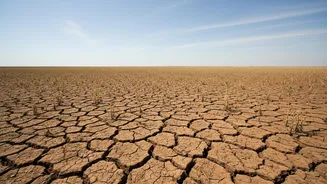
The monsoon's performance has a direct and immediate impact on the lives of millions. The farm sector, which employs nearly half of India's population, is heavily dependent on the roughly 70% of annual rainfall the monsoon provides. A weak monsoon, as has been forecast for parts of the 2026 season, can lead to reduced crop yields, lower farm incomes, and increased distress in rural areas. This has a domino effect on the wider economy. Lower rural incomes weaken demand for goods like tractors, two-wheelers, and other consumer products. Furthermore, poor agricultural output can lead to food shortages and drive up inflation, affecting household budgets across the country. A deficient monsoon can also strain water resources for drinking and reduce generation at hydroelectric power plants, impacting industries.