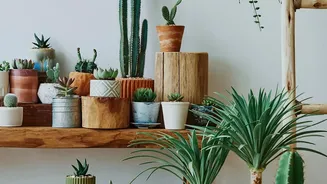




As winter settles in, have you noticed your once-compact succulents looking a bit… leggy? This common problem, known as etiolation, happens when plants stretch for light. Luckily, a simple shift in location might be all you need to fix it.
Understanding Why Succulents Stretch
That long, stretched-out
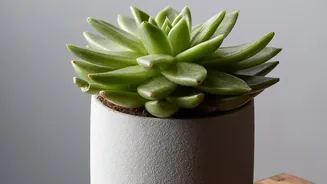
look on your succulent has a name: etiolation. It's a plant's desperate attempt to find more light. When succulents don't get enough sunlight, they divert their energy into growing taller, faster, hoping to reach a brighter spot. This results in a lanky stem with leaves that are smaller and more spaced out than usual. The plant may also look pale or lose its vibrant colours, as chlorophyll production slows down in low light. This is especially common in winter when daylight hours are shorter and the sun's intensity is much lower. While not immediately harmful, etiolation weakens the plant and ruins its compact, rosette shape permanently; once a stem has stretched, it won't shrink back.
The Winter Light Problem
Succulents are sun-lovers, typically evolving in environments with abundant, direct light. Most varieties need at least six hours of bright light daily to maintain their shape and colour. During winter, this becomes a major challenge, even for plants kept indoors. The sun hangs lower in the sky, its rays are less powerful, and the days are significantly shorter. A spot that was perfectly sunny in the summer might receive only a few hours of weak, indirect light in the winter. This light deficit tricks the plant into thinking it needs to grow taller to find the sun, triggering the stretching process. Without enough light, the plant's growth engine is still running, but it's fueled by desperation, not proper energy.
The Magic of a Bright Balcony Corner
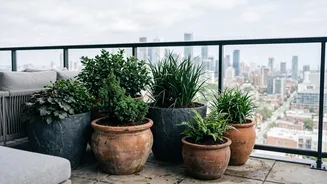
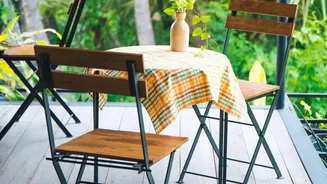
So, where is the best place to find that precious winter light? The answer might be a bright corner of your balcony. Balconies, especially those facing south or west, are prime real estate for sun-hungry plants. A corner spot offers a unique advantage: it can capture and reflect light from multiple directions. Light bouncing off two adjacent walls and the floor can create a micro-environment that is significantly brighter than a more exposed spot. This concentrated light helps satisfy your succulent's needs, telling it to stay put rather than stretch. Furthermore, a corner can offer some protection from harsh winter winds and excessive rain, which can be just as damaging as the cold, especially if the soil stays wet.
Finding Your Balcony's Sweet Spot
To find the perfect winter home for your succulents, become an observer of your own space. Take note of how the sun moves across your balcony throughout the day. You're looking for the location that gets the longest period of direct or very bright, indirect light. Remember to rotate your pots every week or so. This ensures all sides of the plant get access to the light, preventing it from leaning in one direction. If you live in an apartment where natural light is extremely limited, don't despair. You can supplement with a grow light to provide the necessary intensity and duration, typically for 10–12 hours a day, to keep your plants happy and compact.
While maximizing light is the most important step in preventing etiolation, it works best in combination with proper winter care. Most succulents enter a dormant period in the winter, meaning their growth slows down dramatically. Because they aren't actively growing, their need for water plummets. Overwatering is one of the fastest ways to kill a succulent in winter, leading to root rot. Allow the soil to dry out completely and then wait even longer before watering again—perhaps only once every four to six weeks. Reducing water slows the plant's growth, which further discourages stretching. Also, keep plants away from both cold drafts and direct heat sources like radiators, as stable, cool temperatures help encourage healthy dormancy.