


Tired of city lights washing out the cosmos? In the high-altitude deserts and remote mountain valleys of India, the universe puts on a nightly spectacle. Here, thin air and near-zero light pollution reveal a sky you have to see to believe.
Hanle, Ladakh: India's Dark Sky Reserve
Tucked away
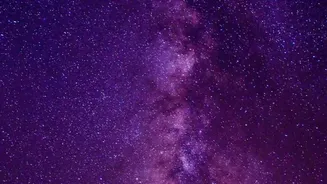
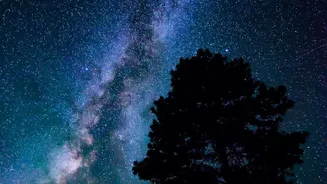
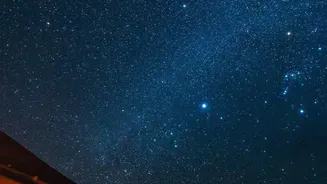
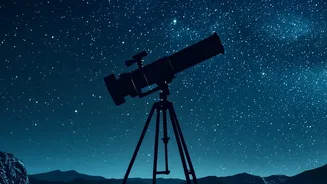
in a remote corner of Ladakh, Hanle is officially recognized as India's first Dark Sky Reserve. Sitting at a staggering altitude of 4,500 meters, this cold desert is home to the Indian Astronomical Observatory, one of the world's highest. The combination of extreme altitude, dry air, and isolation from urban centers creates exceptionally transparent skies, making it Asia's premier stargazing destination. On a clear, moonless night, the Milky Way is so brilliant it appears to have texture, and constellations pop with cinematic clarity. Local communities even have trained 'Astronomy Ambassadors' to guide visitors. For the ultimate experience, plan your trip around a new moon between May and September.
Spiti Valley, Himachal Pradesh: A High-Altitude Desert Gem
Often called a 'world within a world,' Spiti Valley is a cold desert mountain valley in the Himalayas renowned for its stark landscapes and ancient Buddhist monasteries. Its high altitude (most villages are above 3,800 meters) and location in a rain-shadow region mean it has minimal cloud cover and incredibly dry air, perfect for astronomy. Villages like Kaza, Kibber, and Langza offer some of the darkest, most accessible skies in the country. Here, the experience is raw and profound; you can stand beside a centuries-old monastery and watch the galaxy arc overhead in near-total silence. The best viewing season is from June to October when the roads are open and the sky is consistently clear.
Pangong Tso, Ladakh: Stars Mirrored on Water
Famous for its otherworldly blue waters that stretch to the horizon, Pangong Tso (Pangong Lake) transforms into a celestial theater after dark. At an altitude of about 4,350 meters, the high-altitude lake is far from any significant light pollution. The thin, dry atmosphere results in a crystal-clear view of the cosmos. What makes this spot truly magical is the opportunity to see the star-dusted sky reflected in the lake's placid surface, doubling the spectacle. To witness this, you must stay overnight, as most day-trippers leave before sunset. Campsites and homestays in nearby villages like Spangmik or Maan offer a frontrow seat.