







A Chilling New Threat
In October and November of 2026, hundreds of supermarkets across at least ten European countries, including France, Sweden, Belgium, and Ireland, fell victim to an unusual form of cyberattack. Instead of stealing customer data or demanding a typical ransomware
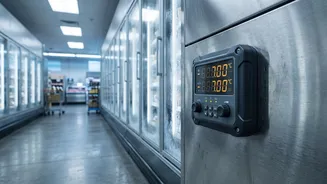
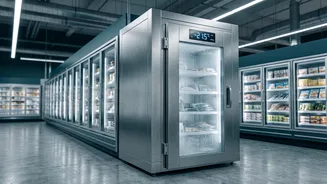
payment, the attackers targeted the stores' operational technology (OT)—specifically, the computerised systems that control refrigerators and freezers. Attackers remotely gained access and manipulated the settings, in some cases cranking freezer temperatures up to 50°C. The coordinated strikes forced grocery chains like Carrefour, Intermarché, and Coop to dispose of vast quantities of spoiled meat, dairy, and frozen goods, leading to millions of euros in losses and raising serious questions about food supply chain security.
The Real Weakness: Operational Technology
These incidents highlight a critical, often-overlooked vulnerability that extends far beyond grocery stores. The technology at the heart of the attacks is not the standard IT network that handles emails and sales data. Instead, it is Operational Technology, the hardware and software that monitors and controls physical processes and industrial equipment. Think of the systems that manage a building's HVAC, a factory's assembly line, or a power grid's distribution. In the supermarket attacks, hackers targeted the internet-connected controllers that allow technicians to remotely manage refrigeration units. Many of these systems are installed by third-party contractors and often exist in a grey area of responsibility, caught between facilities management and the IT department.
An Open Door Left by Neglect
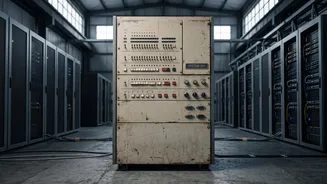
The attackers did not need sophisticated malware; they simply walked through an open digital door. Investigations revealed that many of the compromised refrigeration controllers were older models that no longer received security updates from their manufacturers, such as Danfoss and Copeland. Worse, many were left exposed on the public internet and still used weak or default login credentials. In some cases, the password was as simple as the current date. The manufacturer, Danfoss, had even issued security alerts about these vulnerabilities more than a year before the major attacks occurred. This points to the core issue: a fundamental failure of maintenance. The 'if it ain't broke, don't fix it' mentality, common in operational settings, has become a massive security risk in a connected world.
The High Cost of Poor Maintenance
The consequences of neglecting software and system upkeep are no longer just about slow computers or minor glitches. As the European supermarket incidents show, they can lead to direct physical damage, significant financial loss, and public safety risks. When critical software isn't patched, or hardware isn't updated, it becomes a sitting duck for cybercriminals who actively scan the internet for these known weaknesses. The problem is pervasive across industries that rely on long-lived industrial systems, from manufacturing and logistics to healthcare and energy. These attacks serve as a stark warning that the digital and physical worlds are now inseparable. The security of our food supply, electricity, and other essential services depends on the diligent maintenance of the software that runs them.