





A Fiery Trail from Halley's Comet
Before you set your alarm for the middle of the night, it helps to know what you are looking for. The Orionid meteor shower is an annual celestial event that occurs when Earth passes through the stream of debris left behind by Comet 1P/Halley, the most
famous of all comets. While Halley's Comet itself only visits the inner solar system every 76 years, we get to see tiny pieces of it burn up in our atmosphere every October. These particles, many no larger than a grain of sand, slam into our atmosphere at an incredible speed of about 66 kilometres per second. This extreme velocity is what makes the Orionids so special; they are known for being bright and fast, often leaving glowing trails or 'trains' that can last for several seconds. For a brief moment, you are witnessing the fiery end of a piece of an ancient cosmic wanderer.
Mark Your Calendar: Key 2026 Dates
The Orionid meteor shower is active for a long stretch, from early October through early November. However, there is a specific window when the show is at its best. For 2026, the peak activity is expected on the night of Monday, October 21, and into the early morning hours of Tuesday, October 22. This is when Earth plows through the densest part of the debris stream, maximizing your chances of seeing shooting stars. In perfect conditions, with no light pollution and clear skies, you might see up to 20 meteors per hour. While the peak offers the highest concentration, you can still spot a few Orionids on the nights leading up to and following October 21-22, so it's worth looking up if you have clear skies anytime during that week.
The Challenge: A Bright Moon
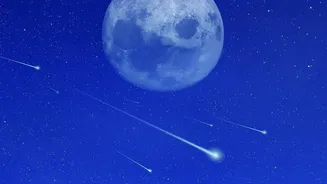
Unfortunately, sky-gazers face a significant challenge in 2026: a bright moon. The peak of the shower coincides with the Last Quarter Moon. This means the moon will rise around midnight and its light will illuminate the night sky during the prime viewing hours before dawn. This lunar glare acts like natural light pollution, washing out the fainter meteors and making them much harder to see. This reduces the number of visible meteors significantly from the theoretical maximum. However, all is not lost. The Orionids are known for producing exceptionally bright meteors, known as fireballs, that can still punch through the moonlight. Your best bet is to be patient and focus on darker patches of the sky, perhaps using a tree or building to block the direct light from the moon.
How to Find the Meteors
The shower gets its name from the constellation Orion the Hunter, as the meteors appear to radiate from a point near it. For viewers in India, Orion will be in the eastern sky after midnight, climbing higher as the night progresses towards dawn. To locate it, look for the three bright stars that form Orion's belt. While the meteors originate from this 'radiant point', they can appear anywhere and everywhere in the sky. In fact, the meteors with the longest and most spectacular trails will often be seen far from the radiant itself. The best advice is not to stare intently at Orion, but to lie back and take in as much of the sky as possible. Your peripheral vision is excellent at detecting motion, which is perfect for spotting the fleeting streaks of light.
Essential Tips for Indian Sky-Watchers
To give yourself the best chance of success, planning is key. The single most important thing you can do is get away from city lights. The glow from cities like Mumbai, Delhi, or Bengaluru can completely obscure a meteor shower. Consider driving at least an hour to a rural location with a wide-open view of the sky. Second, give your eyes time to adjust to the darkness; this can take up to 30 minutes. Avoid looking at your phone screen during this time. Dress in warm, comfortable layers, as even post-monsoon nights can get chilly in the early morning hours. You don't need a telescope or binoculars; your eyes are the best tool for the job. A reclining chair or a blanket on the ground will save you from neck strain and allow you to watch in comfort for an extended period. Finally, check your local weather forecast before you go. Clouds are the ultimate showstopper for any astronomical event.