



Why Europa Is So Compelling
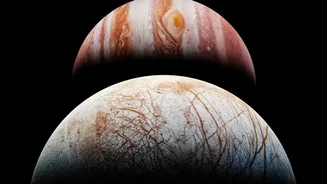
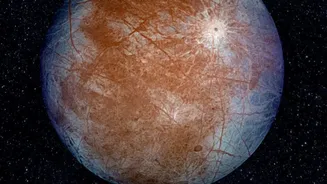
For decades, scientists have considered Europa one of the most promising places in our solar system to search for life beyond Earth. The key is the strong evidence for a massive, global ocean of liquid water hiding beneath its icy shell. Life as we know
it requires three main ingredients: liquid water, essential chemical building blocks (organics), and a source of energy. Europa appears to have all three. The Clipper mission isn't designed to find life itself, but to be the first mission dedicated to investigating an ocean world and determining if conditions there are suitable for it. The probe will undertake dozens of close flybys, some as low as 25 kilometres above the surface, to gather detailed measurements.
The Primary Mission: A Habitability Investigation
The Europa Clipper has three main scientific objectives. First, it needs to confirm the ocean's existence and understand its nature—how deep is it, how salty is it, and how thick is the ice shell on top?. Second, it will investigate Europa's composition, mapping the distribution of key chemical compounds. Finally, it will characterize the moon’s geology to look for signs of recent or current activity, like shifting ice plates or, most excitingly, plumes of water venting into space from the ocean below. Finding and sampling a plume would be a direct way to analyse the ocean's chemistry without having to drill through kilometres of ice.
The Toolkit: A Suite of Advanced Instruments
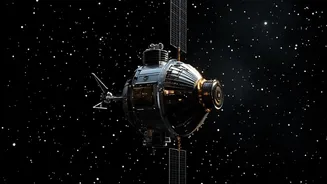
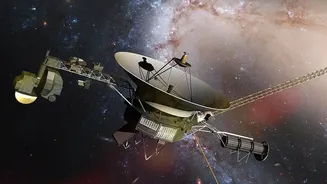
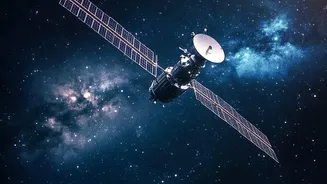
To achieve its goals, the Clipper is outfitted with a powerful suite of nine science instruments, all protected inside a titanium and aluminum radiation vault to shield them from Jupiter's intense radiation field. These instruments are designed to work together, providing a comprehensive picture of Europa. They can be broadly grouped into tools for seeing, sensing, and sniffing. Cameras will produce high-resolution maps of the surface, a thermal instrument will search for warm spots that could indicate activity, and spectrometers will analyze the chemical makeup of surface materials.
Seeing Below the Ice with Radar
One of the most critical instruments is the Radar for Europa Assessment and Sounding: Ocean to Near-surface, or REASON. This ice-penetrating radar uses two different frequencies to probe the ice shell. It is designed to measure the full thickness of the ice, which could be up to 30 kilometres deep, and search for the boundary where ice meets liquid water. Crucially, REASON can also detect potential pockets of water trapped within the shell itself, which could be important habitats or pathways for material moving from the deep ocean toward the surface.
Sensing the Ocean with Magnetism
The Europa Clipper will also confirm the ocean's existence and measure its properties using magnetic fields. As Europa orbits Jupiter, the gas giant’s powerful magnetic field washes over it, creating a secondary, induced magnetic field in any large body of conductive fluid—like a salty ocean. The Europa Clipper Magnetometer (ECM), working with the Plasma Instrument for Magnetic Sounding (PIMS), will measure this induced field. By studying its strength, scientists can determine the ocean's depth, thickness, and salinity without ever touching it. The spacecraft will also use gravity measurements, tracking how much Europa flexes as it orbits Jupiter, to further reveal its internal structure.
Sniffing for Clues in Space
Perhaps the most direct way to sample the ocean is by analysing what gets ejected into space. If water plumes exist, the spacecraft could fly through them. Two instruments are designed for this: the MAss Spectrometer for Planetary EXploration (MASPEX) and the SUrface Dust Analyzer (SUDA). MASPEX will 'sniff' the gases in Europa’s thin atmosphere and any potential plumes to study their chemical makeup. Meanwhile, SUDA will analyse tiny dust particles kicked up from the surface by micrometeorite impacts, giving scientists clues about the ocean's chemistry and salinity based on the composition of this ejected material.