




From Data Collector to Decision Maker
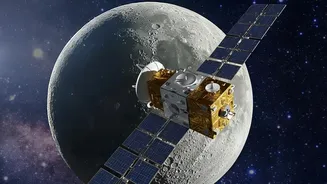
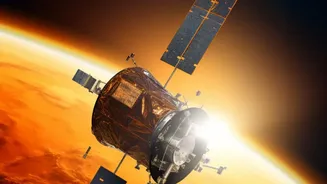
For decades, satellites have acted as humanity's eyes in the sky, capturing vast amounts of images and signals. This raw data is then beamed down to Earth, a process that can be slow and create massive bottlenecks. An orbital computing satellite completely
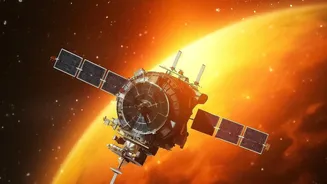
changes this model. Instead of just collecting and transmitting, it processes information directly in space using powerful onboard computers and artificial intelligence. Think of it as the difference between a simple camera and a smartphone. The first just captures a picture, while the second can instantly analyse it, identify faces, and suggest edits. By performing this analysis—or AI inference—in orbit, the satellite can send back only the finished insights, not the petabytes of raw data.
Why Process in Space? The Bandwidth Problem
Modern Earth-observation satellites generate more data than can be economically sent back to ground stations. The sheer volume of high-resolution imagery and sensor readings can overwhelm communication links, leading to significant delays between when data is captured and when it becomes usable intelligence. This latency is a critical problem for time-sensitive applications. By moving the processing to the 'edge'—in this case, the satellite itself—India can bypass these terrestrial traffic jams. This approach reduces the reliance on ground infrastructure, speeds up decision-making, and makes satellite data more efficient and accessible for a wider range of users.
Game-Changing Applications for India
The potential applications of orbital computing are transformative. For national security, it means near-instant analysis of satellite imagery for border monitoring and maritime surveillance, turning hours of waiting into minutes of action. In disaster management, an AI-powered satellite could autonomously detect the start of a forest fire or the extent of flooding and send immediate alerts to response teams on the ground, saving crucial time and lives. For agriculture, it promises real-time insights into crop health, soil moisture, and pest infestations, enabling precision farming at an unprecedented scale. Indian private sector companies are already exploring its use in industries like mining, insurance, and supply chain management.
ISRO's Vision and Private Sector Momentum
The Indian Space Research Organisation (ISRO) is actively studying the feasibility of placing data centres in orbit, viewing it as a strategic evolution of its satellite capabilities. While ISRO's plans are in a conceptual phase, the goal is to enhance India's 'Atmanirbhar Bharat' vision in space technology by reducing reliance on foreign infrastructure and creating sovereign capabilities. The private sector is moving even faster. Bengaluru-based startup TakeMe2Space is scheduled to launch what it calls India's first orbital computing satellite on October 1, 2026. The sub-50 kg satellite, carrying Nvidia processors, already has customers lined up to run AI models for various commercial applications, demonstrating a clear market demand.
The Challenges of Computing in a Vacuum
Putting a data centre in space is not without immense technical hurdles. The harsh radiation of the space environment can damage sensitive electronics, requiring specialised, hardened hardware. Dissipating heat is another major challenge; without air for conventional cooling, systems must rely on radiation, which is far less efficient. Furthermore, generating enough power for high-performance computing and ensuring the system can be maintained or upgraded presents significant engineering problems. Overcoming these obstacles will be key to moving from early-stage prototypes, like the one from TakeMe2Space, to larger, networked constellations of powerful computing satellites.