


A New View of the Sun's Corona
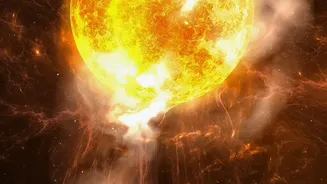
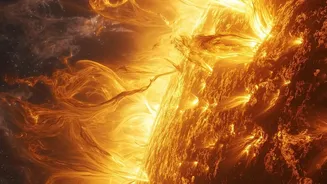
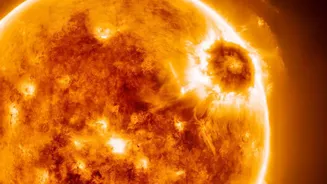
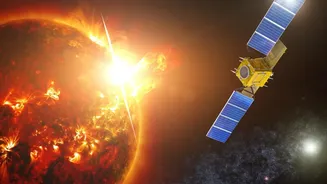
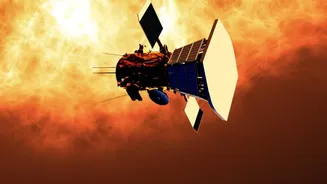
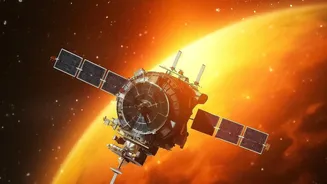
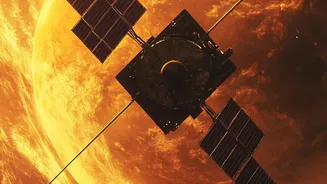
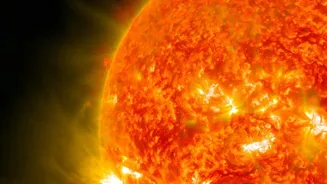
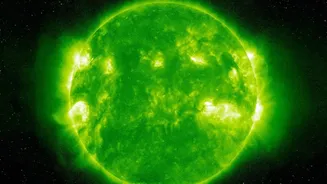
Since becoming operational, ISRO's Aditya L1 has been diligently watching the Sun, and its latest observations of the solar corona—the Sun's superheated outer atmosphere—are a game-changer. The mission's instruments have captured the origin and behaviour
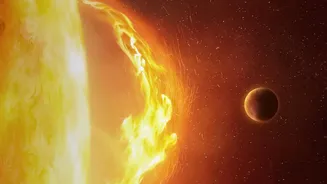
of Coronal Mass Ejections (CMEs) with stunning clarity. CMEs are massive eruptions of plasma and magnetic fields from the Sun that drive space weather. When aimed at Earth, they can trigger geomagnetic storms that threaten our modern way of life, from disrupting satellite communications and GPS to damaging power grids. What Aditya L1 has managed to do is observe the very early stages of these eruptions, providing clues that were previously missing from our understanding.
The Power of SUIT and VELC
Two key instruments are behind these new findings: the Solar Ultraviolet Imaging Telescope (SUIT) and the Visible Emission Line Coronagraph (VELC). VELC is designed to observe the corona closer to the Sun's surface than many other orbiting coronagraphs, allowing it to see the onset of CMEs. It has captured how magnetic field lines in the corona break and reconnect, a process that unleashes tremendous energy and triggers these solar outbursts. Meanwhile, SUIT has captured the first-ever detailed images of solar flare 'kernels' in near-ultraviolet (NUV) light. This is a wavelength range that has been largely unobserved before, filling a critical gap in the data and showing how energy from a flare spreads through different layers of the Sun's atmosphere.
From Data to Better Forecasts
So, how do these new observations help us predict solar storms? The answer lies in improving the lead time and accuracy of our forecasts. By understanding the intricate mechanisms that trigger a CME—like the magnetic reconnection and energy build-up observed by VELC and SUIT—scientists can refine their predictive models. Previously, forecasting relied on observing a CME after it had already left the Sun. Aditya L1's data helps identify the precursors to an eruption. This allows for earlier warnings, potentially extending the forecast window from just a few hours to a day or more. This extra time is crucial for satellite operators, power grid managers, and airlines to take protective measures against an incoming geomagnetic storm.
India's Contribution to Global Safety
The insights from Aditya L1 are not just a feather in ISRO’s cap; they represent a significant contribution to a global scientific effort. Space weather is an international issue, as a major solar storm could have worldwide consequences. The data collected by Aditya L1 is being made available to the global scientific community, fostering collaboration and enhancing space weather models across the board. By providing this crucial data, India is playing a key role in a planetary defence initiative. It helps protect trillions of dollars worth of technological assets in space and on the ground, reinforcing the idea that space exploration is fundamentally about improving and safeguarding life on Earth.