





A Sea of Devotion on the Hills
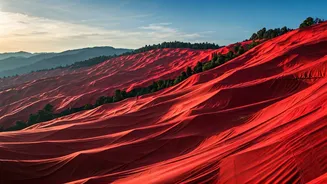
The sight is captivating. Against the lush backdrop of Guwahati’s rolling hills, countless strips of red cloth adorn every possible surface. They are tied to trees, wrapped around bamboo railings, and strung between ancient stones, creating pathways and canopies
of pure crimson. This is not mere decoration; it is a profound expression of devotion. Each piece of cloth, known as 'rakta bastra' or 'angabastra', is a prayer, a token of gratitude, and a sacred souvenir carried by pilgrims from the famous Kamakhya Temple, which sits atop these very hills. The visual spectacle is the culmination of one of India's most unique and powerful spiritual gatherings, a testament to a faith that is deeply intertwined with the natural world.
The Heartbeat of the Festival: Ambubachi Mela
This sea of red appears most vividly during and after the Ambubachi Mela, an annual four-day festival held in June. Unlike other temple festivals, Ambubachi Mela involves no idols, no processions, and no grand celebrations in the traditional sense. Instead, it is a period of quiet reverence. The festival celebrates the annual menstruation of the presiding deity, Goddess Kamakhya, personified as Mother Earth herself. During these days, the temple's main doors are closed. It is believed that the earth is fertile and in a state of renewal, so activities like farming, digging, and ploughing are avoided. Thousands of devotees, including sadhus and tantrics from across the country, gather outside the temple, singing hymns and performing rituals while they wait for the divine feminine energy to restore itself.
Kamakhya: The Bleeding Goddess Temple
To understand the red banners, one must understand the temple itself. The Kamakhya Temple is one of the most revered Shakti Peeths in India. According to mythology, these are sites where parts of Goddess Sati's body fell after her self-immolation. Kamakhya is where her 'yoni' (vulva or womb) is said to have landed, making it a powerful centre for the worship of female creative power, or 'Shakti'. Inside the sanctum sanctorum, there is no idol. Instead, devotees worship a rock fissure in the shape of a yoni, from which a natural spring continuously flows. This sanctum is the epicentre of the Ambubachi Mela, as it is believed the waters run red during these sacred days, symbolizing the Goddess's fertile period.
The Sacred Power of Red Cloth
On the fourth day of the festival, the temple doors reopen. Devotees are offered a unique form of 'prasad': small pieces of red cloth, the 'rakta bastra'. This cloth is believed to have been soaked in the sacred, red-tinged waters from the sanctum, thus imbued with the divine feminine energy of the Goddess. For pilgrims, this is not just a piece of fabric; it is a potent symbol of fertility, protection, and blessing. Carrying it is believed to bring good fortune and ward off evil. Devotees tie a piece of it on the hills as an offering and a prayer, leaving behind a physical marker of their spiritual journey. It is this collective act of millions over the years that creates the stunning red blanket seen across the landscape.
A Tapestry Woven from Faith and Nature
The crimson banners of Kamakhya are more than just a beautiful sight. They represent a powerful synthesis of nature, spirituality, and human devotion. Each thread tells a story of a pilgrim's hope, a tantric's meditation, or a family's prayer for prosperity. The annual ritual transforms the Nilachal Hills from a mere geographical feature into a dynamic canvas of collective faith. As the wind rustles through the red-draped trees, it feels as though it carries the whispers of countless prayers. This visual spectacle serves as a powerful reminder of a tradition that unapologetically celebrates femininity, fertility, and the cyclical nature of life itself, right in the heart of Assam.