





Asia's Looming Demographic Challenge
For decades, countries like Japan, South Korea, and increasingly China, have powered their economies with a large and growing workforce. This 'demographic dividend' is now reversing. These nations are facing a future with fewer workers, which threatens
to slow down economic growth, strain public finances, and reduce overall dynamism. A shrinking labour pool means less production, fewer taxpayers supporting a growing elderly population, and a potential decline in innovation. The traditional economic playbook relies on having more people making more things. When that equation breaks, new solutions are needed.
How AI Can Fill the Gap
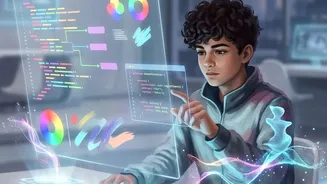
According to the IMF's latest analysis on the Asia-Pacific region, artificial intelligence isn't just a futuristic buzzword; it's a potential economic necessity. The Fund argues that AI and automation can directly counteract the effects of a smaller workforce by significantly boosting productivity. If fewer people can produce substantially more value, an economy can continue to grow even as its labour force declines. The logic is simple: AI can augment human workers, making them more efficient, or automate tasks entirely, freeing up human capital for more complex, creative, and strategic roles. This shift could help maintain economic momentum in the face of unprecedented demographic headwinds.
Productivity Beyond the Factory Floor
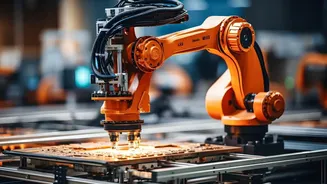
When people think of automation, they often picture manufacturing robots. However, the IMF's vision is much broader. AI's biggest impact may come in the services sector, which dominates most modern economies. For instance, AI can streamline logistics, optimize supply chains, accelerate research and development, and even assist in complex decision-making in fields like finance and medicine. In healthcare, AI can help care for the elderly, a growing need in aging societies, by managing schedules, monitoring health, and reducing the administrative burden on a dwindling number of healthcare professionals. This broad application is key to offsetting the labour shortage across the entire economy, not just in one or two sectors.
What This Means for India
Unlike East Asia, India has a 'youth bulge'—a large and young population that is still growing. So, is the IMF's analysis relevant? Absolutely. While India doesn't face a shrinking workforce today, the report presents two key takeaways. First, it's a glimpse into India's own distant future, providing a roadmap for challenges that may arise in several decades. Second, and more immediately, it highlights AI as a tool for 'leapfrogging'. By investing in AI and automation now, India can potentially boost productivity and create higher-value jobs, accelerating its path to becoming a developed economy. The challenge for India is different: not replacing missing workers, but creating enough high-quality jobs for its abundant young workforce, a task where AI could be both a help and a hindrance.
The Risks and Roadblocks Ahead
The IMF is not blindly optimistic and acknowledges significant risks. The widespread adoption of AI could exacerbate inequality. While high-skilled workers who can collaborate with AI may see their wages rise, low-skilled workers whose jobs are easily automated could be left behind. This creates a pressing need for massive investment in education and reskilling programs. Furthermore, there's the risk of a 'digital divide' between countries and companies that can afford to invest in advanced AI and those that cannot. Without the right policies—including robust social safety nets, progressive tax systems, and forward-thinking education—the AI revolution could create more problems than it solves, leading to social and political instability.