




A Deceptive Sheen
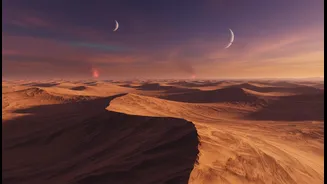
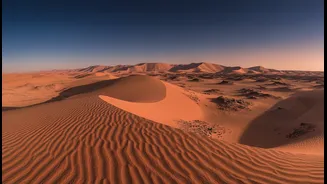
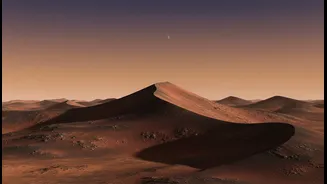
Across the Red Planet, particularly in large craters like Kaiser and Moreux and the vast dune fields surrounding the northern polar cap, orbiters have captured stunning images of massive sand dunes. Unlike the familiar, light-coloured quartz sand of many
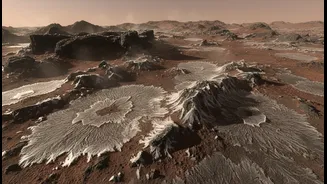
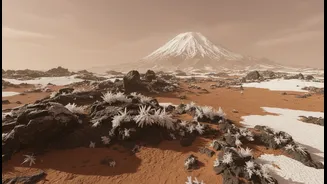
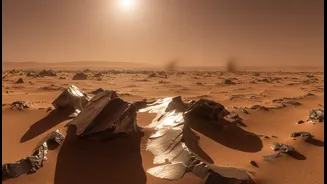
Earth deserts, Martian dunes are strikingly dark, often appearing black or deep brown. In some images from the European Space Agency's Mars Express, these features look so strange they have been described as looking like they are carved from metal. This unusual appearance is sometimes amplified by a thin layer of carbon dioxide frost that settles on their slopes during the Martian winter, creating a shiny, metallic-like contrast as it melts in the spring.
The View from Orbit
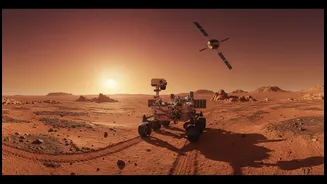
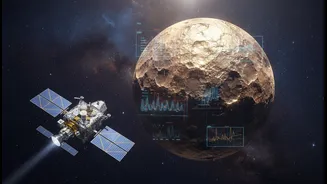
For years, scientists have puzzled over these formations. The key to understanding them has come from instruments orbiting high above the planet. NASA's Mars Reconnaissance Orbiter (MRO), with its powerful High-Resolution Imaging Science Experiment (HiRISE) camera, has been a game-changer. Since 2006, MRO has been monitoring these dunes, tracking their movement and analysing their properties. By studying the light reflected from the dunes across different wavelengths, scientists can determine their mineral composition without ever touching them. These orbital observations have confirmed that while they might look metallic, there's no actual metal involved. The secret lies in Mars's volcanic past.
A Volcanic Recipe
The dark colour comes from the sand's composition: it is basaltic. Essentially, the dunes are made of finely ground volcanic rock. This basaltic sand is rich in dark, rock-forming minerals like pyroxene and olivine, which contain iron and magnesium. On Earth, these minerals would break down relatively quickly through chemical weathering involving water, but in Mars's dry, thin atmosphere, they persist. As a result, while Earth's sand is often dominated by light-coloured silica (quartz), Martian sand retains the dark, mafic signature of the volcanic rocks it eroded from. Similar dark sand can be found on Earth in places with significant volcanic activity, such as the black sand beaches of Hawaii.
Clues to a Dynamic Planet
These dunes are more than just a geological curiosity; they are active, moving features that tell a story about the Martian environment. Wind is the primary sculptor. The dunes can form various shapes, including crescent-shaped 'barchan' dunes and long, linear ridges, which help scientists map the prevailing wind directions on the planet. By comparing images taken over several Martian years (a Martian year is 687 Earth days), researchers have observed the dunes advancing at rates of up to one metre per year. Furthermore, the interaction of this dark sand with seasonal dry ice reveals dynamic processes unique to Mars. In spring, as the carbon dioxide ice cap turns directly into gas, it can erupt through the surface, launching plumes of dark sand and carving streaks down the dunes' faces. This reveals that Mars, far from being a dead world, is still a place of active and dramatic geological change.