





Why the Rupee’s Value Is a Big Deal
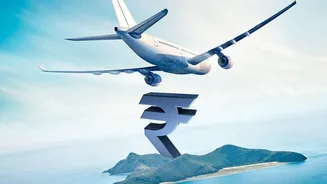
The exchange rate is the price you pay to buy another country's currency. When the rupee weakens against the US dollar, for example, you need more rupees to buy a single dollar. For international travelers or students paying fees in dollars, pounds, or euros,
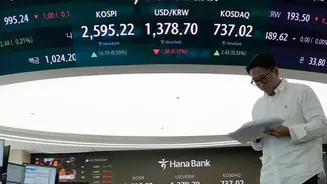
this directly increases costs. A flight ticket, hotel booking, or tuition fee priced at $2,000 costs ₹1,80,000 when the exchange rate is ₹90 per dollar. If the rupee weakens to ₹95, that same $2,000 expense jumps to ₹1,90,000. In late 2026, the rupee has been trading in a volatile range, often hovering between ₹94 and ₹96 to the US dollar. This instability makes budgeting a significant challenge, as the final cost in rupees can change between the time you plan and the time you actually pay.
What Makes the Rupee Fluctuate?
Several powerful forces influence the rupee's value, and most are outside an individual's control. A primary driver is the price of crude oil. As India imports the vast majority of its oil, rising global oil prices mean the country needs to sell more rupees to buy dollars for payment, thus weakening the domestic currency. Another key factor is the monetary policy of the US Federal Reserve. When US interest rates rise, global investors are often drawn to dollar-denominated assets, leading them to sell assets in emerging markets like India. This outflow of capital increases demand for the dollar and puts downward pressure on the rupee. Geopolitical events and India's own economic health, including its trade balance and inflation rates, also play a crucial role.
The Hidden Costs Beyond the Exchange Rate
The exchange rate you see on Google is not the rate you actually get. Banks and financial institutions add their own charges, which can significantly increase your expenses. The most common is the 'forex markup fee', a charge of 2% to 3.5% that banks add to nearly every international transaction made with a standard credit or debit card. On a spending of ₹1,00,000, this can mean an extra ₹3,500 in fees alone. Another trap is 'Dynamic Currency Conversion' (DCC). This happens when an overseas merchant's card machine asks if you want to pay in Indian Rupees (INR) or the local currency. Choosing INR may seem convenient, but it allows the merchant's bank to apply a very poor exchange rate, often 5-8% worse than the market rate. Always choose to pay in the local currency. International ATM withdrawals can also attract a slew of charges, including a fixed withdrawal fee and a currency conversion fee.
Smart Strategies to Manage Forex Costs
While you can't control global markets, you can control how you exchange currency. The key is to plan ahead. Avoid exchanging large amounts of cash at airports, where rates are notoriously poor. Instead, compare rates offered by banks and authorized online forex platforms before your trip. Forex cards are a popular and effective tool. These are prepaid cards that you can load with a specific foreign currency before you travel. They often have lower markup fees than credit cards and lock in an exchange rate, protecting you from further fluctuations. However, it is wise to carry more than one payment method. A combination of a forex card for major expenses, a credit card with low international transaction fees for emergencies, and a small amount of local cash is often the ideal setup.