
What Exactly Is Nordic Walking?
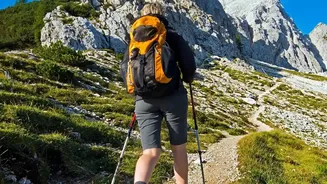
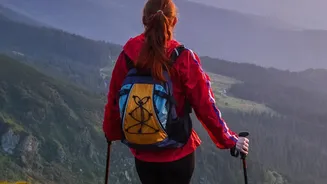
Originally developed as a summer training method for cross-country skiers in Finland, Nordic walking is far more than just walking with a couple of sticks. It’s a specific fitness technique that uses specially designed poles to engage the upper body.
While a regular walk primarily works your leg muscles, adding Nordic poles activates the muscles in your shoulders, arms, and core. This turns a simple stroll into a highly effective, low-impact workout that engages up to 90% of your body's muscles.
The Full-Body Benefits
The reason for Nordic walking’s growing popularity lies in its impressive and well-rounded benefits. Studies show it can burn up to 67% more calories than regular walking. By pushing off with the poles, you propel yourself forward, increasing your heart rate and cardiovascular workout without it feeling significantly harder. The poles also provide added stability, which can improve balance, and they help distribute your weight, reducing the strain on your knees and hips. This makes it an excellent choice for people of all ages and fitness levels, including those with joint concerns.
Gearing Up: Choose the Right Poles
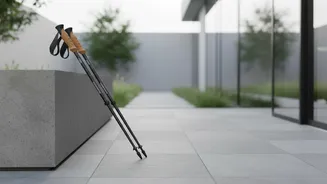
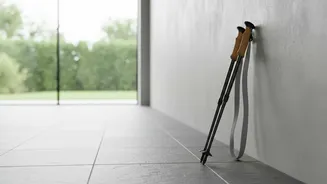
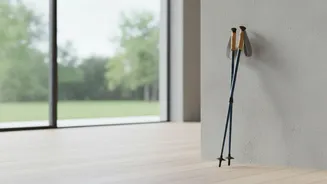
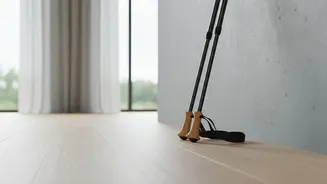
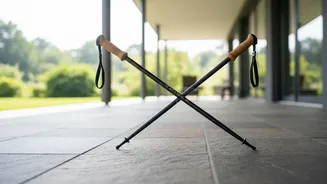
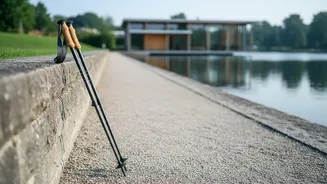
Your poles are your most important piece of equipment, and it's crucial to distinguish them from trekking poles, which are designed for stability on uneven terrain. Nordic walking poles are designed for forward propulsion. Look for poles with a comfortable, glove-like strap system that allows for the proper hand motion. When it comes to length, a good rule of thumb is to multiply your height in centimeters by 0.68, or ensure your elbow is at a 90-degree angle when holding the pole upright. For beginners, adjustable poles are a great, versatile option.
Your Step-by-Step Guide to Form
Mastering the technique is what unlocks the full benefits. Start by focusing on your natural walking rhythm. The movement is contralateral, meaning your right arm swings forward with your left leg, and vice-versa. Stand tall with your shoulders relaxed. Plant the poles at an angle behind you, keeping your arms relatively straight. As you move forward, push through the pole strap to propel yourself. The motion should feel fluid. A key part of the technique is the 'grip and release': grip the handle as the pole comes forward to be planted, and then open your hand on the backward swing, letting the strap do the work.
Common Beginner Mistakes to Avoid
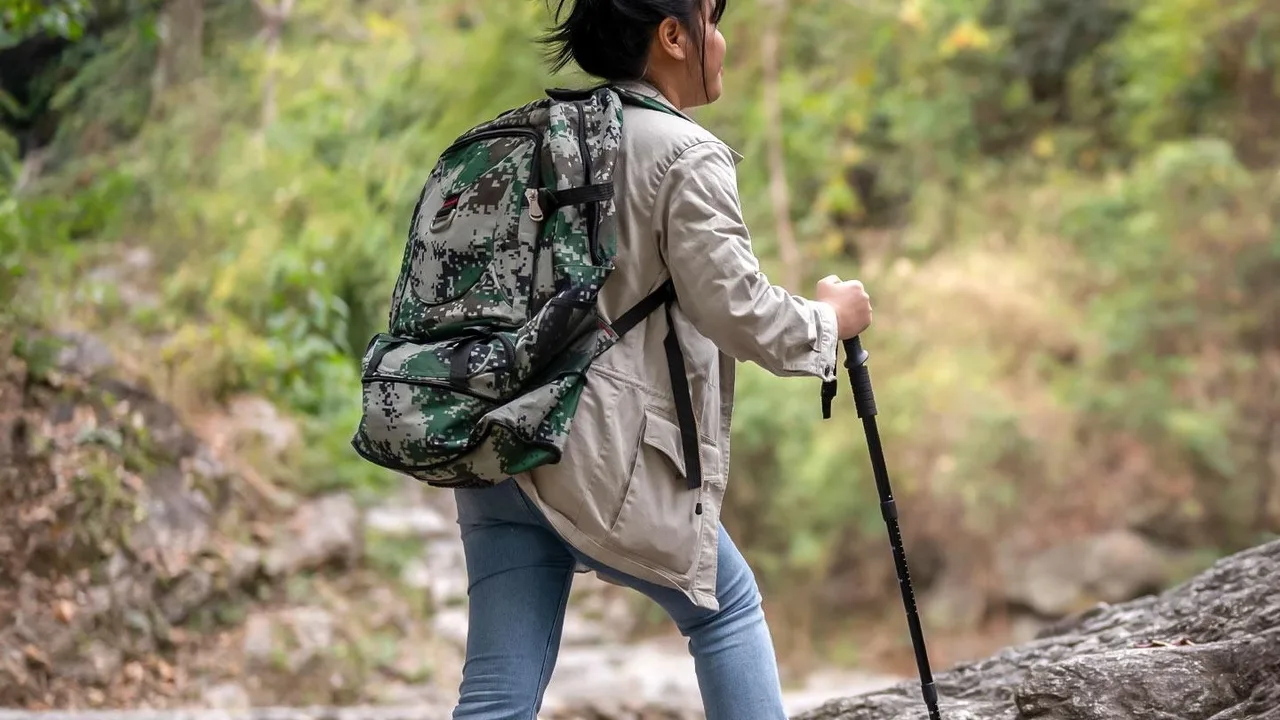
A few common errors can hold you back. First, avoid using trekking poles; they don't have the right straps or design for the Nordic walking motion. Another frequent mistake is planting the poles too far in front of you like a walking stick, which acts as a brake instead of a propeller. The pole should be planted between your feet to push you forward. Also, avoid gripping the poles tightly throughout the entire motion; the relax-and-grip technique is key. Finally, don't forget your posture. Walk upright, looking ahead, not down at your feet.