





More Than Just a Walk
For many urban pet parents in India, especially those in apartments, providing enough stimulation for a dog can be a challenge. Daily walks are essential for physical exercise and potty breaks, but they often don't fully satisfy a dog’s brilliant mind.
Dogs, like people, get bored. This boredom can lead to undesirable behaviours like excessive barking, chewing on furniture, or general anxiety. The antidote is mental enrichment—activities that engage a dog's brain and natural instincts. This is where sensory training comes in, and you don’t need expensive equipment to get started. All you need is a cardboard box.
The Magic of the Humble Box
Why are cardboard boxes so captivating for dogs? It comes down to a few key sensory inputs. Firstly, the smell. Cardboard retains scents from its journey, and it’s also a perfect vessel for hiding smelly treats, engaging your dog’s powerful nose. This 'nose work' is incredibly satisfying and tiring for them. Secondly, the texture and sound provide a novel experience. The feeling of walking on a slightly unstable surface, the sound of their paws on the paper, and the sheer joy of being allowed to shred and destroy something (with permission!) can be a huge stress reliever. It’s a multi-sensory playground that taps directly into their instinct to explore, forage, and problem-solve.
Safety First: A Quick Checklist
Before you turn your living room into a canine wonderland, a few safety precautions are crucial. First, remove all tape, staples, and plastic shipping labels from the boxes. These can be choking hazards or cause internal blockages if ingested. Second, ensure the boxes are an appropriate size. Your dog should be able to move through or around them comfortably without getting stuck. Never force a nervous dog into a tight space. Finally, always supervise playtime. This is an interactive activity, not a leave-them-to-it toy. Watch to make sure they are playing safely and not ingesting large chunks of cardboard.
Beginner Level: The Treat Tunnel
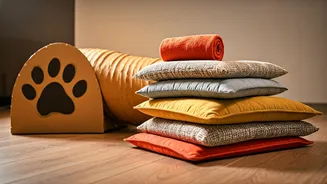
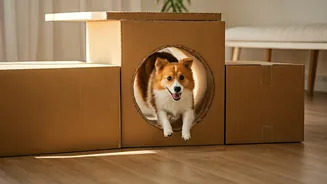
Start simple to build your dog’s confidence. Take a large box that your dog can easily walk through and open both ends to create a tunnel. Place a few high-value treats (like small pieces of chicken or their favourite biscuit) at the entrance, inside the tunnel, and at the exit. Use an encouraging, happy tone of voice to lure them through. Most dogs will quickly learn that going through the tunnel leads to a reward. Keep sessions short and positive, ending on a high note. This teaches your dog to associate the boxes with fun and food.
Intermediate Fun: The Box Maze
Once your dog is comfortable, you can increase the complexity. Arrange several boxes of different sizes into a simple maze. You can create walls and pathways they have to navigate. Scatter treats or their regular kibble throughout the maze. This encourages them to use their nose and problem-solving skills to find the food. You can also place some boxes on their side and others upright to create varied obstacles. The goal isn't to make it impossible, but to make them think and explore. For extra fun, hide a favourite toy at the end of the maze as the grand prize.
Advanced Play: The Destruction Box
For dogs that love to shred and dig, a 'destruction box' can be the ultimate enrichment activity. Take a shallow box and fill it with crumpled-up packing paper, old t-shirts, or even more small, empty cardboard rolls. Hide treats or kibble inside the crumpled materials. This allows your dog to indulge their natural desire to dig and forage without destroying your sofa cushions. It's a fantastic outlet for pent-up energy and can be incredibly satisfying for them. Just be prepared for a bit of a mess afterward—a small price to pay for a happy, tired dog.