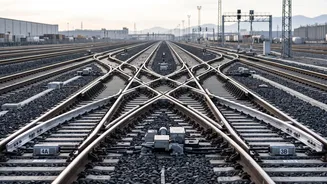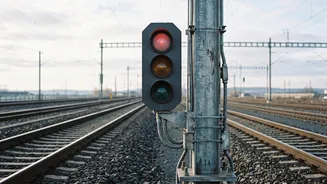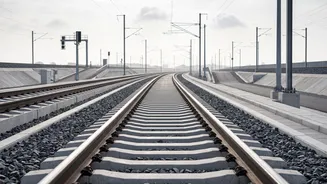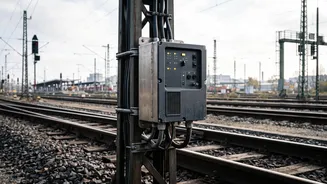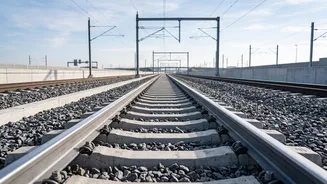




A catastrophic high-speed train collision in Spain has sent shockwaves through the global rail community, immediately sharpening the focus on safety for India's ambitious Mumbai-Ahmedabad bullet train project.
Tragedy in Spain: A System Failure
On October 28, 2026, a high-speed train operated
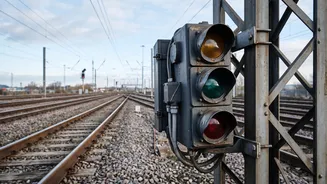
by Spain's state-owned Renfe crashed into a stationary train run by a private company, Iryo, near Toledo, killing 69 people. The incident, Spain's second fatal high-speed rail accident in the same year, has been attributed to a combination of technical and human factors. According to Spain's transport minister, an automatic train control system failed along a 63-kilometre stretch of track, bringing all trains to a halt as a safety precaution. However, a control centre then gave an 'inexplicable' order for the Renfe train to resume its journey, leading it to collide with the Iryo service that remained stopped on the line. The disaster has led to the resignation of the transport minister and has cast a harsh spotlight on the vulnerabilities that can exist even in mature, world-class rail networks.
India's Dream Project Under a Microscope
The events in Spain are resonating deeply in India, home to the under-construction Mumbai-Ahmedabad High-Speed Rail (MAHSR) corridor. This 508-km 'bullet train' line is a project of immense national prestige, promising to connect the two financial hubs in under two hours with trains running at speeds up to 320 km/h. With the first section in Gujarat slated to open in 2027, the project is advancing rapidly. However, the Spanish crash serves as a stark reminder of the immense responsibility involved. While India's conventional rail network has struggled with safety issues, the bullet train project is being built from the ground up with the promise of world-class standards. The question now being asked is whether these standards are robust enough to prevent a similar catastrophe.
The 'Shinkansen Shield' and Its Protections
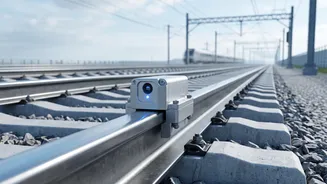
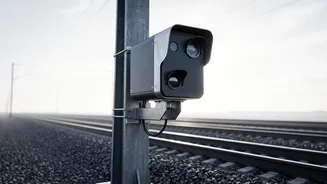
At the heart of the MAHSR project's safety promise is the adoption of Japan's famed Shinkansen technology, which has an unparalleled record of zero passenger fatalities from accidents in over 50 years of operation. The system is a holistic one, integrating tracks, rolling stock, and signalling. A key feature is its Automatic Train Control (ATC) system, which functions like a digital shield. It continuously monitors the train's speed and position, automatically applying brakes if it exceeds limits or gets too close to another train, making human error of the kind seen in Spain highly unlikely. Furthermore, the corridor is being equipped with an advanced early earthquake detection system, with 28 seismometers placed along the route and in nearby seismic zones to halt trains within seconds of a tremor. Officials at the National High Speed Rail Corporation Limited (NHSRCL), the body executing the project, have long pointed to this proven technology as the ultimate guarantee of passenger safety.
New Doubts and Lingering Questions
Despite the reliance on Japanese technology, experts are pointing to unique challenges. A significant debate revolves around India's plan to eventually operate both imported Japanese trains and indigenously manufactured high-speed trains on the same corridor. Japanese experts have warned that mixing rolling stock and signalling systems from different origins on the same high_speed line is an unprecedented move that would require rigorous testing to prove its safety. There are also concerns specific to the Indian operating environment, from ensuring the absolute security of the dedicated tracks against trespassers—a persistent problem on conventional lines—to the impact of extreme weather events. Even before the Spain incident, the NHSRCL had begun processes to hire independent safety assessors to audit the project from design to commissioning, signalling an awareness of the need for third_party validation.
No Room for Error
The tragedy in Spain was not just a failure of a single component, but a collapse in the chain of command after a technical glitch occurred. It underscores that even the most advanced automatic systems require robust manual override protocols and a deeply ingrained safety culture. As India progresses with its own bullet train, including developing domestic manufacturing capabilities, the focus is shifting from just importing technology to mastering the complex interplay between hardware, software, and human decisionmaking. The MAHSR project is not merely an infrastructure upgrade; it is the establishment of an entirely new operational philosophy for Indian Railways. The incident in Europe provides a critical, if tragic, lesson: the foundation of high speed rail is not just speed, but an unwavering, verifiable, and multi layered commitment to safety.