







What is the PJ.2.1 Variant?
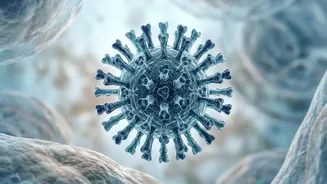
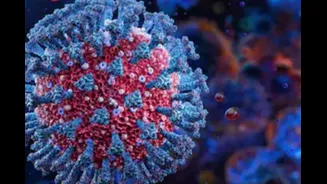
PJ.2.1 is a descendant of the JN.1 lineage of the SARS-CoV-2 virus. Scientists describe it as a 'saltation variant', which means it appeared with a large number of genetic changes at once, rather than evolving slowly over time. This jump in evolution
is thought to occur during persistent infections in a single host before the new version re-enters the general population. Its spike protein—the part of the virus that attaches to human cells—is heavily mutated, which is why researchers are studying it so closely. Since its first detection in Canada, cases have been confirmed in the United States, Australia, Spain, Singapore, and several other countries across Europe and Asia.
Is It Spreading More Quickly?
Early signs suggest PJ.2.1 may have a growth advantage. Laboratory studies have found that it binds more strongly and efficiently to the ACE2 receptor, the main entry point for the virus into human cells. Some research indicates its cell-entry efficiency could be up to 2.5 times greater than reference strains in certain lab models. Furthermore, wastewater data from some regions, like Ontario, Canada, and parts of the US, showed PJ.2.1 was the fastest-growing variant at the time of analysis. However, experts caution that enhanced cell-binding in a lab does not automatically translate to faster transmission between people in the real world. The World Health Organization (WHO) is closely monitoring its geographical spread.
Does It Cause More Severe Disease?
Currently, there is no evidence to suggest that PJ.2.1 causes more severe illness, a higher rate of hospitalisation, or increased deaths compared to other circulating variants. An emergency physician noted that while new variants will continue to emerge, there is no reason for unnecessary alarm at this stage. The symptoms associated with PJ.2.1 are similar to those of previous strains and other respiratory viruses, including fever, cough, sore throat, fatigue, and muscle aches. One Russian professor suggested it may cause more severe throat infections and prolonged fatigue, but this is not yet a consensus view. The WHO has stated that symptoms alone are not a reliable way to distinguish PJ.2.1 from the flu or a common cold; a diagnostic test is required.
How Effective Are Vaccines Against It?
The initial laboratory findings on vaccine effectiveness are reassuring. One preliminary study found that PJ.2.1 does not significantly evade the antibodies produced by existing updated COVID-19 vaccines. In that study, antibodies from vaccinated individuals were only slightly less effective against PJ.2.1 compared to the reference variant, a much smaller drop in performance than was seen with other circulating variants. This suggests that current vaccines, particularly recently updated boosters, should continue to provide strong protection against severe disease and hospitalisation. Experts believe this sustained protection is largely due to durable T-cell responses, a different part of the immune system that is less affected by spike protein mutations.
What Is the Outlook?
Health officials and scientists agree that continued surveillance is crucial. While PJ.2.1 shows some concerning characteristics in the lab, such as its enhanced ability to bind to cells, its real-world impact is still being assessed. The variant has not yet been designated a 'variant of interest' or 'variant of concern' by the WHO. For the public, this serves as a reminder that the virus is still evolving. Standard public health advice remains the best defense: stay up-to-date with recommended vaccinations, practice good hygiene, and consider wearing masks in crowded indoor settings, especially for those who are vulnerable. Combining prior infection with vaccination, known as hybrid immunity, has been shown to provide the strongest and most durable protection against severe outcomes.