





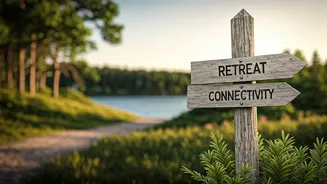



From Gold Faucets to Golden Silence
For decades, luxury travel was a game of conspicuous consumption. It was about securing the reservation at the world’s most exclusive restaurant, flaunting a suite with an ocean view, or chartering a yacht. The goal was to be seen in the right places,
collecting experiences that could be easily translated into social capital. The evidence of a good trip was a camera roll full of five-star evidence. Now, a seismic shift is underway. For a growing number of affluent, and often burned-out, Americans, the most valuable commodity isn't opulence; it's absence. Specifically, the absence of notifications, emails, and the relentless hum of the digital world. The new luxury is the ability to afford inaccessibility. It’s about trading the pressure to perform online for the profound peace of being present. In a world where anyone can broadcast their life, the truly powerful move is to go silent.
The Business of Doing Nothing
This isn't just about turning your phone off at a standard hotel. An entire industry is blossoming around the concept of curated disconnection. High-end resorts from Big Sur to the Catskills now market their lack of Wi-Fi as a premium feature, not a bug. Companies like Getaway build minimalist, chic cabins just outside major cities with the express purpose of locking your phone in a small box upon arrival. These aren’t rustic, bare-bones campsites; they are meticulously designed, architecturally pleasing spaces that cost a premium. The irony is palpable: we are now paying top dollar to experience a state of being that was once the default for all humanity. These digital detox retreats offer guided meditation, forest bathing, and communal, device-free dinners. The message is clear: true rest is a structured, intentional activity, and it comes with a price tag that reflects its rarity.
Why We Crave the Off Switch
The demand for unplugged travel isn’t just a fad; it’s a direct response to the pathologies of modern life. The rise of remote work has blurred the lines between office and home, leaving many feeling perpetually on the clock. The constant influx of information—from breaking news to social media updates—has led to widespread digital fatigue and anxiety. We are overstimulated, overwhelmed, and desperate for a reprieve. An unplugged vacation offers a powerful antidote. By removing the primary source of distraction, travelers report feeling more connected to their surroundings, their companions, and themselves. Without a screen to mediate reality, the senses sharpen. Food tastes better, conversations go deeper, and the natural world feels more vibrant. It’s less about escaping life and more about finding a way back to a more fundamental, focused version of it.
The Performance of Unplugging
But there's a subtle complexity to this trend. Is it a genuine retreat from the pressures of modern life, or just another form of status signaling? When a traveler returns from a week-long digital detox and immediately posts a multi-paragraph caption about the life-changing magic of being offline, the authenticity can feel… questionable. The act of unplugging can become just another experience to be packaged and presented for public consumption upon one's return. This creates a paradox: the very thing designed to free us from the performance of online life can become the ultimate humblebrag. It’s the wellness equivalent of saying, “I’m so important and my life is so demanding that I had to be professionally de-programmed in a yurt.” For some, the unplugged trip is the new trophy, a testament to their success and their enlightened approach to self-care.