





A New Strategy for the Red Planet
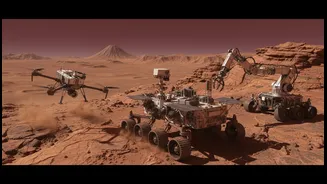
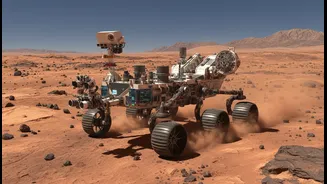
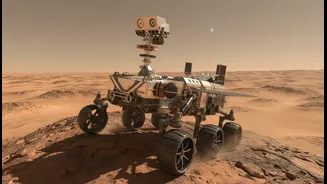
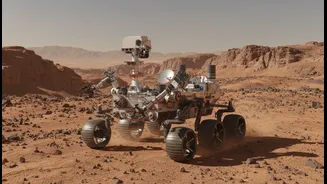
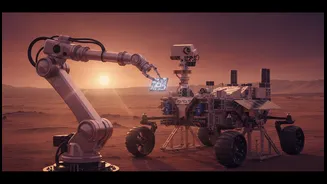
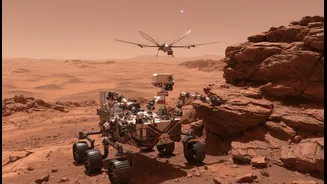
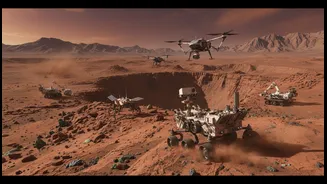
To conquer the challenges of exploring Mars, NASA has launched an initiative called STRIDE, which stands for Science Transport and Robotic Innovation for Deployment and Exploration. Announced in July 2026, this program represents a major shift in strategy.
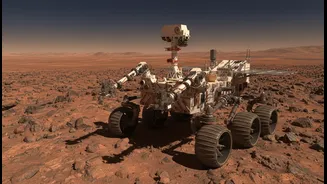
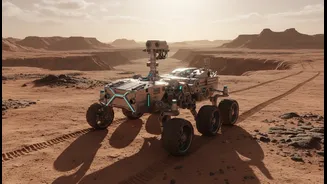
Instead of developing all its technology in-house, NASA is acting as a customer, inviting the private sector to design and build the robotic systems that will one day traverse the Martian landscape. The goal is to create robots that can access more challenging terrain, travel farther, and investigate scientifically rich areas that current rovers can't reach. This public-private partnership model aims to accelerate innovation, reduce costs, and leverage the speed of the commercial space industry to prepare for eventual human missions.
Who Are the Chosen Seven?
Under the STRIDE initiative, NASA selected seven companies to develop these cutting-edge mobility concepts. This group is a diverse mix of established aerospace giants and agile startups, each bringing a unique set of skills to the table. From creating aerial drones to designing rugged all-terrain vehicles, these companies are now on the front lines of Mars exploration. The contracts, worth a potential total of $17 million, will fund the initial design and development work set to begin in late 2026. Let's meet the companies tasked with building the future of Martian robotics.
AeroVironment and Astrobotic
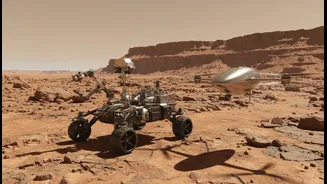
AeroVironment is no stranger to Martian skies. The company was behind the development of the Ingenuity helicopter, the first aircraft to achieve powered flight on another planet, which arrived with the Perseverance rover. Their expertise in creating lightweight, autonomous aerial vehicles will be invaluable for developing next-generation drones capable of scouting vast areas of Mars. Astrobotic, based in Pittsburgh, has deep experience in developing lunar landers and rovers under NASA's Commercial Lunar Payload Services (CLPS) program. Their work on lunar mobility systems provides a strong foundation for designing robust vehicles that can handle the harsh, dusty environment of Mars.
Venturi Astrolab and Ground Control Robotics
Venturi Astrolab is focused on creating highly capable rovers for planetary exploration. Their Flexible Logistics and Exploration (FLEX) rover is designed to be a versatile workhorse, capable of transporting cargo, equipment, and eventually, astronauts. Their inclusion in STRIDE signals NASA's interest in developing larger, more utilitarian vehicles for building a future Martian base. Ground Control Robotics, an Atlanta-based startup, brings a fresh perspective focused on creating autonomous robotic systems that can operate with minimal human intervention. Their expertise in software and intelligent robotics will be key to making future Mars rovers more independent and efficient.
Honeybee Robotics and Intuitive Machines
Honeybee Robotics has a long and storied history of building crucial components for Mars missions. They have contributed to every NASA Mars mission since 2004, developing drills, sample collection systems, and other robotic tools for rovers like Curiosity and Perseverance. Their deep knowledge of the Martian environment is critical for designing hardware that can survive and function on the Red Planet. Intuitive Machines is another major player in the lunar landing scene, with its Odysseus lander making history as the first commercial spacecraft to land on the Moon. This experience in successfully delivering payloads to another celestial body makes them a strong partner for developing reliable robotic systems for Mars.
MEI Technologies (Aegis Aerospace)
MEI Technologies, which now operates as part of Aegis Aerospace, has a long history of providing engineering services and hardware for NASA and the Department of Defense. Their role in the STRIDE initiative will likely leverage their expertise in systems integration and ensuring that complex technologies work together seamlessly in extreme environments. As NASA plans for missions that involve multiple robotic systems working in concert—from rovers on the ground to drones in the air—this kind of integration expertise is absolutely essential for mission success.