




Beyond the Lone Genius
The stereotype of the solitary engineer toiling away on complex equations is becoming a relic of the past. The modern space industry, both in India and globally, is rapidly shifting towards a collaborative model. Future breakthroughs will come from dynamic,
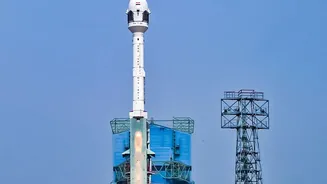
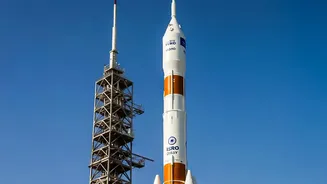
interdisciplinary teams where biologists, psychologists, lawyers, and designers work alongside aerospace engineers and astrophysicists. This is because the challenges are no longer just about getting a rocket off the ground. They are about sustaining human life in hostile environments, managing complex orbital logistics, and even shaping the laws and ethics of a multi-planetary future. As missions grow in complexity, from ISRO's Gaganyaan human spaceflight program to potential lunar bases, the need for diverse perspectives becomes critical to solving unprecedented problems.
Why Collaboration is the New Fuel
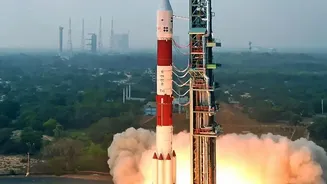
The drive towards interdisciplinary work is fuelled by necessity. Consider a long-duration mission to Mars. Engineers can design the spacecraft, but who ensures the crew remains psychologically stable? That's a job for a space psychologist. Who designs the habitats for maximum efficiency and well-being? A space architect. And who manages the legal framework for resource mining on the Moon? A space lawyer. Similarly, ISRO's Earth observation programs require data scientists and GIS experts to interpret satellite imagery for everything from agricultural planning to disaster management. The sheer volume of data and the complexity of modern missions mean that no single discipline has all the answers. Innovation now happens at the intersection of different fields, where a biologist's understanding of closed-loop ecosystems can inform an engineer's design for a life support system.
India's Evolving Space Ecosystem
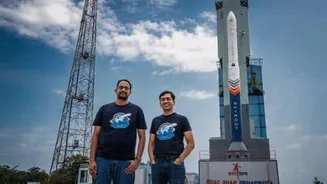
This global trend is powerfully reshaping career paths in India. The nation's space economy, projected to grow fivefold to $44 billion by 2033, is no longer just the domain of ISRO. The rise of over 1,200 private space startups like Skyroot Aerospace and Agnikul Cosmos has created a vibrant and competitive job market. These companies are not just hiring from the small pool of aerospace engineering graduates; they are actively recruiting talent from the IT, manufacturing, and data science sectors. In fact, many are forced to hire from unrelated fields and provide extensive on-the-job training due to a shortage of specialised talent. This creates a massive opportunity for professionals who can bridge disciplines. As experienced talent moves from ISRO to lead these new ventures, they bring with them a deep understanding of mission requirements, further fuelling the demand for varied expertise.
The In-Demand Skills of Tomorrow
So, what does this mean for aspiring space professionals? While a strong foundation in STEM (Science, Technology, Engineering, and Mathematics) remains crucial, it's no longer the only ticket to entry. The most sought-after individuals will be those who combine technical knowledge with other skills. The industry needs technical writers to create clear documentation, project managers to coordinate complex timelines, and communications experts to tell the story of a mission to the public. Furthermore, there is a growing need for professionals in fields like space law, policy, finance, and marketing to build the commercial infrastructure of the industry. Critically, 'soft skills' like communication, collaboration, adaptability, and cross-disciplinary problem-solving are now considered just as vital as technical proficiency. The ability to work effectively in a team with diverse experts is a non-negotiable skill for the new space age.