



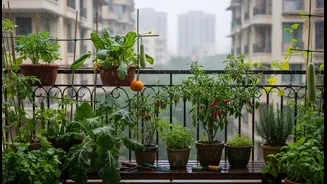


The Monsoon Watering Dilemma
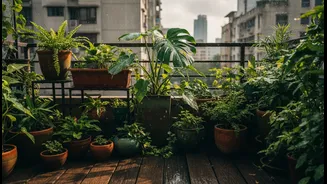
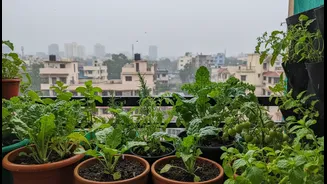
The Indian monsoon is a welcome relief from the scorching summer heat, turning everything lush and green. For balcony gardeners, it feels like a blessing. Your tropical plants, which thrive in humidity, seem to be in their element. However, this season
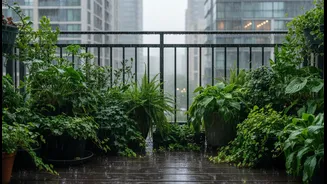
presents a hidden and often misunderstood challenge. With high humidity, frequent rain, and reduced sunlight, the risk of overwatering skyrockets. Many gardeners continue their summer watering schedule, not accounting for the moisture from the rain and the fact that soil dries out much slower. This combination of manual watering and natural rainfall is a recipe for disaster, with the most common victim being the plant's root system.
Understanding Root Rot: The Silent Killer
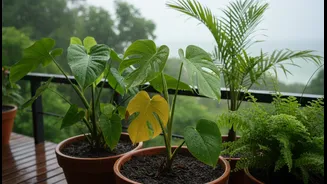
The primary danger of overwatering is a condition called root rot. This isn't just about 'drowning' the plant; it’s about suffocation. Plant roots need oxygen to function, which they absorb from air pockets in the soil. When soil becomes waterlogged, these air pockets disappear, depriving the roots of oxygen. This anaerobic environment is the perfect breeding ground for fungi and bacteria that cause the roots to decay. Healthy roots are typically firm and white, but rotting roots turn brown or black, become mushy, and often emit a foul odour. Once root rot sets in, the plant can no longer absorb water and nutrients effectively, leading to wilting and yellowing leaves—ironically, symptoms that might make you think it needs more water.
Why Tropical Plants Are Not Immune
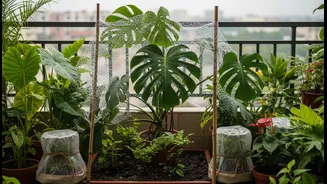
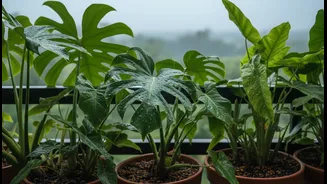
A common misconception is that since many popular balcony plants are 'tropical', they must love endless water. While it's true they appreciate humidity, their natural habitat is very different from a pot on a balcony. In the ground, excess water can drain away more easily. In a container, drainage is limited to the holes at the bottom. During the monsoon, pots can remain saturated for days, which is far from the ideal conditions for most plants, including tropical ones. They may be adapted to heavy rainfall, but they are also adapted to well-draining forest floors, not the dense, constantly wet soil of a waterlogged container.
Overwatering vs. Underwatering Signs
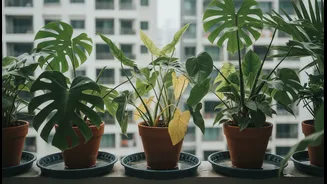
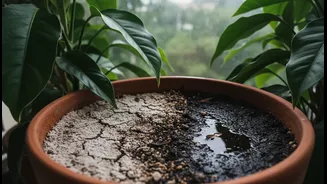
It can be tricky to tell the difference, as both conditions can cause yellowing and wilting leaves. However, there are key distinctions. An overwatered plant's leaves will often feel soft and limp, and the yellowing may start from the bottom of the plant and move up. The soil will be consistently damp or wet to the touch. In contrast, an underwatered plant’s leaves will feel dry and crispy at the edges. The soil will be visibly dry, sometimes even pulling away from the sides of the pot. Crucially, it is almost always easier to revive a thirsty plant than to save one from advanced root rot. A plant that is slightly underwatered has a much better chance of recovery.
A Safer Strategy: When in Doubt, Let It Dry Out
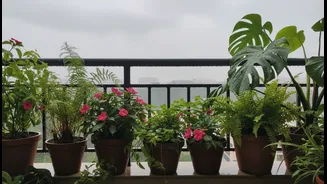
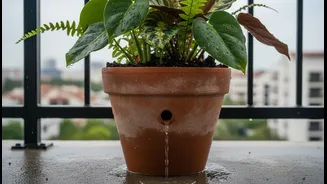
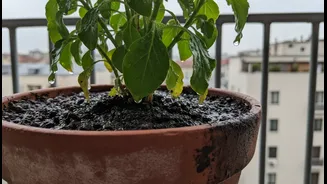
During the rainy season, the most prudent approach is to err on the side of underwatering. Ditch your fixed watering schedule. The golden rule is to check the soil first. Insert your finger about two inches into the pot; if the soil feels moist, do not water it. Wait until the top layer is noticeably dry. Ensure your pots have excellent drainage; the holes must be clear and unobstructed. Elevating pots on stands or 'pot feet' can dramatically improve drainage and airflow, preventing them from sitting in a puddle of runoff. If a plant gets drenched by a heavy downpour, consider that its watering for the next several days and monitor the soil moisture before even thinking about reaching for the watering can again.