
Gajar ka Halwa: More Than a Sweet Treat
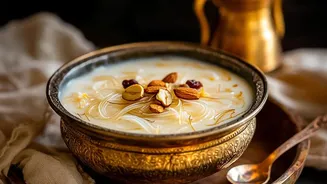
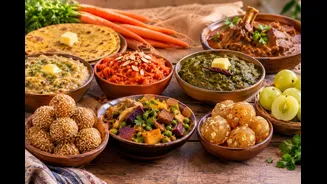
Gajar ka Halwa is the quintessential winter dessert, a sweet pudding made from a slow-cooking process involving grated carrots, milk, ghee, and sugar, and often garnished with nuts. Its star ingredient, the seasonal red carrot, is what makes it a winter specialty.
These carrots are naturally sweeter and richer in beta-carotene, which the body converts into Vitamin A. This vitamin is crucial for boosting immunity, maintaining good vision, and supporting skin health during the dry winter months. The addition of milk provides a healthy dose of calcium and protein, while ghee and nuts offer healthy fats and antioxidants. According to nutritionists, cooking carrots actually makes their nutrients, like beta-carotene, more easily absorbed by the body. While it's a dessert, the combination of its core ingredients makes it a surprisingly nutrient-dense food perfectly suited for the season.
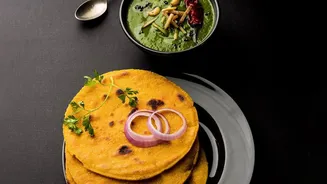
Sarson ka Saag and Makki ki Roti: A Power-Packed Duo
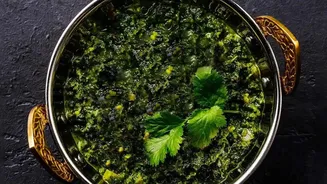
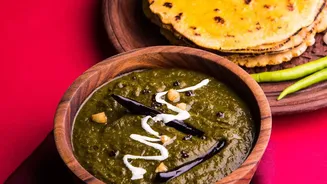
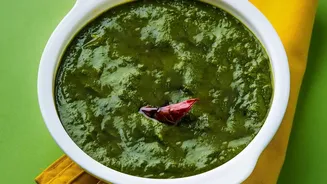
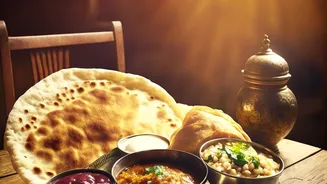
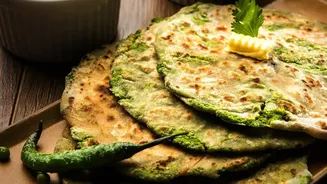
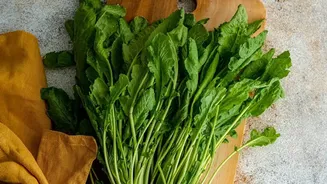
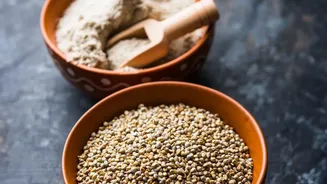
This iconic Punjabi meal is a winter staple for a reason. Sarson ka Saag, made from mustard greens and often mixed with other greens like spinach, is a nutritional powerhouse. Mustard greens are exceptionally rich in Vitamins A, C, and K, along with iron and antioxidants that bolster the immune system. Paired with Makki ki Roti, a flatbread made from maize (corn) flour, the meal is a well-rounded source of energy. The roti provides dietary fibre, complex carbohydrates, and essential minerals like zinc, which supports immunity. Together, they form a meal that's not just culturally significant but also nutritionally optimized for winter. The fibre content in both the saag and the roti aids digestion, a common concern during a season often marked by heavier foods and reduced physical activity.
Gond ke Laddu: The Energy Booster
Gond ke Laddu are energy-dense sweet balls made from edible gum (gond), whole wheat flour, ghee, jaggery, and a generous amount of nuts and seeds. Gond, a natural resin from acacia trees, is known in Ayurveda for its 'warming' properties, making it an ideal winter food. It is believed to help the body retain heat and provides sustained energy, fighting off the lethargy that can accompany colder weather. These laddus are particularly beneficial for bone health; gond is thought to lubricate joints, while the nuts and seeds provide calcium and magnesium. For this reason, they are a traditional food for new mothers to aid in postpartum recovery and for the elderly to help with joint stiffness. A single laddu is a powerhouse of healthy fats, protein, and fibre, designed to keep you fortified throughout the day.
Panjiri: The Warming Nutritional Mix
Panjiri is a loose, crumbly mixture of whole wheat flour roasted in ghee, sweetened with sugar or jaggery, and packed with nuts, seeds, and warming spices like dried ginger and cardamom. Much like Gond ke Laddu, Panjiri is considered a 'hot' or warming food in traditional medicine, valued for its ability to strengthen the body and ward off winter ailments. It is incredibly nutrient-dense and is often consumed to replenish energy levels and boost immunity. Panjiri has a strong tradition as a postpartum healing food, believed to help new mothers regain strength, support lactation, and balance hormones. The healthy fats from ghee and nuts, combined with the slow-release energy from whole wheat flour, make it a perfect snack to combat winter fatigue and keep the digestive system healthy.