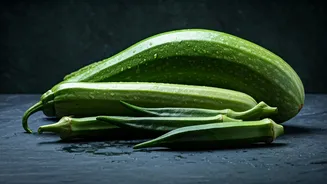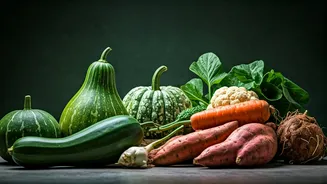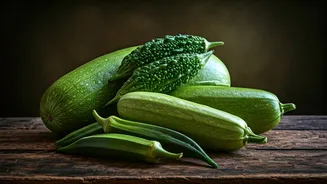



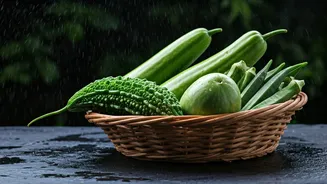
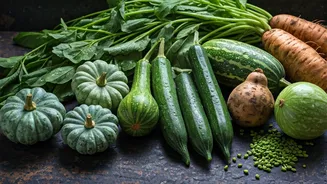
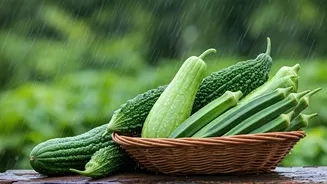


Bottle Gourd (Lauki)
Often underrated, lauki is a superstar of the monsoon diet. With its high water content (about 92%), it’s incredibly hydrating and very light on the stomach, making it easy to digest. This is crucial during a season when our digestive fire (agni, in Ayurveda)
is naturally weaker. Rich in fibre, it aids in smooth digestion and prevents constipation. It’s also packed with essential minerals like sodium, potassium, and iron, helping replenish electrolytes lost through sweating in the humid weather. Furthermore, its low-calorie, low-fat nature makes it perfect for anyone looking to manage their weight without compromising on nutrition. How to enjoy it: Forget bland, boiled lauki. Prepare a flavourful Lauki Chana Dal, a simple yet delicious Lauki ki Sabzi with tomatoes and mild spices, or even shred it to make savoury koftas that are steamed or pan-fried instead of deep-fried.
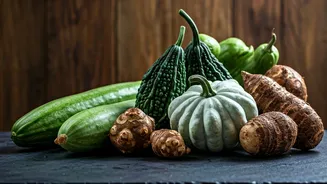
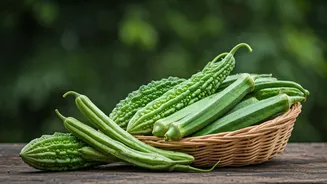
Bitter Gourd (Karela)
Don't let the bitterness fool you; karela is one of the most powerful vegetables for monsoon wellness. It's renowned for its immunity-boosting properties, packed with Vitamin C and antioxidants that help the body fight off common seasonal infections like colds and flu. Traditional medicine values it for its blood-purifying abilities and its effectiveness in managing blood sugar levels. The bitter compounds in karela stimulate the liver and aid in detoxification, which is especially beneficial during the damp monsoon months. How to enjoy it: To reduce its bitterness, you can scrape the skin and marinate the pieces in salt water for 30 minutes before cooking. A classic Bharwa Karela (stuffed bitter gourd) with a spicy onion-and-spice mix is a delicacy. For a modern twist, slice it thinly, toss with spices, and air-fry or bake until crisp for healthy 'karela chips'.
Pointed Gourd (Parwal)
Parwal is a humble but mighty vegetable that thrives during the rainy season. It’s a fantastic source of vitamins A and C, along with antioxidants that strengthen the immune system. According to Ayurvedic texts, parwal is excellent for balancing the body's 'doshas' and is particularly good for treating common ailments like fever, colds, and coughs. Its high fibre content promotes good gut health and keeps the digestive system running smoothly, preventing the sluggishness that often accompanies the monsoon. How to enjoy it: This versatile vegetable can be used in numerous dishes. A simple Aloo Parwal ki Sabzi is a comforting staple in many Indian homes. You can also make a delicious gravy-based curry or slice it thinly and pan-fry it with turmeric and salt for a simple, crispy side dish.
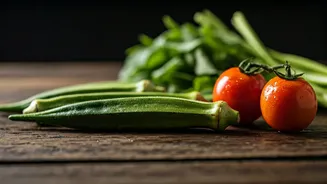
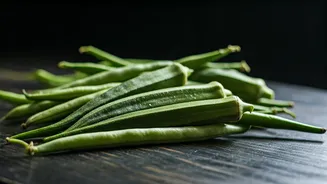
Okra (Bhindi)
A favourite across India, okra is another excellent choice for your monsoon plate. It is a soluble fibre powerhouse, which helps regulate digestion and prevents bloating and gas—common complaints during this season. The mucilage (the slimy substance in bhindi) soothes the intestinal tract. It’s also a good source of Vitamin C, Vitamin K, and folate. The antioxidants present in okra help combat free radicals and support overall immunity, keeping you resilient against seasonal illnesses. How to enjoy it: For a healthy preparation, avoid deep-frying. A simple Bhindi Masala made in a pan with onions, tomatoes, and spices is both delicious and nutritious. For a crispy texture without the excess oil, try Kurkuri Bhindi by slicing it, coating it with gram flour and spices, and then baking or air-frying it.
Ridge Gourd (Turai)
Turai, or ridge gourd, is known for its cooling properties, making it an ideal vegetable to balance the humid and stuffy monsoon weather. Like bottle gourd, it has a high water content and is extremely easy to digest. It acts as a natural blood purifier and is beneficial for liver health. Packed with dietary fibre, Vitamin C, iron, and magnesium, it supports both digestive health and immunity. Its gentle nature makes it suitable for all ages and a perfect addition to a light, detoxifying meal. How to enjoy it: Turai pairs beautifully with lentils; a Turai Chana Dal is both wholesome and flavourful. You can also make a simple sabzi with minimal spices to let its natural, subtle sweetness shine through. Another popular preparation involves cooking it with poppy seed paste (posto) in Bengali cuisine for a unique, creamy texture.