






A Declaration of Arrival
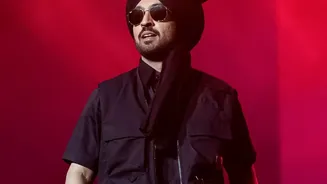
Before the music even reached its most poignant moment, the night was already one for the history books. Diljit Dosanjh stepped onto the stage at one of the world's most famous venues and declared, “Punjabi Aa Gaye Wembley Oye!”—a triumphant announcement
that Punjab had arrived. The show on September 12 was a sell-out, a landmark achievement that saw a Punjabi artist headline the 90,000-capacity stadium for the first time. For many in the British Punjabi community and fans worldwide, it felt like a powerful recognition of a culture that has been a vibrant part of the UK for decades but had never before taken center stage in such a monumental way. The concert was not about assimilation; it was a celebration of identity, with thousands gathering to hear a superstar perform a catalogue of hits deeply rooted in Punjabi language and culture.
A Soulful Tribute to a Legend
In the middle of this high-octane celebration of modern Punjabi music, the atmosphere shifted. Dosanjh transitioned from his chart-topping anthems to perform “Sanson Ki Mala Pe,” the iconic qawwali forever associated with the legendary Ustad Nusrat Fateh Ali Khan. This was the standout moment that the headline captured, a musical tribute that bridged generations and genres. The choice was deeply significant. By performing a composition revered across the Indian subcontinent, Dosanjh was not just singing a classic; he was connecting his contemporary global platform with a rich, shared musical heritage. It was a move that showcased his versatility and paid homage to one of the giants of South Asian music, grounding the futuristic spectacle in a timeless tradition.
A Modern Spectacle for a Classic
The performance was dubbed “new-generation” not because of a dramatic remix, but because of its context. As Diljit’s voice carried the soulful melody through the vast stadium, tens of thousands of fans created a modern-day candlelight vigil, illuminating the stands with the lights from their mobile phones. This visual spectacle, widely shared online, created a powerful juxtaposition: a timeless qawwali being celebrated in one of the world’s most modern arenas, by a new generation of fans. It was a moment of quiet connection amidst the roaring energy of a stadium show. The performance demonstrated how classic compositions can find new life and relevance, resonating deeply with a young, global audience when presented with authenticity and respect. Reports described how the moment brought a completely different, more soulful atmosphere to the show.
More Than Just Music
The decision to perform “Sanson Ki Mala Pe” and other folk songs like 'Laung Gawacha' was a profound statement. In a venue situated in a city that is a melting pot of South Asian communities, Dosanjh was deliberately showcasing Punjab's shared cultural inheritance. He was reaching into the repertoire of a Pakistani maestro and presenting that music as part of a single, unified cultural universe, transcending borders. This act resonated powerfully, especially as he became the first Punjabi artist to headline Wembley. It cemented his role as more than just an entertainer, but as a cultural ambassador who uses his platform to celebrate unity and heritage. Some attendees noted that Dosanjh also paid tribute to the legendary Punjabi singer Chamkila, further cementing the evening as a celebration of musical lineage.