

Why Pre-Book Your Sikkim Taxi?
Sikkim's mountainous terrain and limited public transport to remote areas make a reliable vehicle essential. Unlike ride-hailing apps which are not prevalent outside major towns, pre-booking a private taxi with a local operator offers several advantages.
Firstly, it helps you lock in your transportation costs, preventing last-minute price surges during peak season. This guarantees vehicle availability and saves you precious time you would otherwise spend negotiating at crowded taxi stands. Most importantly, it connects you with an experienced local driver who is not just a chauffeur but a guide. These drivers are skilled in navigating treacherous roads and can handle the complex permit requirements for restricted areas like North Sikkim and the Old Silk Route, ensuring your journey is both safe and compliant.
How to Book and What to Expect
Booking in advance is straightforward. The most reliable method is to contact registered Sikkim-based travel agencies or dedicated taxi services online. Many have websites or WhatsApp numbers for inquiries. You can book a cab for simple point-to-point transfers (like from Bagdogra Airport to Gangtok), full-day local sightseeing, or multi-day package tours that cover your entire itinerary. When booking, specify your group size and the type of vehicle you need; rugged SUVs like Innovas or Xylos are mandatory for high-altitude routes. Always ask for a clear quote that includes fuel, the driver's allowance, parking, and permit fees to avoid hidden costs.
The Budget Advantage
While shared taxis offer a cheaper per-seat rate, a pre-booked private cab provides immense value, especially for families and groups. A full-day sightseeing tour in Gangtok can cost between ₹2,500 and ₹4,000, depending on the car. Trips to popular spots like Tsomgo Lake are around ₹3,500 to ₹6,000. For multi-day trips to North Sikkim or Zuluk, operators offer packages that bundle transport and sometimes accommodation, providing a clear and fixed budget. A 3-day private tour of the Old Silk Route might start from ₹6,000 to ₹8,000 per vehicle, while North Sikkim packages cost more. By finalising these costs beforehand, you can better allocate your funds for stays, food, and activities.
Spotlight: Zuluk and the Old Silk Route
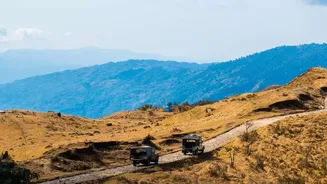
The winding, hairpin-laced roads of the Old Silk Route in East Sikkim are a prime example where advance booking is critical. Zuluk is a small village that serves as a base to explore this historic trail. Reaching it and the stunning viewpoints beyond, like Thambi View Point, requires a special permit and a driver skilled in high-altitude conditions. Travel agencies that arrange your cab will typically handle the permit paperwork at the Rongli check post, a process that is difficult for independent travellers to navigate. A pre-booked multi-day tour ensures your stay in a local homestay is coordinated with your transport, making the journey seamless.
Spotlight: Dzongu Valley
Known as a reserved sanctuary for the native Lepcha community, Dzongu in North Sikkim is a true off-the-beaten-path destination. It is a land of pristine waterfalls, dense forests, and cultural immersion. Access to Dzongu is restricted, and all visitors need a special permit, which can be arranged by your homestay host or a registered tour operator who also provides your taxi. Because of these regulations, you cannot simply arrive and expect to find transport. Booking an all-inclusive package that covers your permit, cab, and homestay is the most practical way to experience this protected eco-paradise, ensuring your visit is both respectful and well-managed.
Spotlight: Ravangla and Borong
South Sikkim offers a quieter, more tranquil experience. Towns like Ravangla, with its famous Buddha Park, and the nearby village of Borong, known for its hot springs, are perfect for travellers seeking peace. While these areas don't have the strict permit requirements of the north and east, public transport remains limited. Having a pre-booked cab gives you the freedom to explore at your own pace. You can spend a morning at the Ralang Monastery, take an afternoon detour to the Temi Tea Garden, and not be bound by the fixed schedules of shared jeeps. It turns a simple visit into a flexible, personalised exploration of Sikkim's serene south.