


The Lithium Conundrum
For years, the electric vehicle revolution has been powered by lithium-ion (Li-ion) batteries. They are energy-dense, meaning they can store a lot of power in a small space, which is perfect for cars. However, this technology comes with significant challenges
for India. The primary raw materials—lithium, cobalt, and nickel—are not available in commercially extractable quantities within the country. This dependence on imports creates supply chain vulnerabilities and exposes the market to geopolitical tensions and price volatility. China's dominance over the global lithium-ion value chain further complicates India's ambition for self-reliance in the clean energy sector. As India's demand for EV and grid-scale batteries is projected to soar, relying solely on lithium presents a major economic and strategic risk.
Enter the Sodium-Ion Alternative
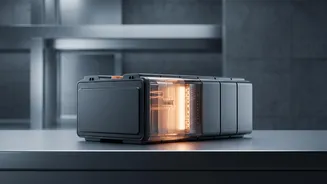
Sodium-ion (Na-ion) batteries work on a similar principle to their lithium-ion cousins, shuttling ions between a cathode and an anode to store and release energy. The key difference is the ion doing the work. Instead of lithium, they use sodium, an element that is abundant and widely available, especially in India through sources like seawater. This simple substitution has profound implications. It drastically reduces the reliance on scarce, imported critical minerals, aligning perfectly with the 'Atmanirbhar Bharat' mission. Several Indian companies and research institutes, such as Indi Energy, Rechargion, and Naxion Energy, are already developing and commercialising indigenous Na-ion technology.
The All-Important Cost Advantage
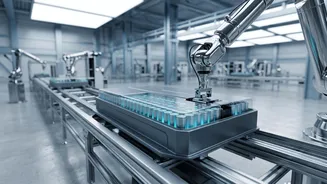
The primary appeal of sodium-ion batteries is their potential for significantly lower costs. This cost-effectiveness stems from the raw materials. Sodium is far more abundant and cheaper than lithium. Furthermore, Na-ion batteries can use aluminium for their current collectors instead of the more expensive copper required in Li-ion cells, further reducing material costs. Some estimates suggest that Na-ion batteries could be 30-50% cheaper to produce than their Li-ion counterparts. While large-scale production is still needed to realise these savings fully, the long-term cost potential is a game-changer for making EVs more accessible to the average Indian consumer.
Performance: A Story of Trade-Offs
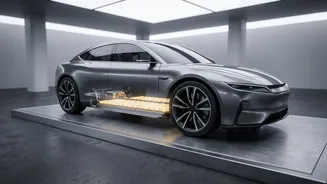
While Na-ion batteries win on cost, there are performance trade-offs. Their main drawback is lower energy density, typically ranging from 100-175 Wh/kg compared to over 200 Wh/kg for many Li-ion types. This means a Na-ion battery pack of the same capacity will be heavier and bulkier, which can reduce a vehicle's range. However, Na-ion technology holds other advantages. They generally exhibit better thermal stability, making them safer and less prone to fire risk. They also perform better in extreme cold temperatures and can be safely transported at zero volts, a logistical advantage over Li-ion cells. Recent advancements show Na-ion batteries with fast-charging capabilities and impressive cycle life, making them increasingly viable for specific applications.
The Ideal Fit for Indian Mobility
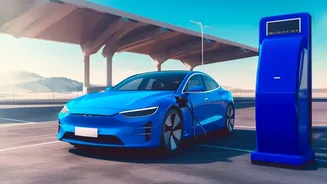
Given these characteristics, Na-ion batteries are not necessarily a direct replacement for high-performance, long-range Li-ion EVs. Instead, they are perfectly positioned to power a different, but equally crucial, segment of the Indian market. Their cost, safety, and robustness make them ideal for two-wheelers, three-wheelers, e-rickshaws, and entry-level passenger cars where extreme range is less of a concern than affordability. Many Indian startups are targeting the existing lead-acid battery market for these applications, which Na-ion can outperform in efficiency and lifespan. They are also exceptionally well-suited for stationary energy storage, such as for solar power grids, where weight and size are not primary constraints but cost and safety are paramount.